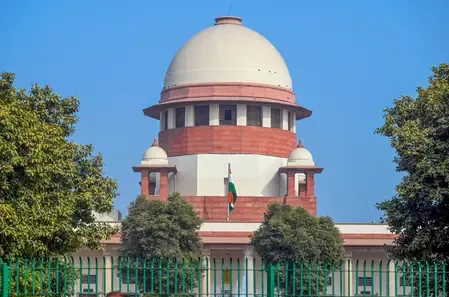
Supreme Court Grapples with Religious Beliefs in Sabarimala Review
Synopsis
The Supreme Court is currently tackling the complex challenge of assessing the validity of deeply held religious beliefs in the Sabarimala case, emphasizing the difficulty of declaring the beliefs of millions as erroneous.
Key Takeaways
The Supreme Court faces the complex challenge of declaring widely held beliefs erroneous.
Judicial intervention in religious matters raises concerns about overreach.
The concept of 'essential religious practices' is under scrutiny.
Community perspectives on religion must be prioritized in legal discussions.
Broader implications for religious freedoms and rights are at stake.
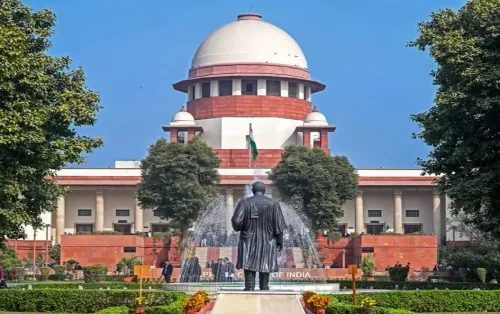
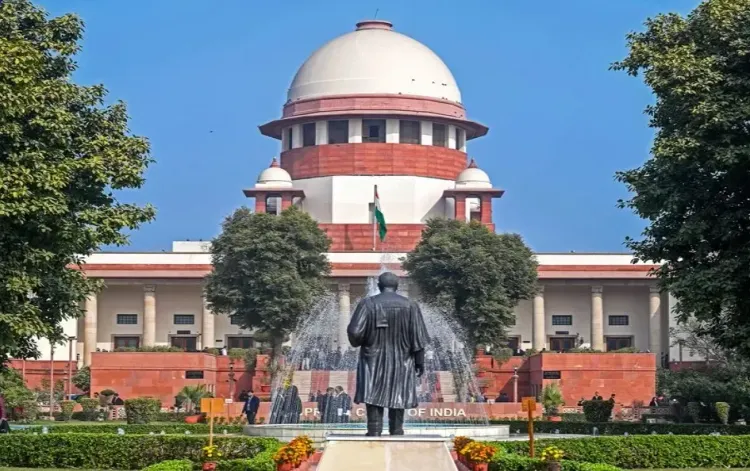
New Delhi, April 15 (NationPress) A nine-judge Constitution Bench is currently engaged in the Sabarimala review, which explores the balance between religious freedom and fundamental rights. On Wednesday, the Supreme Court remarked that one of the most challenging responsibilities for a constitutional court is to declare the beliefs of millions as erroneous.
Led by Chief Justice of India (CJI) Surya Kant, the Constitution Bench listened to arguments from senior advocate Abhishek Manu Singhvi, representing the Travancore Devaswom Board, which opposes the ongoing application of the “essential religious practices” doctrine.
“A court's most difficult task may be to declare that the beliefs of millions are wrong or erroneous,” stated the CJI Kant-led Bench. The apex court is also assessing whether public interest litigations (PILs) from non-believers should be acknowledged in cases related to religious faith and practices.
Justice BV Nagarathna warned against excessive judicial involvement in religious affairs, stating, “We cannot undermine religion under the guise of social welfare reform.”
During the proceedings, Singhvi urged the court to eliminate the essential religious practices test, arguing that it incorrectly allows judges to define what constitutes the core of a religion.
“Once Your Lordships permit the terms ‘essential’ or ‘integral’, it inevitably leads to a framework where judges or external adjudicators define what is essential or non-essential in religion,” Singhvi asserted.
He emphasized that religious beliefs and practices should be evaluated through the lens of the community that holds them, rather than through external judicial standards.
“The Court must respect the community's beliefs... it is not the role of the Court to judge that belief,” he added.
Singhvi further claimed that if a practice is genuinely and sincerely recognized as part of a religion, it should be afforded constitutional protection, limited only by the explicit constraints of public order, morality, health, and other fundamental rights under Article 25.
While acknowledging that courts may intervene in “extreme cases,” such as those that threaten life or public order, he maintained that the threshold for considering PILs in religious matters should be significantly elevated.
Written submissions made on behalf of the Travancore Devaswom Board similarly urged the Supreme Court to embrace a “community-centric and subjective” interpretation of religion under Article 25, warning against judicial reinterpretation of faith-based practices.
The submissions argue that the “essential religious practices” test lacks constitutional basis and amounts to an unacceptable judicial addition to the clearly defined limitations.
The Supreme Court is presently examining broader issues related to the interaction between religious freedom and other fundamental rights, including the scope of judicial review over religious practices and denominational rights under Articles 25 and 26.
Besides the Sabarimala case, the Constitution Bench will also deliberate on related issues such as the entry of Muslim women into mosques and dargahs, the rights of Parsi women to access fire temples after interfaith marriages, the validity of excommunication practices, and the legality of female genital mutilation within the Dawoodi Bohra community.
Point of View
I observe that the Supreme Court's handling of the Sabarimala review reflects a broader dialogue on the delicate balance between individual rights and collective beliefs. This case not only challenges the judicial system but also prompts a national reflection on the essence of religious freedom in a diverse society.
NationPress
19 Sept 2026
Frequently Asked Questions
What is the Sabarimala review case about?
The Sabarimala review case involves the Supreme Court's examination of the interplay between religious freedom and fundamental rights, particularly regarding the beliefs and practices of millions.
What are the implications of the Supreme Court's decision?
The Supreme Court's decision could redefine the boundaries of religious practices and influence the extent of judicial review in matters of faith.
What is the significance of the 'essential religious practices' doctrine?
The 'essential religious practices' doctrine determines what is considered core to a religion; its application has been challenged in the context of judicial overreach.
How does this case affect religious communities?
The outcome of the case may have profound implications for various religious communities, potentially altering their rights to practice and uphold their beliefs.
What other issues are being discussed alongside Sabarimala?
The Constitution Bench is also addressing related issues, including the rights of women in religious places and practices like excommunication and female genital mutilation.