Surjewala backs Jarkiholi after ED raids, owns Karnataka Cabinet woman gap
Synopsis
Congress's Randeep Singh Surjewala did something rare on Wednesday: he publicly owned a party failure. While defending PWD Minister Satish Jarkiholi against ED raids and alleging SC/ST-targeted witch-hunts, he admitted that the missing woman minister in the Karnataka Cabinet is entirely his fault — not Delhi's. The double admission raises the stakes on whether the vacancy gets filled before it becomes an electoral liability.
Key Takeaways
Congress General Secretary Randeep Singh Surjewala on 16 September 2026 publicly backed Karnataka PWD Minister Satish Jarkiholi amid ED raids linked to him.
Surjewala alleged the ED was being used to target Congress leaders from SC and ST communities , naming over seven leaders who have faced raids.
He directly blamed Prime Minister Narendra Modi and Home Minister Amit Shah , alleging central agencies act as an 'election wing' of the ruling party.
Surjewala personally accepted responsibility for the vacant woman minister berth in the Karnataka Cabinet , distancing the Delhi high command from the delay.
He said consultations with Chief Minister D.K.
Shivakumar and PCC chief B.K.
Hariprasad would resolve the issue 'soon.' Congress MLC Gayathri Shantegowda met Chief Minister Shivakumar in Bengaluru on the same day amid renewed discussions over the post.
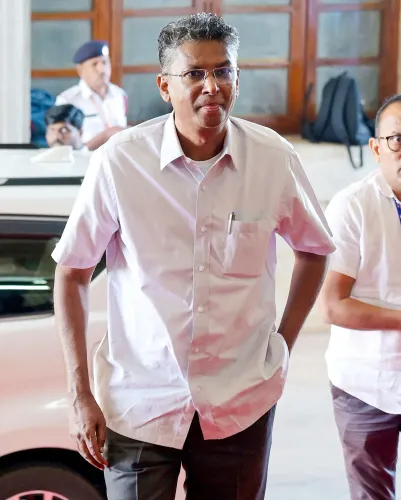
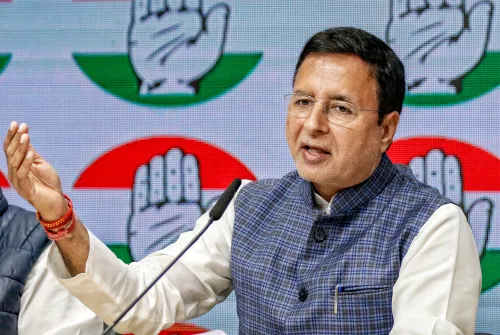
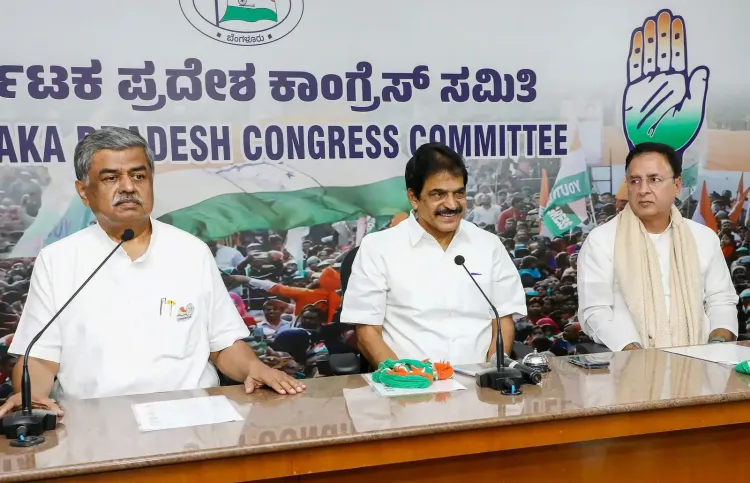
Congress General Secretary and Karnataka in-charge Randeep Singh Surjewala on Wednesday, 16 September publicly backed Public Works Minister Satish Jarkiholi in the wake of Enforcement Directorate (ED) raids linked to him, and took personal responsibility for the continued absence of a woman minister in the Karnataka Cabinet. Addressing reporters at the state unit office in Bengaluru, Surjewala alleged a pattern of political misuse of central agencies against Congress leaders from Scheduled Caste (SC) and Scheduled Tribe (ST) communities.
ED Raids and the Congress Pushback
Surjewala alleged that the central investigative machinery had been selectively deployed against Congress leaders belonging to marginalised communities. He cited a string of ED actions — against Chief Minister D.K. Shivakumar, former Chief Minister Siddaramaiah, Congress MLA Na.Ra. Bharat Reddy, former minister B. Nagendra, Congress MLA Basanagouda Daddal, Deputy Chief Minister G. Parameshwara, and MLA Veerendra Pappi — to argue that the targeting was systematic.
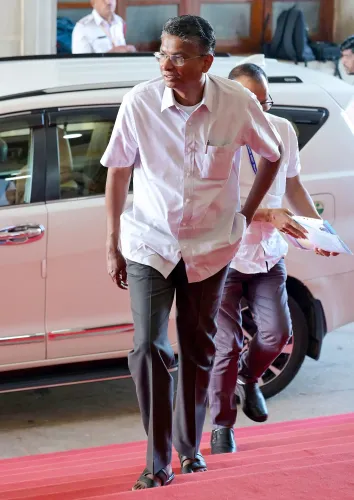
'Minister for PWD Satish Jarkiholi has been targeted twice,' Surjewala said, adding: 'The reason behind these raids is that all these leaders hail from SC and ST communities. We will not bow down for any reason before the Central government. We are all with Minister Satish Jarkiholi.'
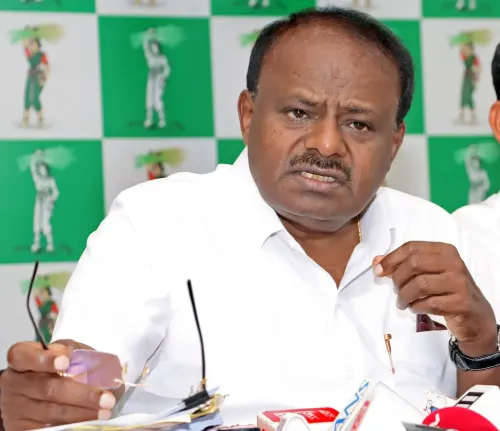
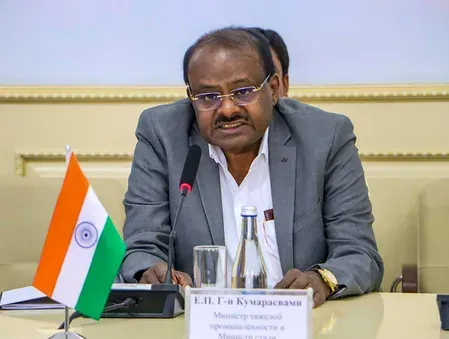
He further questioned why prosecution proceedings against Bharatiya Janata Party (BJP) and Janata Dal (Secular) leaders — including Union Minister H.D. Kumaraswamy, former Chief Minister B.S. Yediyurappa, former minister Janardhana Reddy, and Renukacharya — had not produced comparable outcomes. 'Don't they have prosecution pending against them? Already the ED stands exposed,' he said.
Allegation of Political Weaponisation
Surjewala framed the raids in explicitly electoral terms, alleging: 'The ED has been working as the election wing of the party. Whenever elections come near, ED, CBI, and IT come into the picture. Afterwards, Prime Minister Narendra Modi and Union Home Minister Amit Shah arrive in the state.' The Congress has consistently levelled such allegations at the Centre; the BJP and federal agencies have denied political interference in investigative decisions.
Surjewala Takes Blame for No Woman in Karnataka Cabinet
In a notable admission, Surjewala accepted sole responsibility for the vacancy of the woman minister's berth in the Karnataka Cabinet — distancing the Congress high command in Delhi from the delay. 'In the Cabinet, there is no woman minister. The mistake is mine. It is not the mistake of the high command sitting in Delhi. It is my mistake. I have not been able to finalise one candidate in this regard,' he said.
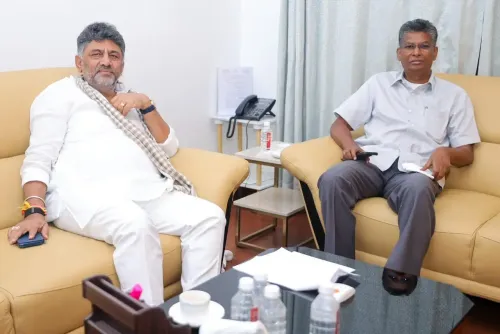
He attributed the delay to the presence of 'more than one aspirant' for the post, making consensus difficult. He said the matter would be resolved after consultations with Chief Minister D.K. Shivakumar and state unit President B.K. Hariprasad, both of whom he said were pressing him on the issue daily.
Separately, Congress MLC Gayathri Shantegowda met Chief Minister Shivakumar at his residence in Bengaluru on Wednesday. Her name had reportedly featured in an earlier list of ministers during the Cabinet expansion, but she did not take oath alongside the others.
Political Context and Opposition Dig
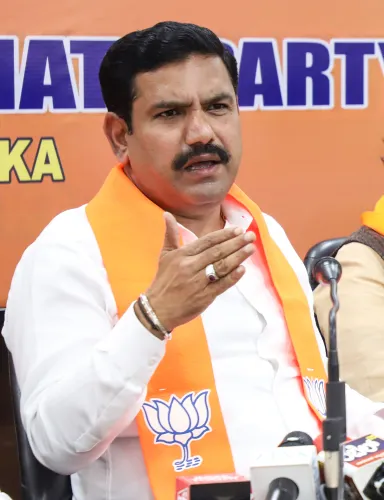
Surjewala also turned the focus on critics pointing to the Congress's women representation gap. Invoking the BJP–JD(S) coalition government's record, he said: 'I want to remind those who are making noises that they themselves were Women and Child Welfare Minister for the full term during their tenure — that was Mr Kumaraswamy in the BJP and JD-S coalition government.'
The Cabinet post earmarked for a woman has remained vacant since the expansion, and Wednesday's remarks signal that a resolution remains contingent on internal Karnataka Congress negotiations rather than a Delhi directive. How quickly that vacancy is filled will be watched as a measure of the Congress's stated commitment to women's empowerment in the state.
Point of View
Where accountability is typically diffused upward or outward — but the admission also conveniently shields the Congress high command from a charge that could hurt the party with women voters ahead of local body elections. On the ED front, the Congress's SC/ST framing is a sharp strategic move, but it sidesteps the actual allegations that prompted the raids. The party's counter-narrative — that BJP leaders face no comparable scrutiny — gains traction only if it pursues accountability through institutional channels rather than press conferences alone.
NationPress
16 Sept 2026
Frequently Asked Questions
Why did Randeep Singh Surjewala defend Satish Jarkiholi?
Surjewala extended Congress's full support to Public Works Minister Satish Jarkiholi after the ED conducted raids linked to him. He alleged the raids were politically motivated and part of a pattern of central agencies being used against Congress leaders from SC and ST communities in Karnataka.
Which Congress leaders in Karnataka have faced ED raids, according to Surjewala?
Surjewala cited ED actions against Chief Minister D.K. Shivakumar, former Chief Minister Siddaramaiah, PWD Minister Satish Jarkiholi (twice), Deputy Chief Minister G. Parameshwara, MLA Na.Ra. Bharat Reddy, former minister B. Nagendra, MLA Basanagouda Daddal, and MLA Veerendra Pappi.
Why is there no woman minister in the Karnataka Cabinet?
Surjewala admitted on 16 September 2026 that the delay in filling the woman minister's berth is his personal failure, citing multiple competing aspirants for the post. He said the matter would be resolved after consulting Chief Minister D.K. Shivakumar and state unit President B.K. Hariprasad.
What is the latest development on the Karnataka Cabinet woman minister post?
Congress MLC Gayathri Shantegowda met Chief Minister Shivakumar at his Bengaluru residence on Wednesday. Her name had reportedly appeared in an earlier ministers' list during the Cabinet expansion, though she did not take oath at that time. The seat remains vacant pending finalisation.
What did Surjewala say about BJP and JD(S) leaders facing the ED?
Surjewala questioned why prosecution proceedings against BJP and JD(S) leaders — including Union Minister H.D. Kumaraswamy, former CM B.S. Yediyurappa, former minister Janardhana Reddy, and Renukacharya — had not produced similar investigative intensity, saying 'the ED stands exposed.'