Swami Chidanand Saraswati opposes fatwa against Sara Ali Khan for Kedarnath visit
Synopsis
A fatwa declaring Sara Ali Khan's Kedarnath Temple visit 'haram' has drawn sharp pushback from Parmarth Niketan's Swami Chidanand Saraswati, who said religious rulings must not target those following a path of virtue. The episode has reignited a national debate on interfaith religious expression and the limits of personal religious law in public life.
Key Takeaways
Swami Chidanand Saraswati of Parmarth Niketan Ashram publicly opposed the fatwa against Sara Ali Khan on 30 October 2026 in Haridwar .
Maulana Shahabuddin Razvi Barelvi of the All India Muslim Jamaat declared Sara Ali Khan's Kedarnath Temple visit 'haram' and 'najayaz' under Sharia law.
The cleric stated Khan is required to perform 'Tauba' (repentance) under Sharia.
Swami Jitendranand Saraswati of the Akhil Bharatiya Sant Samiti called it an internal matter for Muslim clerics but raised questions about interfaith participation norms.
The Madurai Bench of the Madras High Court ruling on non-Hindus entering Agamic temples was cited as relevant context.
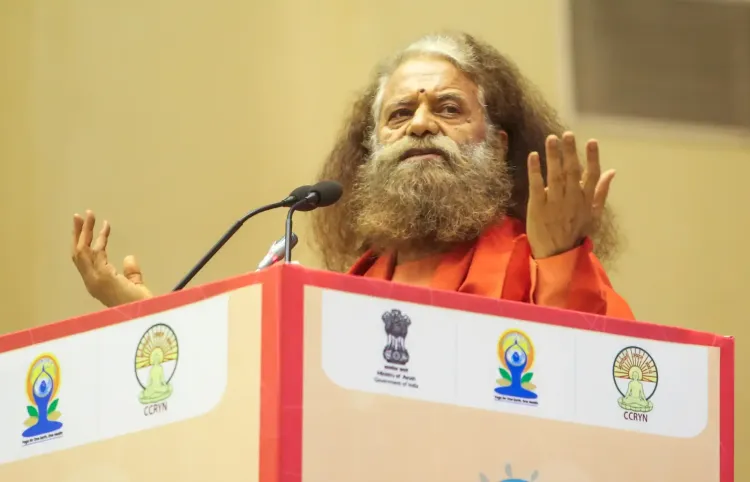
Spiritual Head of Parmarth Niketan Ashram, Swami Chidanand Saraswati, on Friday, 30 October, publicly opposed the fatwa issued by a Muslim cleric against Bollywood actress Sara Ali Khan for offering prayers at the Kedarnath Temple in Uttarakhand, stating that such religious rulings should not be directed at anyone walking the 'path of virtue'.
The Fatwa That Sparked the Debate
All India Muslim Jamaat National President Maulana Shahabuddin Razvi Barelvi issued the fatwa against Sara Ali Khan, declaring her visit to the Kedarnath Temple and the prayers she offered there as 'haram (forbidden)' and 'najayaz (impermissible)' under Sharia law. Defending his decision on Thursday, the cleric said, 'I have received information that film actress Sara Ali Khan visited Kedarnath (Temple) and performed acts of worship. If she truly did this from the heart, then the rulings of Sharia apply to her, because she is a Muslim, and for a Muslim, visiting a temple and engaging in acts of worship falls under the category of shirk (polytheism); it is najayaz (impermissible) and haram (forbidden).' He added that according to Sharia, Khan is required to perform 'Tauba' (repentance).
What Swami Chidanand Saraswati Said
Addressing reporters in Haridwar, Swami Chidanand Saraswati said, 'I believe fatwas should not be issued against anyone. If a person has committed a sin, one can understand the concern. But issuing a fatwa against someone who is following a path of virtue is difficult to understand.' He further stated, 'I do not know all the details, but I would say that anyone who does something good, follows a positive path, works for the welfare of society or helps others should be appreciated, not targeted with fatwas.'
Akhil Bharatiya Sant Samiti's Stance
Swami Jitendranand Saraswati, General Secretary of the Akhil Bharatiya Sant Samiti, offered a more nuanced view, noting, 'This is a matter for Muslim clerics. They can stop women of their community from visiting temples.' However, he raised a pointed question: 'If Islam believes Muslim boys should participate in our Dandiya celebrations, then why only boys? Why shouldn't their entire families participate? Why shouldn't their daughters join as well?'
Madras High Court Ruling Cited
Separately, citing the Madurai Bench of the Madras High Court's ruling that Agamic Hindu temples are not tourist destinations but places of pilgrimage, the seer noted that people may visit if they have genuine faith — but must demonstrate that faith. The court has ruled that non-Hindus sporting religious markers of other faiths, and not affirming reverence for the deity concerned, cannot be permitted into the premises of Agamic temples. Notably, Sara Ali Khan is the daughter of Bollywood actor Saif Ali Khan and his former wife Amrita Singh. The controversy reflects a broader and recurring tension in India over interfaith religious expression and the reach of personal religious law.
Point of View
Suggesting that religious leaders across faiths are increasingly uneasy with punitive orthodoxy. The Sant Samiti's counter-question about Dandiya participation, however, hints that the defence of Sara Ali Khan's autonomy may be entangled with competitive communal positioning rather than a principled stand on individual religious freedom. The Madras High Court citation further complicates the narrative: restricting entry to Agamic temples on faith grounds sits uneasily alongside arguments for open, interfaith spiritual engagement.
NationPress
30 Oct 2026
Frequently Asked Questions
Why was a fatwa issued against Sara Ali Khan?
Maulana Shahabuddin Razvi Barelvi of the All India Muslim Jamaat issued the fatwa because Sara Ali Khan, a Muslim, reportedly visited the Kedarnath Temple and offered prayers there. The cleric declared the act 'haram' (forbidden) and 'najayaz' (impermissible) under Sharia law, classifying it as 'shirk' (polytheism), and called on her to perform 'Tauba' (repentance).
What did Swami Chidanand Saraswati say about the fatwa?
Swami Chidanand Saraswati, the Spiritual Head of Parmarth Niketan Ashram in Haridwar, said fatwas should not be issued against anyone following a 'path of virtue'. He stated that people who do good and work for the welfare of society deserve appreciation, not religious rulings targeting them.
Who is Sara Ali Khan?
Sara Ali Khan is a Bollywood actress and the daughter of actor Saif Ali Khan and his former wife Amrita Singh. She has appeared in several Hindi films since her debut in 2018 and has a high public profile.
What did the Akhil Bharatiya Sant Samiti say about the controversy?
Swami Jitendranand Saraswati, General Secretary of the Akhil Bharatiya Sant Samiti, described the fatwa as an internal matter for Muslim clerics while raising a broader question about whether Muslim families — not just young men — should be free to participate in Hindu festivals like Dandiya.
What is the Madras High Court ruling cited in connection with this case?
The Madurai Bench of the Madras High Court has ruled that Agamic Hindu temples are places of pilgrimage, not tourist destinations, and that non-Hindus who do not affirm reverence for the deity concerned and display markers of other faiths cannot enter such temple premises. This ruling was cited by religious leaders as relevant context for discussing interfaith temple visits.