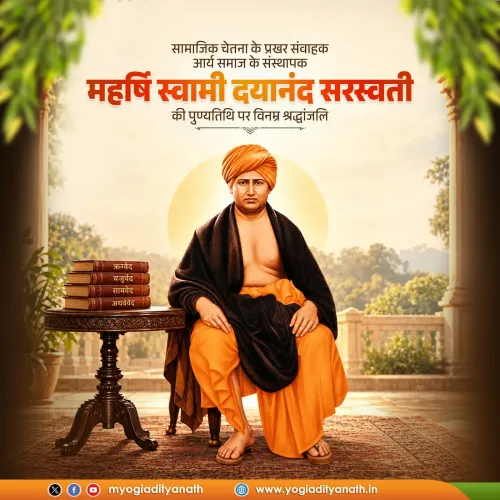
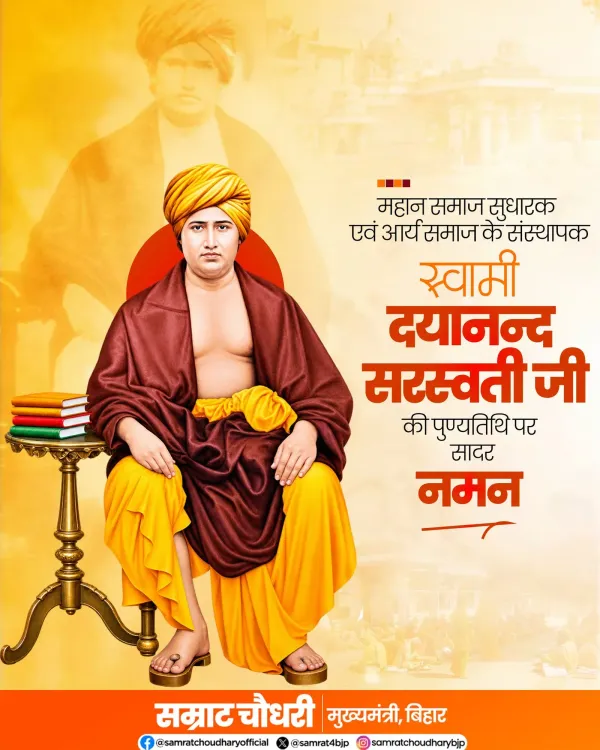
CM Samrat Choudhary pays tribute to Swami Dayanand Saraswati
Synopsis
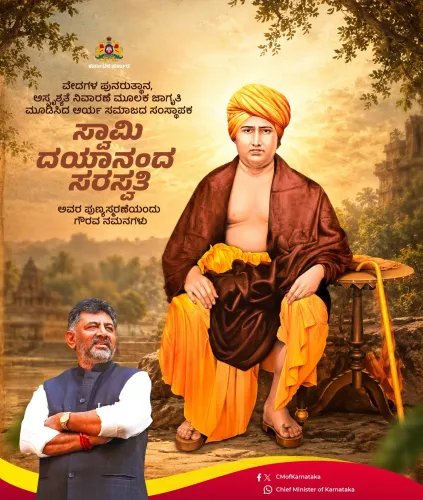
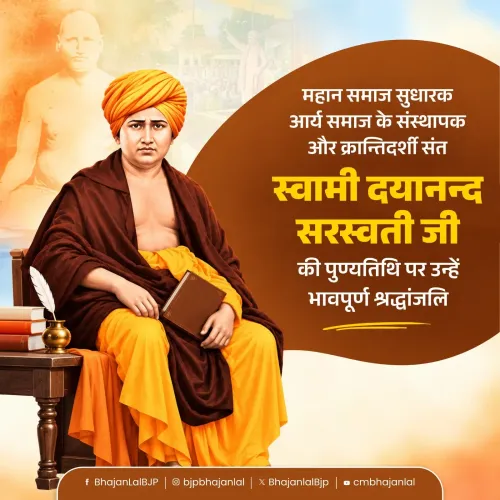
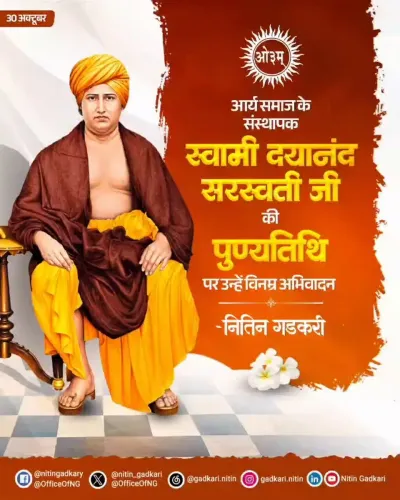
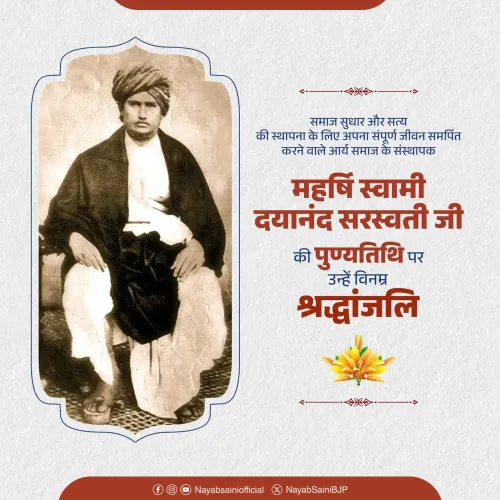
Bihar Chief Minister Samrat Choudhary paid tribute to Arya Samaj founder Swami Dayanand Saraswati on his October 30 death anniversary, saluting his 19th-century work in education, social awareness, and equality as an enduring inspiration for future generations.
Key Takeaways
Bihar CM Samrat Choudhary posted a tribute to Swami Dayanand Saraswati on Friday, October 30, 2026 , his death anniversary.
Swami Dayanand Saraswati founded the Arya Samaj in 1875 , advocating Vedic monotheism, women's education, and opposition to caste discrimination.
He died on October 30, 1883 , and is remembered as a foundational figure in India's social reform movement.
CM Choudhary highlighted the reformer's contributions to 'awareness, education and equality in society.' Annual tributes to Swami Dayanand Saraswati on this date are issued by political leaders across the spectrum in India.
On the death anniversary of one of India's most consequential 19th-century reformers, Bihar Chief Minister Samrat Choudhary on Friday, October 30, 2026 paid homage to Swami Dayanand Saraswati, the philosopher-monk whose crusade against social inequality helped reshape modern India's conscience.
Posting on X, CM Choudhary offered 'koti-koti naman' — a crore-fold salute — to Swami Dayanand Saraswati on his punyatithi (death anniversary). He wrote that the reformer's work in spreading 'awareness, education and equality in society will always be remembered,' adding that 'his thoughts and ideals will continue to inspire generations to come.'
The man who challenged a social order
Swami Dayanand Saraswati was born in 1824 in Gujarat and grew into one of the most formidable intellectual forces of colonial India. He founded the Arya Samaj in 1875 — a Hindu reform movement that rejected idol worship, caste discrimination, and the denial of education to women, anchoring all reform in a return to Vedic knowledge.
The Arya Samaj's emphasis on universal education and social equality made it a forerunner of many nationalist and reformist currents that followed. Its Dayanand Anglo-Vedic schools spread across the subcontinent, giving generations access to modern learning rooted in Indian philosophical tradition. Dayanand Saraswati died on October 30, 1883 — the anniversary marked every year across India with tributes from leaders of all political persuasions.
Annual tributes and the BJP's cultural commemorations
Paying homage to 19th-century social reformers on their death anniversaries is a well-established tradition among political leaders in India. For BJP figures, figures like Swami Dayanand Saraswati occupy a particular place in the party's cultural imagination — the Arya Samaj's Vedic revivalism and its fight against discriminatory social practices are frequently cited as part of India's own reform heritage, distinct from colonial-era interventions.
CM Choudhary's tribute follows that pattern, honouring a reformer whose legacy belongs to the shared national memory rather than to any single political tradition.
Point of View
Used to signal alignment with India's indigenous reform heritage. For CM Samrat Choudhary, honouring Swami Dayanand Saraswati — whose Arya Samaj championed education and equality well before independence — reinforces the party's narrative of Hindu social renewal from within. The gesture carries no immediate policy weight but is part of a broader cultural calendar that BJP governments across states maintain. Such commemorations also serve to build cross-community appeal by acknowledging reformers celebrated beyond partisan lines.
NationPress
30 Oct 2026
Frequently Asked Questions
Who was Swami Dayanand Saraswati?
Swami Dayanand Saraswati was a 19th-century Indian philosopher and social reformer born in 1824. He founded the Arya Samaj in 1875 to revive Vedic teachings and promote education, gender equality, and opposition to caste discrimination. He died on October 30, 1883.
What is the Arya Samaj?
Arya Samaj is a Hindu reform movement founded by Swami Dayanand Saraswati in 1875. It advocates monotheism based on the Vedas, universal education, women's rights, and the rejection of idol worship and caste-based discrimination.
Why did Bihar CM Samrat Choudhary post about Swami Dayanand Saraswati?
Bihar Chief Minister Samrat Choudhary posted a tribute on October 30, 2026, to mark the death anniversary of Swami Dayanand Saraswati, honouring his contributions to social awareness, education, and equality.
When is Swami Dayanand Saraswati's death anniversary?
Swami Dayanand Saraswati's death anniversary, known as his punyatithi, falls on October 30. He passed away on October 30, 1883.
What did Samrat Choudhary say about Swami Dayanand Saraswati?
CM Samrat Choudhary said that Swami Dayanand Saraswati's work in spreading awareness, education, and equality in society 'will always be remembered,' and that his thoughts and ideals 'will continue to inspire generations to come.'