CM Himanta marks Mising Language Day, salutes Assam's tribal heritage
Synopsis
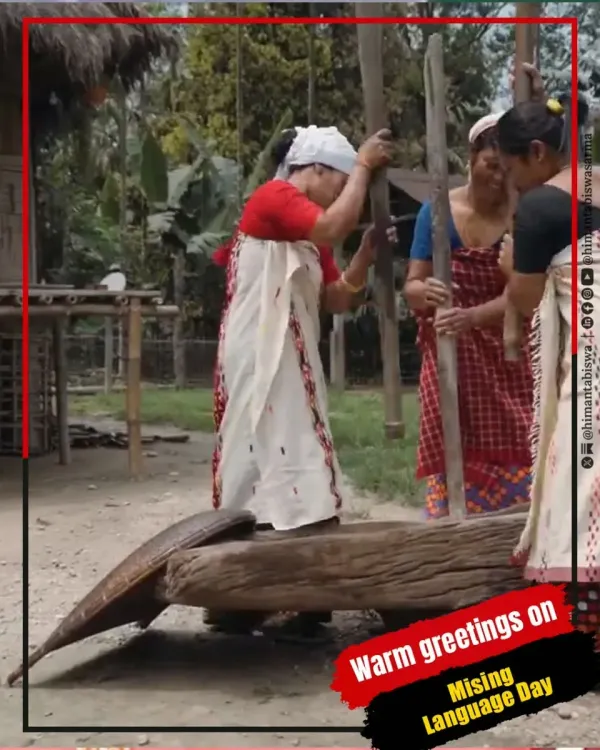
Assam Chief Minister Himanta Biswa Sarma marked Mising Language Day on 30 October 2026, honouring the Tibeto-Burman-language-speaking Mising community and urging preservation of their cultural heritage across generations, as part of his broader tribal outreach in the state.
Key Takeaways
Himanta Biswa Sarma marked Mising Language Day on 30 October 2026 with a public message of solidarity on X.
The Mising are an indigenous Tibeto-Burman-language-speaking community primarily settled in Assam .
CM Sarma called for pride in the Mising language and ensuring its 'invaluable legacy' reaches future generations.
The message is part of a recurring pattern of state-level cultural recognition for Assam 's tribal groups, including the Bodo and Karbi.
Language Day observances in Assam are seen as signals for institutional support — from mother-tongue education to cultural documentation.
Every tongue tells a story that no other can. On Mising Language Day, Assam Chief Minister Himanta Biswa Sarma took to X on Friday, 30 October 2026, to salute the linguistic richness of the Mising community — one of the state's most distinct indigenous peoples — and call for the preservation of their heritage across generations.
In his post, CM Sarma wrote: 'Every language adds a unique voice to the beautiful cultural mosaic of Assam. On Mising Language Day, let us take pride in the Mising language, honour the community's rich heritage and ensure that this invaluable legacy continues to thrive among future generations.'
Who are the Mising, and why their language matters
The Mising — also historically referred to as the Miri — are an indigenous ethnic group primarily settled along the Brahmaputra river plains of Assam. Their language belongs to the Tibeto-Burman family, placing it in a distinct linguistic lineage from the Indo-Aryan Assamese spoken by the state's majority population. That difference makes its vitality both fragile and precious.
Language days like this one serve a dual purpose: they anchor community pride in a living, spoken tradition, and they send a signal — to schools, to cultural bodies, to policymakers — that the language deserves institutional support, not just ceremonial acknowledgement.
Sarma's pattern of tribal cultural outreach
Assam is home to dozens of distinct tribal and indigenous communities, among them the Bodo, the Karbi, and the Mising. CM Sarma has made public recognition of their linguistic and cultural identities a visible part of his governance posture, using platforms like X to mark community observances and extend solidarity to groups spread across the state's districts.
The gesture fits a broader Northeast India pattern — one where political leaders increasingly frame cultural diversity not as a challenge to cohesion, but as the very texture of regional identity. In a state where language has historically been a flashpoint, these public affirmations carry weight beyond the ceremonial.
The real test, as observers of North-East cultural policy note, lies in what follows: mother-tongue education initiatives, documentation programmes for oral traditions, and consistent funding for community cultural institutions. Mising Language Day is the occasion — what comes next will be the measure.
Point of View
The BJP-led government signals cultural inclusivity to a community that sits outside Assam's dominant Assamese-speaking mainstream. The pattern — extending similar acknowledgements to the Bodo, Karbi, and now the Mising — suggests a deliberate North-East outreach strategy under Sarma's NEDA convenorship, where cultural goodwill is a complement to political consolidation. The open question is whether these symbolic moments translate into measurable policy steps on mother-tongue education or heritage funding.
NationPress
30 Oct 2026
Frequently Asked Questions
What is Mising Language Day?
Mising Language Day is an annual observance celebrated by the Mising community in Assam to honour their distinct Tibeto-Burman language and preserve their indigenous cultural heritage.
Who are the Mising people of Assam?
The Mising (historically also called Miri) are an indigenous ethnic group primarily living in the river plains of Assam. They speak a Tibeto-Burman language distinct from the Indo-Aryan Assamese of the state's majority population.
Why did CM Himanta Biswa Sarma post about Mising Language Day?
CM Sarma posted to express solidarity with the Mising community, call for pride in their language, and urge that the heritage be kept alive for future generations — continuing his broader pattern of publicly recognising Assam's tribal linguistic diversity.
What other tribal languages does Assam officially recognise?
Assam is home to several indigenous linguistic communities including the Bodo, Karbi, and Mising, each with distinct languages. The state has increasingly marked cultural observances for these groups as part of its diversity outreach.
What policy steps could follow a Mising Language Day acknowledgement?
Cultural observers watching North-East language policy look for follow-through in the form of mother-tongue medium education programmes, state funding for oral tradition documentation, and support for community cultural institutions.