CM Dhami Issues Orange Alert Directive for 5 Uttarakhand Districts

Synopsis
Chief Minister Pushkar Singh Dhami on 30 October 2026 activated Uttarakhand's full disaster-response machinery after IMD issued orange alerts for five districts — Nainital, Champawat, Pithoragarh, Bageshwar and Chamoli — warning of thunderstorms, hailstorms, heavy rain and gusting winds up to 50 km/h.
Key Takeaways
Orange alert issued by IMD Dehradun for Nainital, Champawat, Pithoragarh, Bageshwar and Chamoli on 30 October 2026 .
Thunderstorms, hailstorms and winds of 40-50 km/h forecast; heavy rainfall expected in Pithoragarh, Bageshwar, Nainital and Champawat.
All remaining Uttarakhand districts placed under a yellow alert for thunder, lightning and strong winds.
Trekking activities in mountain zones and tourist movement in high Himalayan areas ordered to be controlled until weather normalises.
IRS-designated officers, SDRF, police and fire brigades directed to remain on high alert with equipment ready.
Road-clearance operations to begin immediately on any blocked route; inter-departmental coordination mandated across Revenue, Rural Development and Panchayati Raj.
With storm clouds massing over the Kumaon and Garhwal ranges, Chief Minister Pushkar Singh Dhami on Friday, 30 October 2026, ordered the entire state machinery onto high alert — halting trekking in the high Himalayas and putting police, SDRF and fire brigades on standby — as the India Meteorological Department issued simultaneous orange and yellow warnings across Uttarakhand.
Orange Alert Over Five Districts: What IMD's Forecast Says
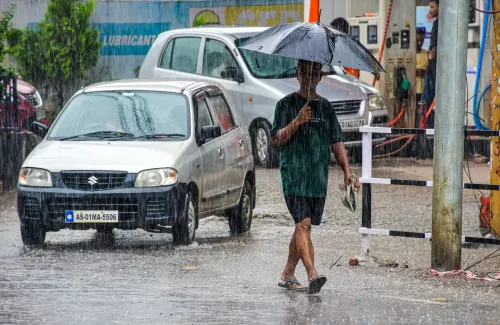
The India Meteorological Department's Dehradun office forecast, issued on 30 October, places Nainital, Champawat, Pithoragarh, Bageshwar and Chamoli under an orange alert. The agency warned of thunderstorms with lightning, hailstorms, and gusting winds reaching 40 to 50 kilometres per hour. Heavy rainfall is specifically anticipated in Pithoragarh, Bageshwar, Nainital and Champawat. The remaining districts of the state are under a yellow alert for thunder, lightning and strong winds.
An orange alert in India's weather grading system signals that authorities must be 'prepared to act' — one step below the red alert's 'take action' directive. For a terrain as unforgiving as Uttarakhand's, even that middle tier demands immediate mobilisation.
Dhami's Seven-Point Directive to District Machinery
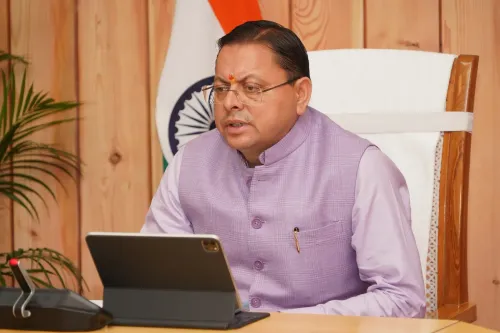
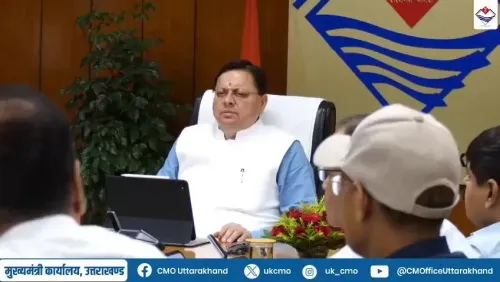
CM Dhami's instructions, relayed through the Chief Minister's Office, are specific and operational. All District Magistrates have been told that officers designated under the disaster management Incident Response System (IRS) and departmental nodal officers must remain on high alert. Officers from the Revenue, Rural Development and Panchayati Raj departments are directed to stay active in their respective field areas.
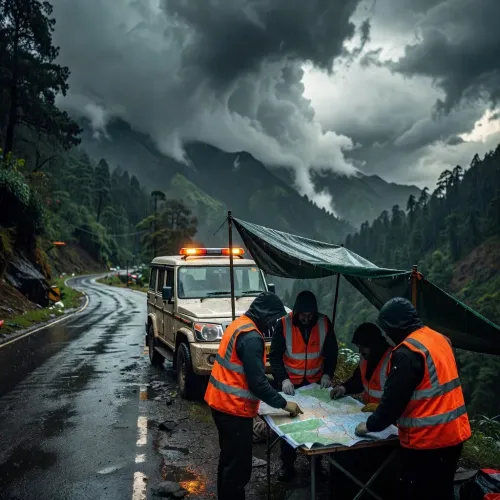
Police, SDRF, fire services and other rescue teams must stand ready with all necessary equipment. Should any road be blocked — a near-certainty during heavy rain in landslide-prone corridors — the concerned department must begin clearance operations immediately. Traffic on vulnerable stretches is to be regulated without delay.
Trekking Curbed, High-Altitude Tourism Restricted
Two of the Chief Minister's directives carry direct consequence for the tourism economy. First, trekking activities in mountain zones are to remain controlled until weather normalises. Second, and more broadly, the movement of tourists in high Himalayan areas is to be curtailed during heavy rain and adverse weather conditions.
Uttarakhand's late-October calendar still sees adventure tourists on popular trails — the Kedarkantha base, the Pin Bhaba pass, the Milam glacier approach. A weather-driven suspension, even temporary, is a standard precaution that state agencies have embedded into protocol since the catastrophic 2013 Kedarnath floods, which reshaped the state's entire disaster preparedness architecture and deepened its coordination with IMD.
Why Uttarakhand Treats Weather Warnings as Operational Orders
The state's Himalayan topography — steep gradients, fragile slopes, single-road access to dozens of villages — means that a gap of even a few hours between a weather warning and administrative response can be fatal. Landslides can sever national highways in minutes; flash floods in narrow gorges give almost no evacuation window.
The IRS framework now mandates that every district keep a pre-designated chain of command active during alerts, integrating revenue officials, block-level panchayat staff and emergency responders into a single, coordinated response tree. CM Dhami's message is emphatic: treat the IMD forecast as a call to action, not a bulletin to file.
The next 24 hours will test whether that preparation holds. All eyes are on the Kumaon hills.
Point of View
Public directive reflects a post-2013 governance posture in Uttarakhand where weather alerts are treated as political and administrative tests, not just technical bulletins — failure to act visibly can become a reputational liability overnight. The instruction to restrict trekking and high-altitude tourism also signals a calculated trade-off: short-term economic disruption over the risk of casualties that would dominate news cycles for weeks. Embedding the IRS framework into routine orange-alert responses is significant; it normalises a command structure originally designed for mega-disasters, making local officials rehearse it repeatedly. If the forecast materialises and the administration responds cleanly, it reinforces the state's argument that its disaster-management overhaul since Kedarnath has tangibly improved ground-level response.
NationPress
30 Oct 2026
Frequently Asked Questions
Which districts are under orange alert in Uttarakhand on 30 October 2026?
IMD Dehradun has placed Nainital, Champawat, Pithoragarh, Bageshwar and Chamoli under an orange alert on 30 October 2026, warning of thunderstorms, hailstorms and winds up to 50 km/h.
What does an orange alert mean in India's weather warning system?
An orange alert means authorities must 'be prepared to act.' It is the second-highest warning level, below red ('take action') and above yellow ('be updated/aware'), indicating significant weather disruption likely.
Has CM Dhami ordered trekking to be stopped in Uttarakhand?
Yes. CM Dhami has directed that trekking activities in mountain zones be controlled — not necessarily stopped permanently — until the weather normalises. Tourist movement in high Himalayan areas is also to be restricted during heavy rain and adverse conditions.
What is the Incident Response System (IRS) in Uttarakhand disaster management?
The IRS is a structured command framework under which designated officers at district and departmental level coordinate disaster response. CM Dhami has directed all IRS-designated officers to remain on high alert during the current weather warning.
What is Uttarakhand's history with disaster preparedness after 2013?
Following the catastrophic 2013 Kedarnath floods, Uttarakhand significantly expanded its disaster management framework, strengthened early-warning coordination with IMD, and institutionalised the IRS for district-level response — making weather-alert advisories a routine administrative protocol.