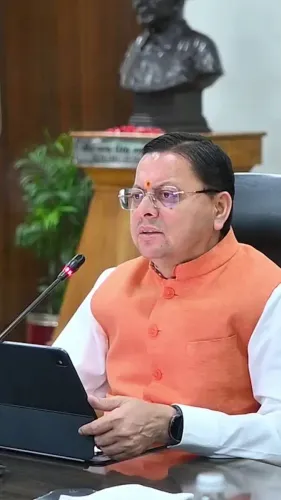
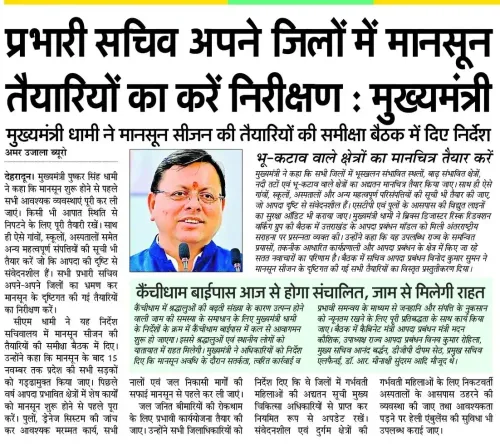
CM Dhami puts all Uttarakhand depts on 24-hr rain alert
Synopsis
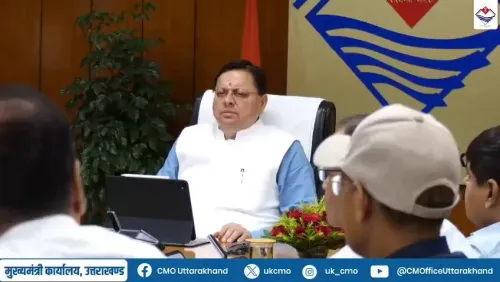
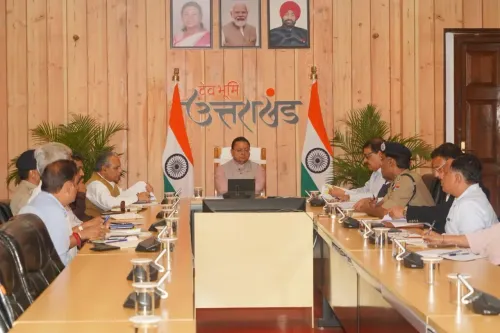
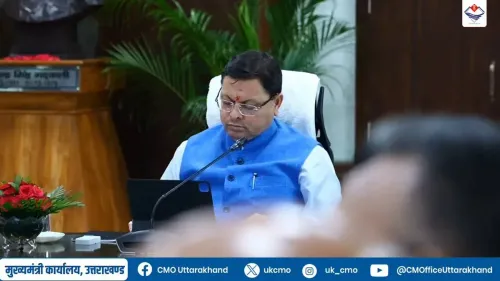
Chief Minister Pushkar Singh Dhami has directed all Uttarakhand government departments to stay on 24-hour alert amid active monsoon rains and disaster risk, invoking the state's post-2013 Kedarnath flood preparedness framework.
Key Takeaways
CM Pushkar Singh Dhami issued a 24-hour alert directive to all state departments on 29 July 2026 .
The order was prompted by active rain and disaster conditions across Uttarakhand .
The alert framework traces back to protocols established after the catastrophic 2013 Kedarnath floods .
Monsoon season in Uttarakhand runs June through September , bringing recurring risks of cloudbursts, landslides, and flash floods.
Key agencies on standby include district administrations and the State Disaster Response Force .
District rainfall reports and any SDRF deployments or evacuation orders are the next indicators to watch.
With monsoon fury bearing down on the Himalayas, Chief Minister Pushkar Singh Dhami has ordered every state department in Uttarakhand onto a 24-hour alert — a command that signals the administration is not waiting for disaster to knock first.
The Chief Minister's Office announced on Wednesday, 29 July 2026 that CM Dhami has directed all departments to remain on round-the-clock standby in view of the prevailing rain and disaster conditions across the state. The instruction, issued from Dehradun, covers the full machinery of state government — from revenue and public works to health and power.
Why the Himalayas demand this every year
Uttarakhand sits in one of the most disaster-prone corridors on earth. Every monsoon season — June through September — its steep valleys and fragile slopes face cloudbursts, flash floods, and landslides that can sever roads, cut off villages, and claim lives within minutes. The memory of the 2013 Kedarnath floods, which killed thousands and displaced hundreds of thousands, permanently reshaped how the state approaches monsoon preparedness.
In the aftermath of that catastrophe, Uttarakhand institutionalised annual monsoon alert protocols, making 24-hour departmental readiness a standard precautionary baseline — not an exceptional measure. CM Dhami's directive this week sits squarely within that post-2013 governance framework.
What the alert means on the ground
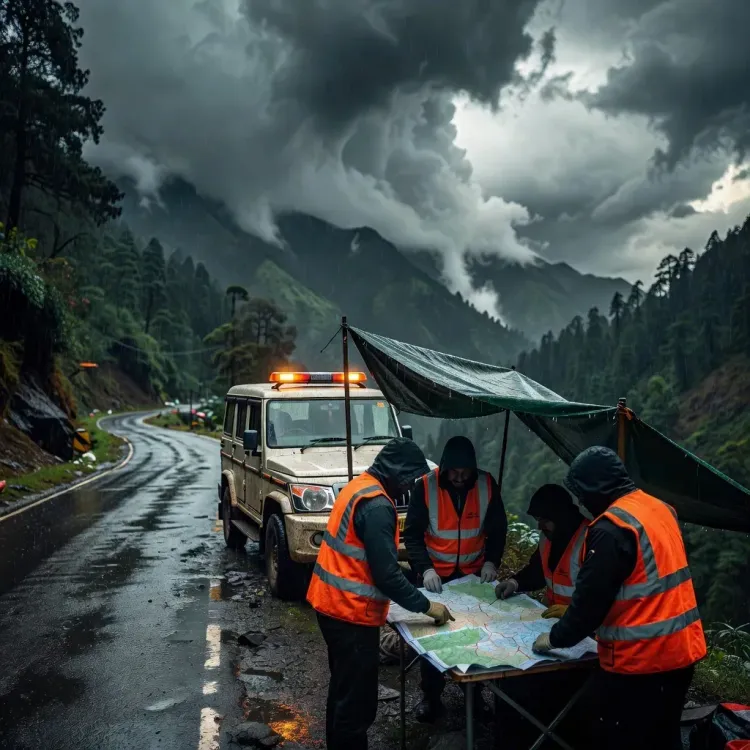
A state-wide alert of this kind typically activates coordination between district administrations, the State Disaster Response Force, and line departments responsible for roads, bridges, and essential services. Hill district residents — especially those in remote areas accessible by single roads — are the most directly affected when departments shift into active-monitoring mode.
Authorities will be watching district-wise rainfall reports closely. Any surge in intensity could trigger the next tier of response: deployment of rescue teams, evacuation orders, or emergency relief operations. The alert is the first line; what follows depends on what the clouds deliver.
In a state where a single cloudburst can transform a stream into a torrent in under an hour, keeping every department wired and waiting is not bureaucratic caution — it is the minimum the terrain demands.
Point of View
Since issuing it costs nothing while not issuing it, if disaster strikes, costs everything. It also reflects the lasting institutional shadow of the 2013 Kedarnath catastrophe, which forced successive Uttarakhand governments to treat 24-hour readiness as a non-negotiable baseline. The real test of the alert's value will come in execution: whether departments translate the order into pre-positioned resources and fast response, or whether it remains a paper directive. In an election-sensitive state with a BJP government keen to project administrative competence, visible disaster preparedness carries clear political utility alongside its genuine governance purpose.
NationPress
13 Sept 2026
Frequently Asked Questions
Why has CM Dhami put Uttarakhand on a 24-hour alert?
Chief Minister Pushkar Singh Dhami issued the alert due to active monsoon rain and worsening disaster conditions across Uttarakhand, directing all state departments to remain on round-the-clock standby.
Which departments are covered by the Uttarakhand 24-hour alert?
The directive covers all state government departments, which typically includes revenue, public works, health, power, and district administrations coordinating with the State Disaster Response Force.
Is Uttarakhand frequently hit by monsoon disasters?
Yes. Uttarakhand is one of India's most disaster-prone states during the monsoon season from June to September, facing recurring cloudbursts, flash floods, and landslides due to its mountainous terrain.
What happened in the 2013 Kedarnath floods?
The 2013 Kedarnath floods were among India's worst natural disasters, killing thousands and displacing hundreds of thousands, and led Uttarakhand to establish mandatory annual monsoon alert protocols for all departments.
What happens after a 24-hour alert is declared in Uttarakhand?
Authorities monitor district-wise rainfall reports and, if conditions worsen, can activate State Disaster Response Force teams, issue evacuation orders, and launch emergency relief operations.