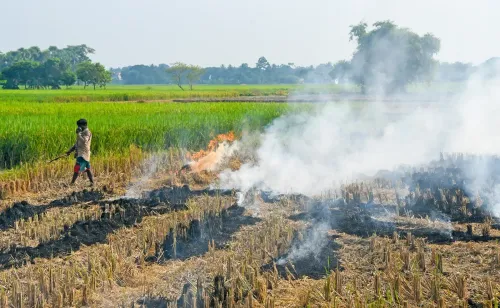
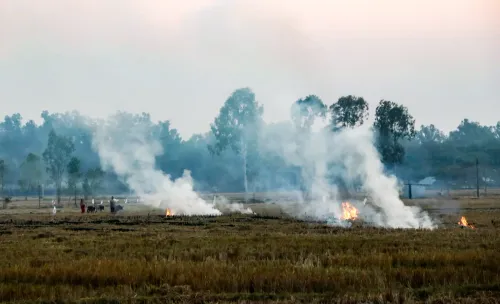
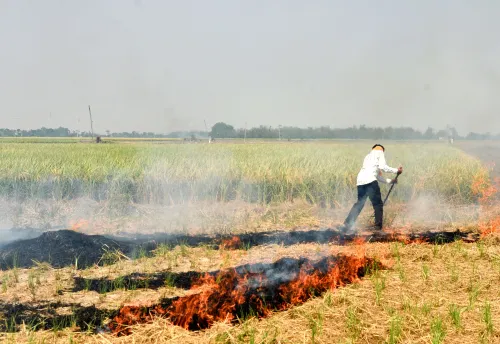
Punjab stubble burning: 1,007 cases recorded, Tarn Taran tops with 397
Synopsis
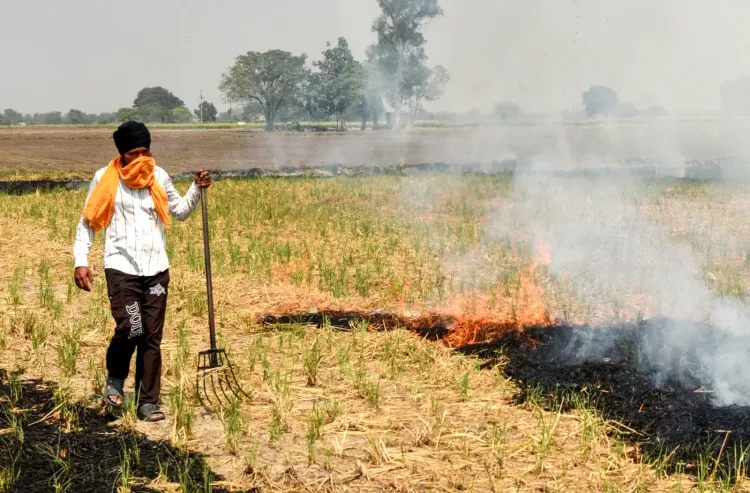
Punjab's stubble-burning tally has crossed 1,000 cases this paddy season, with a single district — Tarn Taran — accounting for nearly 4 in every 10 fires recorded statewide. Despite 246 FIRs and ₹17.50 lakh in penalties, zero prosecutions under the CAQM Act signal that enforcement muscle remains largely unused as the peak pollution window approaches.
Key Takeaways
Punjab has recorded 1,007 stubble-burning incidents during the paddy harvesting season, per the PPCB report up to 29 October 2026 .
Tarn Taran leads with 397 cases — nearly 39% of the state total — followed by Amritsar ( 171 ) and Ferozepur ( 104 ).
Of 778 locations inspected, burning was confirmed at 379 sites ; an additional 26 fields showed traces of burning.
Environmental compensation of ₹17.50 lakh was levied in 349 cases ; ₹13.15 lakh recovered so far.
246 FIRs registered and red entries made in revenue records of 297 fields ; however, prosecution under CAQM Act Section 14 stands at zero .
Mansa was the only district to report zero stubble-burning incidents in the current data.
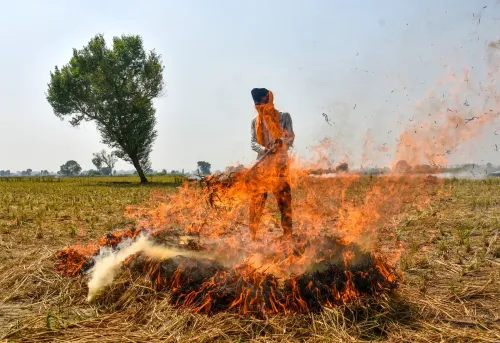
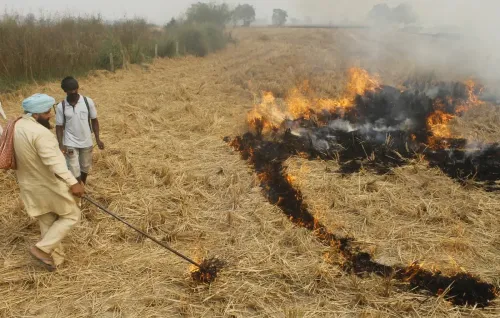
Punjab has logged 1,007 stubble-burning incidents during the ongoing paddy harvesting season, with Tarn Taran district leading the state tally at 397 cases — nearly 39% of all incidents recorded — according to a district-wise report by the Punjab Pollution Control Board (PPCB) covering cumulative data up to 29 October 2026.
District-wise Breakdown
Amritsar ranked second with 171 cases, followed by Ferozepur at 104 incidents. Together, these three districts accounted for 672 cases — over two-thirds of the state total — indicating a sharp geographic concentration of stubble burning in Punjab's central and border belt.
Gurdaspur recorded 72 cases, Kapurthala logged 63, and Bathinda reported 31. Fazilka followed with 28, Jalandhar with 22, and Faridkot with 21. At the lower end, Ludhiana recorded 6 incidents, Malerkotla 5, SBS Nagar 3, Rupnagar 2, and Pathankot 1. Mansa reported zero incidents in the current report.
Ground Inspections and Confirmed Burning
Of the 1,007 reported incidents, officials had physically inspected 778 locations. Stubble burning was confirmed at 379 of those sites following on-ground checks. An additional 26 fields were found to carry traces of stubble burning by Punjab Police Force (PPF) and nodal officers, the PPCB report stated.
Notably, the confirmed figure of 379 sites represents roughly 49% of inspected locations — suggesting that roughly half of all flagged fields yielded verified violations, pointing to a significant enforcement challenge on the ground.
Penalties, FIRs and Enforcement Action
Environmental compensation was imposed in 349 cases. The total penalty assessed stood at ₹17.50 lakh, of which ₹13.15 lakh had been recovered at the time of the report. A total of 246 FIRs have been registered in connection with stubble-burning incidents, and red entries have been made in the revenue records of 297 fields.
Authorities have issued 426 warnings and show-cause notices to nodal and supervisory officers. However, the report recorded zero instances of prosecution action under Section 14 of the Commission for Air Quality Management (CAQM) Act, filing of chargesheets, or suspension of officials — a gap that critics are likely to flag as enforcement falling short of deterrence.
Patiala District: A Closer Look
In Patiala district, 16 stubble-burning cases have been reported this season. Officials inspected 14 of those locations and confirmed burning at 7. Environmental compensation was imposed in 6 cases, amounting to ₹35,000, of which ₹20,000 has been recovered so far.
Why It Matters and What Comes Next
Stubble burning is a leading contributor to the toxic smog that blankets northern India each October and November, severely degrading air quality across Punjab, Haryana, and the National Capital Region. This comes amid mounting pressure from the Supreme Court and the CAQM on state governments to contain farm fires before the peak pollution window.
The PPCB data covers cumulative figures for the season and does not break down fresh incidents by district for the preceding 24-hour period. State authorities say inspections and enforcement measures are ongoing; whether the pace of penalty recovery and FIR prosecution accelerates in the remaining harvest weeks will determine how effective this season's crackdown ultimately proves.
Point of View
Suggesting that district-level enforcement capacity and farmer incentive structures have not materially changed. The zero-prosecution figure under the CAQM Act is the most telling number in the report: FIRs and red entries in revenue records are procedural steps, but Section 14 prosecutions carry real deterrent weight, and their absence signals that the crackdown remains administrative rather than punitive. With roughly half of inspected fields yielding confirmed violations, and the peak smog window still ahead, the pressure on Punjab — from the Supreme Court, the CAQM, and Delhi's air quality monitors — will only intensify over the next fortnight.
NationPress
30 Oct 2026
Frequently Asked Questions
How many stubble-burning cases have been recorded in Punjab this season?
Punjab has recorded 1,007 stubble-burning incidents during the ongoing paddy harvesting season, according to the PPCB district-wise report covering data up to 29 October 2026. The figures are cumulative for the season and do not reflect a single 24-hour period.
Which district has the highest stubble-burning cases in Punjab?
Tarn Taran tops the state list with 397 cases, accounting for nearly 39% of all incidents recorded across Punjab. Amritsar ranks second with 171 cases and Ferozepur third with 104 cases.
What penalties have been imposed for stubble burning in Punjab?
Environmental compensation has been imposed in 349 cases, totalling ₹17.50 lakh, of which ₹13.15 lakh had been recovered at the time of the report. Additionally, 246 FIRs have been registered and red entries made in the revenue records of 297 fields.
Has any official been prosecuted under the CAQM Act for stubble burning?
No. The PPCB report recorded zero instances of prosecution action under Section 14 of the Commission for Air Quality Management (CAQM) Act, zero chargesheets filed, and zero officials suspended — despite 426 warnings and show-cause notices issued to nodal and supervisory officers.
Why is stubble burning a serious concern in Punjab every year?
Stubble burning following the paddy harvest is a major source of the toxic smog that blankets Punjab, Haryana, and the National Capital Region each October–November, causing severe air quality deterioration. The Supreme Court and the CAQM have repeatedly directed state governments to curb farm fires during this window, making enforcement data a matter of national public interest.