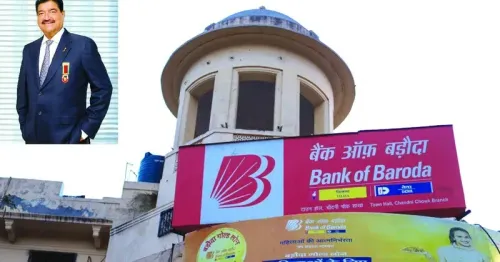
Swamy flags Abu Dhabi court verdict hitting Bank of Baroda in BR Shetty case

Synopsis
Veteran politician Dr. Subramanian Swamy has flagged an Abu Dhabi court verdict in the BR Shetty case that reportedly strikes Bank of Baroda, reviving scrutiny over Indian public sector banks' Gulf lending exposure following the collapse of NMC Health.
Key Takeaways
Subramanian Swamy flagged an Abu Dhabi court verdict in the B.R.
Shetty case on 20 November 2026 , linking it to impact on Bank of Baroda .
NMC Health , founded by B.R.
Shetty and listed in Abu Dhabi, collapsed in 2020 after billions in hidden debt were discovered.
Bank of Baroda had lending exposure to Shetty-linked entities during the Gulf investment boom of the 2010s.
Indian public sector banks have been navigating cross-border legal systems to recover Gulf-era loans, a process that is slow and jurisdiction-dependent.
Bank of Baroda's upcoming quarterly disclosures on provisions or write-offs will be a key indicator of the verdict's financial impact.
The case fits a broader pattern of Indian financial institutions facing overseas NPA challenges stemming from the 2010s Gulf lending rush.
A foreign court's ruling is now rattling one of India's oldest public sector lenders. Veteran politician Dr. Subramanian Swamy flagged on Friday, 20 November 2026, that an Abu Dhabi court verdict in the B.R. Shetty case has struck Bank of Baroda — drawing fresh attention to the long-running financial fallout from one of the Gulf's most spectacular corporate collapses.
Who is B.R. Shetty and why the Abu Dhabi courts matter
Bavaguthu Raghuram Shetty, the Indian-origin UAE-based businessman who built the healthcare giant NMC Health into an Abu Dhabi-listed empire, became the centre of one of the region's biggest fraud investigations after the company entered administration in 2020. Auditors discovered billions of dollars in hidden debt and accounting irregularities that had gone undetected for years. UAE courts have since been the principal arena for untangling the wreckage left behind.
NMC Health's collapse did not stay neatly offshore. Indian public sector banks, including Bank of Baroda, had extended credit to Shetty-linked entities during the Gulf investment boom of the 2010s, and those exposures quickly became a source of elevated non-performing assets in the early 2020s. The Abu Dhabi judiciary's latest move in the case now threatens to sharpen that pain.
Bank of Baroda's cross-border recovery gamble
Bank of Baroda, one of India's largest public sector banks with a significant international footprint, has been among the creditors navigating foreign legal systems to recover loans extended when Gulf-linked Indian businesses were expanding aggressively. The broader pattern is well-established: Indian financial institutions, burned by the 2010s lending rush, have spent the better part of this decade pursuing asset recovery across jurisdictions — from London to Dubai to Abu Dhabi.
The challenge is structural. Cross-border enforcement is slow, expensive, and subject to the domestic jurisprudence of host countries. Each new court ruling — in either direction — can materially shift the provisioning calculus for a bank's quarterly disclosures and trigger scrutiny from the Reserve Bank of India on overseas lending risk management.
Why Swamy's spotlight matters now
Dr. Swamy has a track record of flagging banking-sector stress and governance lapses in public sector institutions before they reach mainstream debate. His amplification of this verdict signals that the Abu Dhabi ruling could have consequences material enough to warrant parliamentary and regulatory attention — not just a footnote in a bank's next earnings call.
Investors and depositors in Bank of Baroda will be watching the bank's next quarterly disclosure closely for any revision in provisions or write-offs tied to Shetty-linked exposures. The RBI's posture on overseas lending risk guidance will be equally telling.
The BR Shetty saga has already rewritten the rulebook on due diligence for Indian banks eyeing Gulf-region credit. This latest Abu Dhabi chapter may force yet another reckoning — this time with real balance-sheet consequences landing in real time.
Point of View
Not Indian regulators, setting the pace. Dr. Swamy's public flag raises the political stakes: if a major public sector bank faces material losses from a foreign verdict, questions of due diligence and regulatory oversight will inevitably surface in Parliament. The RBI's guidance on cross-border credit risk and Bank of Baroda's next earnings disclosure now carry unusual significance. This episode also reinforces the long-standing argument for tighter sovereign risk and jurisdiction-risk frameworks before Indian state-owned banks extend large-ticket overseas credit.
NationPress
20 Nov 2026
Frequently Asked Questions
What is the Abu Dhabi court verdict in the BR Shetty case?
An Abu Dhabi court has issued a verdict in proceedings related to B.R. Shetty, the Indian-origin businessman whose companies including NMC Health collapsed amid fraud allegations in 2020. The specific details of the November 2026 ruling are still emerging, but it is reported to have consequences for Bank of Baroda.
How is Bank of Baroda connected to BR Shetty?
Bank of Baroda had lending exposure to entities linked to B.R. Shetty during the Gulf investment boom of the 2010s. After the collapse of NMC Health in 2020, the bank became one of the creditors pursuing cross-border legal recovery in UAE courts.
What happened to NMC Health?
NMC Health, the Abu Dhabi-listed healthcare group founded by B.R. Shetty, was placed into administration in 2020 after auditors uncovered billions of dollars in hidden debt and accounting irregularities. It became one of the largest corporate collapses in the Gulf region.
Why did Subramanian Swamy highlight this verdict?
Dr. Subramanian Swamy, a veteran politician known for flagging banking-sector governance issues, shared news of the verdict to draw attention to its potential impact on Bank of Baroda, a major Indian public sector bank.
What should Bank of Baroda investors watch for now?
Investors should monitor Bank of Baroda's next quarterly financial disclosures for any revision in provisions or write-offs tied to Shetty-linked Gulf exposures, and watch for any RBI commentary on overseas lending risk following the verdict.