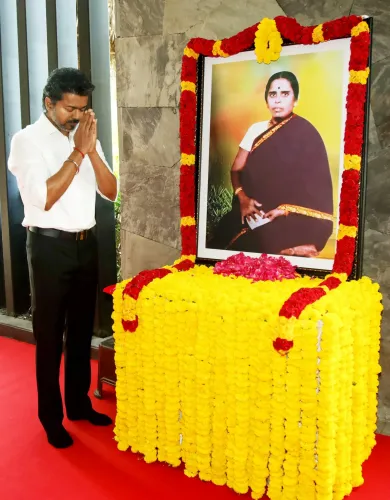
Tamil Nadu CMO honours Dr. Muthulakshmi Reddy on her birthday
Synopsis
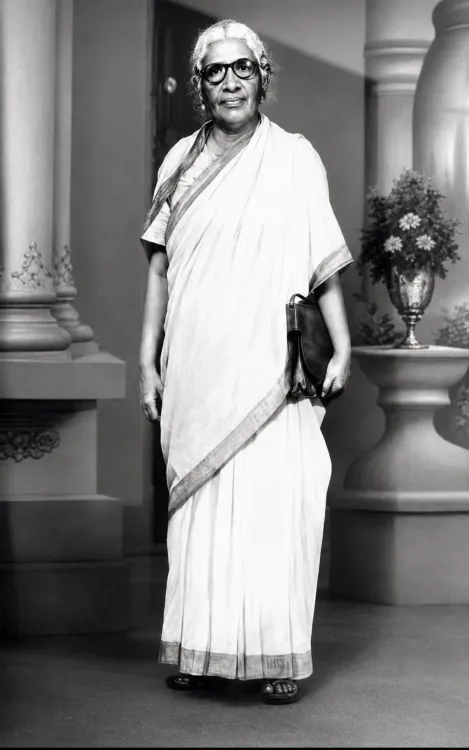
The Chief Minister's Office of Tamil Nadu paid tribute to Dr. Muthulakshmi Reddy on her birthday, honouring her as Tamil Nadu's first woman doctor, the first woman elected to the Madras Legislative Council in 1927, and the founder of Avvai Illam and the Adyar Cancer Institute.
Key Takeaways
Muthulakshmi Reddy was Tamil Nadu's first woman doctor and the first woman elected to the Madras Legislative Council in 1927 .
She founded Avvai Illam , a shelter for destitute women and children, and the Adyar Cancer Institute in Chennai.
Her advocacy contributed to the passage of the Child Marriage Restraint Act of 1929 , one of colonial India's earliest protections for girls.
The Chief Minister's Office of Tamil Nadu commemorated her on her birthday on 30 July 2026 .
Both institutions she founded — Avvai Illam and the Adyar Cancer Institute — remain operational today.
A trailblazer who cracked open the doors of medicine and legislature for Indian women a century ago, Dr. Muthulakshmi Reddy was remembered on her birthday — 30 July — by the Chief Minister's Office of Tamil Nadu, which paid tribute to her towering legacy of reform, institution-building, and selfless public service.
The post, shared on 30 July 2026, recalled that Dr. Muthulakshmi Reddy holds the twin distinction of being Tamil Nadu's first woman doctor and the first woman elected to the Madras Legislative Council — a historic feat she achieved in 1927. The tribute noted that she dedicated her entire life to women's education, rights, social advancement, and the welfare of the poor.
The institutions she built, the laws she shaped
Dr. Muthulakshmi Reddy did not stop at personal firsts. She channelled her influence into lasting brick-and-mortar legacies. Avvai Illam, the shelter she founded for destitute women and children, and the Adyar Cancer Institute, which she established to bring hope to cancer patients, remain active institutions in Chennai to this day — a century after her most consequential years.
Her legislative tenure was equally consequential. Dr. Reddy's sustained advocacy inside and outside the Madras Legislative Council contributed directly to the passage of the Child Marriage Restraint Act of 1929 — one of colonial India's earliest statutory protections for girls. She did not merely participate in the legislature; she weaponised it for social change.
Why Tamil Nadu keeps returning to this name
Tamil Nadu governments across generations have made a practice of publicly honouring early 20th-century reformers who advanced women's healthcare, education, and legal standing — figures whose work is woven into the state's self-image as a cradle of progressive social movements. Dr. Muthulakshmi Reddy sits at the very centre of that tradition: a doctor, a legislator, and an institution-builder rolled into one life.
The CMO's tribute closed with a line that carries its own quiet weight: her ideals, her work for women's progress, her humanitarian service, and her selfless dedication 'தலைமுறைகளைக் கடந்து என்றும் தமிழ் மண்ணில் நிலைத்திருக்கும்' — 'will endure across generations on Tamil soil, forever.'
That is not rhetoric. The Adyar Cancer Institute is still treating patients. Avvai Illam is still sheltering women. The proof of permanence is already in the present.
Point of View
The Adyar Cancer Institute, the Child Marriage Restraint Act), the CMO signals continuity with a reform tradition that predates Independence. In a political climate where women's empowerment is a contested terrain across Indian states, Tamil Nadu's consistent honouring of such pioneers functions as a soft assertion of regional distinctiveness. The real policy question the tribute quietly raises is whether the state will back the symbolism with fresh investment in the very institutions Dr. Reddy built.
NationPress
30 Jul 2026
Frequently Asked Questions
Who was Dr. Muthulakshmi Reddy?
Dr. Muthulakshmi Reddy was Tamil Nadu's first woman doctor and the first woman elected to the Madras Legislative Council in 1927. She was a pioneering social reformer who founded Avvai Illam for destitute women and children and the Adyar Cancer Institute in Chennai, and her advocacy helped shape the Child Marriage Restraint Act of 1929.
What is Avvai Illam?
Avvai Illam is a shelter for destitute women and children founded by Dr. Muthulakshmi Reddy. It continues to operate in Chennai as one of her enduring institutional legacies.
Who founded the Adyar Cancer Institute?
The Adyar Cancer Institute in Chennai was founded by Dr. Muthulakshmi Reddy to provide care and support for cancer patients. It remains one of India's prominent cancer care centres.
What was Dr. Muthulakshmi Reddy's role in the Child Marriage Restraint Act?
Dr. Muthulakshmi Reddy was a vocal advocate against child marriage during her tenure in the Madras Legislative Council. Her sustained campaigning contributed to the passage of the Child Marriage Restraint Act of 1929, one of colonial India's earliest legal protections for girls.
Why did the Tamil Nadu CMO post about Dr. Muthulakshmi Reddy?
The Chief Minister's Office of Tamil Nadu posted a tribute to Dr. Muthulakshmi Reddy on her birthday, 30 July, honouring her historic firsts and the institutions she built. Tamil Nadu governments have a consistent tradition of publicly commemorating early 20th-century social reformers who advanced women's rights and public health.