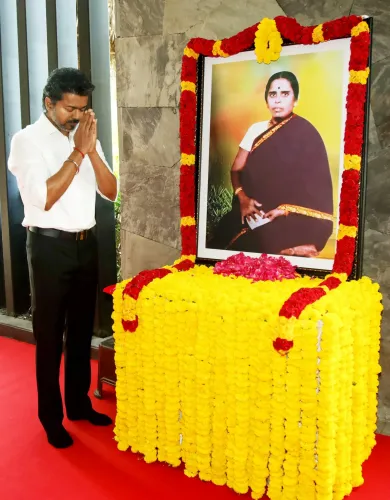
Tamil Nadu CMO pays tribute to Raja of Panagal on birth anniversary

Synopsis
The Tamil Nadu Chief Minister's Office paid tribute to Raja of Panagal, second Chief Minister of Madras Province and Justice Party co-founder, on his birth anniversary, honouring his landmark 1921 communal reforms and their lasting influence on the state's social justice tradition.
Key Takeaways
The Tamil Nadu Chief Minister's Office posted a birth anniversary tribute to Raja of Panagal on 9 July 2026 .
Raja of Panagal served as the second Chief Minister of Madras Province from 1921 to 1926 .
He was a co-founder of the Justice Party , established in 1916 to advance non-Brahmin interests in public life.
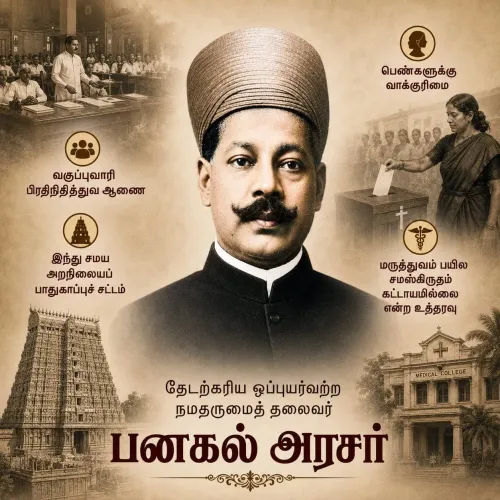
His administration issued the Communal Government Order of 1921 , introducing early reservations in education and government employment.
The tribute explicitly links his reforms to Periyar E.
Ramasamy's Self-Respect and social justice movements.
Tamil Nadu governments routinely invoke Justice Party leaders to affirm the state's commitment to the Dravidian tradition of social equity.
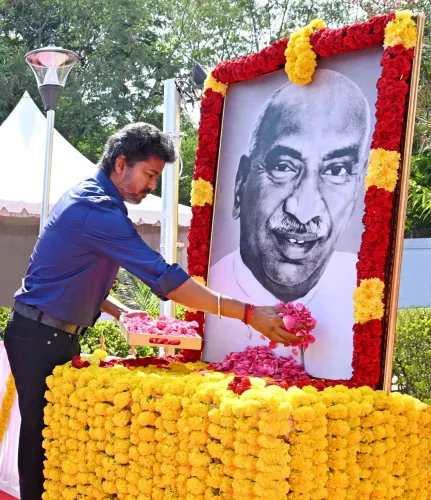
The Chief Minister's Office of Tamil Nadu on Thursday, 9 July 2026 paid homage to Raja of Panagal, the second Chief Minister of Madras Province, on his birth anniversary, honouring his foundational role in shaping the state's social justice tradition.
The post, shared in Tamil, reads: 'On the birth anniversary of Raja of Panagal, the second Chief Minister of Madras Province, I offer my respectful tribute. One of the founders of the Justice Party, he ensured equal opportunity for all. His progressive reforms laid a strong foundation for the Self-Respect and social justice movements later championed by Thanthai Periyar. His commitment to educational development and his people-centric vision of governance remain noble legacies that guide us even today. The glory of Raja of Panagal will endure forever in the history of social justice in Tamil Nadu!'
Context
Raja of Panagal, born Krishnaraja Tangirala Pantulu, served as Chief Minister of Madras Province from 1921 to 1926 under the Montagu-Chelmsford reforms framework. He was a prominent leader of the Justice Party, founded in 1916 to represent non-Brahmin communities who were largely excluded from public services and higher education during the colonial era. His administration is credited with issuing the landmark Communal Government Order of 1921, which introduced reservations in education and government employment — one of the earliest affirmative-action measures in Indian history.Policy Backdrop
The Justice Party formed the first non-Congress ministry in Madras Presidency, marking a decisive turn in the region's political history toward non-Brahmin assertion. The party's policies directly influenced Periyar E. V. Ramasamy, whose Self-Respect Movement of the late 1920s and 1930s deepened the campaign for caste equality and rationalism across Tamil society. The ideological thread running from the Justice Party through Periyar to the modern Dravidian movement is a cornerstone of Tamil Nadu's political identity and continues to inform the state's robust reservation framework.Stakeholders and Impact
Tamil Nadu's ruling parties — across administrations — have consistently invoked Justice Party leaders and early Dravidian reformers to reaffirm commitments to social equity and reservations. Non-Brahmin communities, Dalit groups, and education reformers regard Raja of Panagal's legacy as the institutional starting point for affirmative action in the region. Annual commemorations of such figures serve as markers of ideological continuity, signalling the government's alignment with the Dravidian tradition of social justice rather than announcing immediate legislative change.What's Next
Such commemorations in Tamil Nadu often precede or accompany policy announcements related to education, welfare, or reservation expansion around other Justice Party anniversaries. With the Dravidian social justice narrative remaining central to electoral politics in the state, further commemorative events and related policy articulations are likely in the months ahead — reinforcing the government's positioning on equity and inclusion as foundational governance values.Point of View
Placing the current administration squarely within the Dravidian social justice lineage that runs from the Justice Party through Periyar to modern reservation politics. By explicitly connecting Panagal's 1921 communal reforms to Periyar's Self-Respect Movement, the post constructs a seamless narrative of progressive continuity — a rhetorical move both DMK and AIADMK governments have employed for decades. Such tributes rarely produce immediate policy outcomes but serve as important legitimising gestures ahead of elections or policy debates around affirmative action. The invocation of foundational figures also reinforces Tamil Nadu's distinct political identity, which consistently prioritises social equity as a governance cornerstone.
NationPress
8 Oct 2026
Frequently Asked Questions
Who was the Raja of Panagal?
The Raja of Panagal was the second Chief Minister of Madras Province, serving from 1921 to 1926. He was a co-founder of the Justice Party, which championed non-Brahmin rights, and his administration issued the Communal Government Order of 1921 introducing reservations in education and public employment.
What was the Justice Party in Tamil Nadu?
The Justice Party was a political organisation founded in 1916 to represent non-Brahmin communities in Madras Presidency. It formed the first non-Congress ministry in the region and laid the ideological groundwork for the later Dravidian movement led by Periyar E. V. Ramasamy.
What is the Communal Government Order of 1921?
The Communal Government Order of 1921 was issued under the Raja of Panagal's administration in Madras Province. It introduced proportional reservations for different communities in government services and education, making it one of the earliest formal affirmative-action measures in Indian history.
How is Raja of Panagal connected to Periyar?
Raja of Panagal's Justice Party reforms created the institutional and ideological foundation on which Periyar E. V. Ramasamy built his Self-Respect Movement in the late 1920s. Both figures are regarded as pillars of Tamil Nadu's social justice tradition, with Periyar deepening the anti-caste agenda Panagal's party had initiated.
Why does the Tamil Nadu government regularly pay tribute to Justice Party leaders?
Tamil Nadu's ruling parties invoke Justice Party leaders to affirm their ideological continuity with the Dravidian tradition of social equity and reservations. These tributes serve as political markers reinforcing the government's commitment to non-Brahmin and Dalit welfare, a central pillar of electoral politics in the state.