CM Vijay tells Nilekani panel: scrap NEET, use Class 12 marks
Synopsis
Chief Minister C. Joseph Vijay formally demanded the abolition of NEET and all similar exams before the Nandan Nilekani-led Union task force on 4 November 2026, backing the call with the Tamil Nadu assembly's unanimous August 2026 anti-NEET resolution and pressing for Class 12 marks as the sole admission criterion.
Key Takeaways
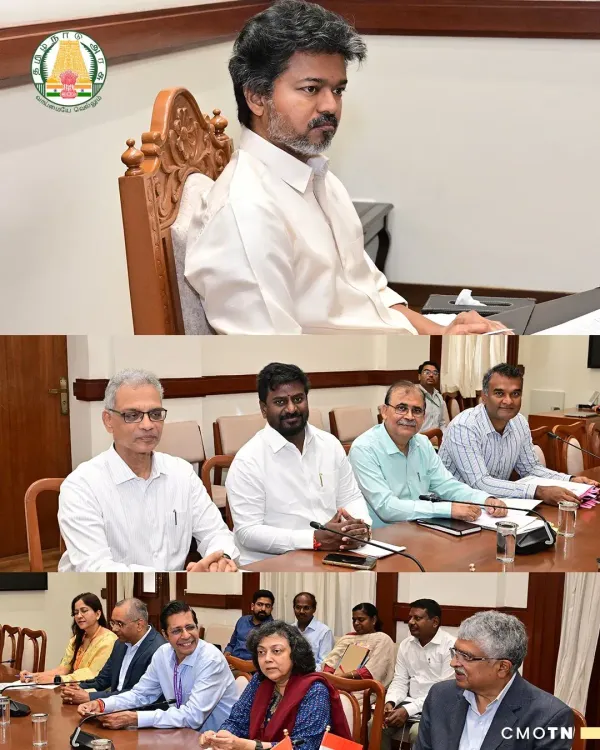
Joseph Vijay met the Union Government's High Powered Task Force on Examination Reforms chaired by Nandan Nilekani at the Tamil Nadu Secretariat on 4 November 2026 .
Tamil Nadu formally demanded the complete abolition of NEET and all similar centralised entrance examinations for higher education admissions.
The state pushed for Class 12 board examination marks to be the sole criterion for admissions to medical and other higher education courses.
The government cited the Tamil Nadu Legislative Assembly's unanimous resolution of 11 August 2026 opposing NEET as democratic backing for its position.
Tamil Nadu's anti-NEET campaign stretches back to the exam's 2016 introduction , including a 2017 legislative resolution and a 2021 state bill seeking Class-12-based admissions.
The Nilekani task force's recommendations will feed into Union Government decisions on the future of centralised entrance tests for lakhs of aspirants nationwide.
A central government task force walked into the Tamil Nadu Secretariat on Wednesday, 4 November 2026 — and walked out with an unambiguous message from Chief Minister C. Joseph Vijay: abolish NEET entirely, for every course, no exceptions. The High Powered Task Force on Examination Reforms, chaired by Nandan Nilekani, met CM Vijay at the Secretariat to gather state inputs ahead of its national recommendations on the future of centralised entrance tests.
Tamil Nadu's demand, stated plainly
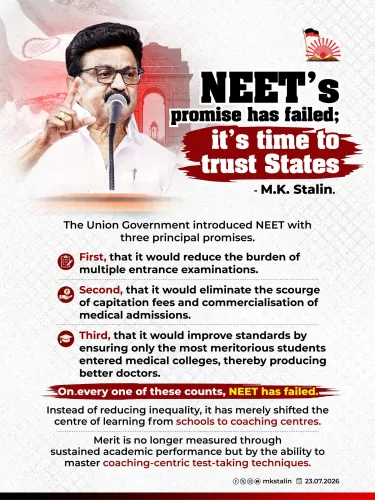
The government's position, as conveyed during the meeting, left no room for ambiguity. Tamil Nadu formally reiterated its opposition to NEET — the National Eligibility cum Entrance Test — and to any NEET-like centralised examination for higher education admissions. In its place, the state pushed for a single criterion: Class 12 board examination marks. The demand extended beyond medical seats to cover all higher education courses where such standardised tests are currently used or proposed.
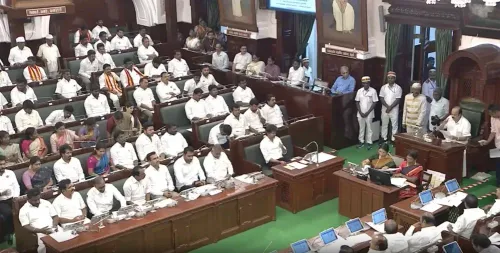
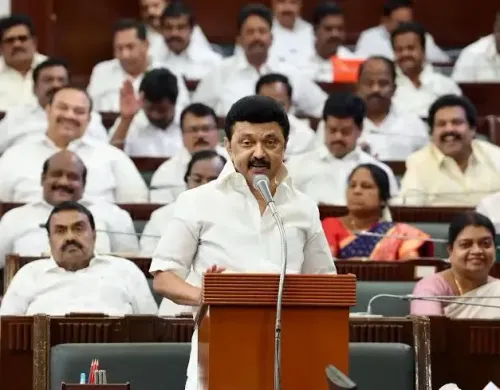
To anchor its stand, the state pointed to the Tamil Nadu Legislative Assembly's unanimous resolution passed on 11 August 2026 opposing NEET — the latest in a series of legislative moves the state has made over nearly a decade. The resolution's unanimous character, cutting across party lines, was presented as democratic mandate, not merely a ruling-party preference.
A decade of resistance, hardening into policy
NEET was introduced in 2016 as a standardised national gateway for admissions to medical and dental colleges. Tamil Nadu pushed back almost immediately, arguing that rural students and state-board students — who study a different curriculum — are structurally disadvantaged by a test designed around CBSE patterns. The state legislature first passed a resolution against NEET in 2017, and in 2021 passed a bill seeking to replace NEET with Class 12 marks for medical admissions. That bill awaited central assent — a waiting game that has defined Tamil Nadu's frustration with the federal architecture around education.
Nandan Nilekani, the co-founder of Infosys who built India's Aadhaar identity infrastructure as the first chairman of UIDAI, now leads the Union Government's examination reform effort. His task force is gathering state positions before framing recommendations — which makes this meeting a formal input into a process with real consequences for lakhs of medical aspirants.
What hangs in the balance for state-board students
The stakes are concrete. Every year, tens of thousands of Tamil Nadu's state-board students compete against CBSE-trained peers in a test that the state argues is not syllabus-neutral. For families in smaller towns and rural districts — where coaching infrastructure for NEET is thin — the exam has functioned as an effective barrier. Tamil Nadu's argument is not merely ideological federalism; it is a downstream equity claim about which students actually reach a medical seat.
The Nilekani task force's eventual recommendations, and the Union Government's response to them, will determine whether this decade of Tamil Nadu's legislative and legal pressure translates into actual policy change — or simply adds another chapter to a long standoff. The state has now put its demand formally on the record. The next move belongs to New Delhi.
Point of View
The Vijay government frames federalism and equity as inseparable, making it politically costly for any central panel to dismiss the state's position as partisan. The choice of Class 12 marks as the counter-proposal is deliberate: it shifts the conversation from 'exemption' to 'replacement', signalling that Tamil Nadu is not asking to opt out quietly but to reshape national policy. How the Nilekani committee weighs this against states with weaker school-exam infrastructure will reveal whether examination reform becomes a genuine federal negotiation or another top-down directive.
NationPress
4 Nov 2026
Frequently Asked Questions
What did Tamil Nadu CM Joseph Vijay tell the Nandan Nilekani task force?
CM C. Joseph Vijay told the High Powered Task Force on Examination Reforms that Tamil Nadu firmly opposes NEET and all similar centralised entrance exams, and demanded their complete abolition. He called for Class 12 board marks to be the basis for admissions to medical and other higher education courses.
What is the Nandan Nilekani examination reforms task force?
It is a High Powered Task Force constituted by the Union Government and chaired by Nandan Nilekani — co-founder of Infosys and former UIDAI chairman — to review and recommend reforms to India's examination system, including centralised tests like NEET.
When did the Tamil Nadu assembly pass a resolution against NEET in 2026?
The Tamil Nadu Legislative Assembly passed a unanimous resolution opposing NEET on 11 August 2026 . This was cited by the state government during its meeting with the Nilekani task force on 4 November 2026.
Why does Tamil Nadu oppose NEET?
Tamil Nadu argues that NEET disadvantages state-board students — especially rural and economically weaker students — because the exam is aligned with the CBSE curriculum rather than the state syllabus. The state contends that Class 12 marks provide a fairer, more inclusive admission criterion.
What happens after the Nilekani task force meets Tamil Nadu?
The task force is gathering inputs from states and stakeholders before framing its recommendations to the Union Government. Those recommendations could influence whether NEET is retained, reformed, or replaced — a decision that would affect medical admissions for lakhs of students across India.