Tamil Nadu Assembly passes NEET abolition resolution; BJP walks out
Synopsis
Tamil Nadu's Assembly has once again passed a resolution demanding NEET's abolition — but this time, the political stakes are sharper. With a 2021 bill already blocked by withheld presidential assent, the state's latest move is as much a constitutional confrontation with the Centre as it is an education policy debate.
Key Takeaways
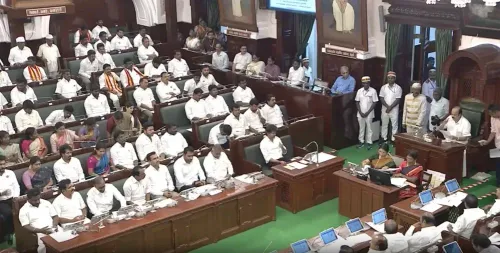
The Tamil Nadu Assembly adopted a resolution on 11 August urging the Centre to abolish NEET for undergraduate medical admissions.
State Health Minister K.G.
Arunraj moved the resolution, seeking amendments to the National Medical Commission Act, 2019 and related central laws.
Bhojarajan opposed the resolution and walked out before the vote.
The resolution cited alleged NEET irregularities, proliferation of costly coaching centres, and student deaths as key reasons for abolition.
A similar bill passed by the Assembly in 2021 was reserved for presidential consideration and was eventually denied assent.
Tamil Nadu seeks to restore medical admissions based on Class 12 marks rather than a centralised entrance test.
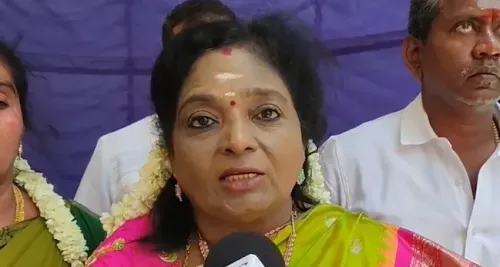
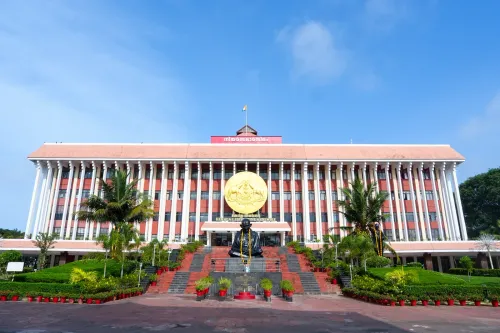
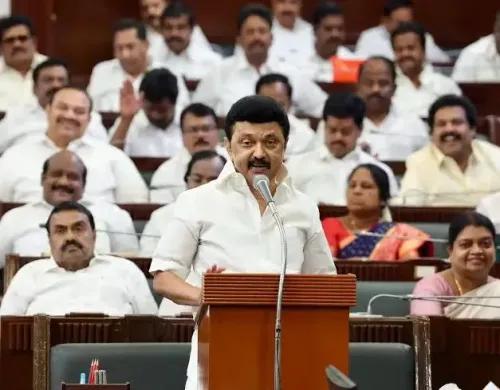
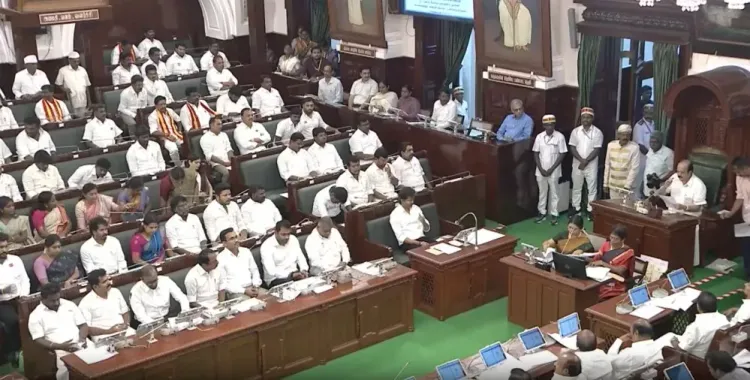
The Tamil Nadu Legislative Assembly on Tuesday, 11 August adopted a resolution urging the Centre to abolish the National Eligibility-cum-Entrance Test (NEET) for undergraduate medical admissions, renewing the state's long-standing battle against the centralised entrance examination. The lone Bharatiya Janata Party (BJP) member in the House, MLA M. Bhojarajan, opposed the resolution and staged a walkout before it was put to vote.
What the Resolution Demands
Moving the resolution, state Health, Medical Education and Family Welfare Minister K.G. Arunraj called upon the Centre to amend relevant central legislation so that Tamil Nadu could admit students to medical courses based on their Class 12 examination marks. The resolution specifically sought amendments to the National Medical Commission Act, 2019, the National Commission for Indian System of Medicine Act, 2020, the National Commission for Homoeopathy Act, 2020, and other related central enactments governing medical admissions.
Grounds Cited Against NEET
The resolution argued that NEET is contrary to the principles of social justice and equality, and infringes upon states' rights in matters of medical education. It cited alleged irregularities in the conduct of the examination, the rapid proliferation of expensive coaching centres, and the deaths of students as the primary reasons for seeking abolition. The government contended that NEET has disproportionately disadvantaged students from rural and economically weaker backgrounds, particularly those educated in Tamil medium schools and those without access to costly private coaching. It further argued that the examination has steadily shifted students' focus away from the regular school curriculum towards specialised entrance test preparation.
A Pattern of Persistent Opposition
Tuesday's resolution is not Tamil Nadu's first legislative push against NEET. The Assembly has adopted similar resolutions seeking exemption from the examination on previous occasions. Notably, in 2021, when the Dravida Munnetra Kazhagam (DMK) was in power, the Assembly passed the Tamil Nadu Admission to Undergraduate Medical Degree Courses Bill, which sought to exempt the state from NEET. The legislation was subsequently reserved for the consideration of the President, and presidential assent was eventually withheld — effectively blocking the state's attempt to bypass the central framework.
What Happens Next
With this latest resolution, the state government has formally renewed its demand for a legal framework that would allow Tamil Nadu to determine medical admissions independently on the basis of Class 12 marks. The resolution now awaits a response from the Centre, which has historically resisted state-level exemptions from NEET. Whether the Union government will take up the proposed amendments to the relevant acts remains to be seen, particularly given the BJP's continued support for the centralised examination system.
Point of View
At its core, a federalism dispute dressed in education policy language. The state has tried this route before — the 2021 bill went all the way to Rashtrapati Bhavan and came back unsigned. Passing another resolution without a changed political calculus at the Centre risks being symbolic rather than substantive. What is worth watching is whether other non-BJP states align behind Tamil Nadu's position, because a coalition of states demanding amendments to the National Medical Commission Act would carry far more constitutional weight than a single resolution. The NEET debate also exposes a deeper tension: the Centre's push for standardisation versus states' legitimate concerns about equity for rural, vernacular-medium students — a contradiction no resolution alone can resolve.
NationPress
25 Sept 2026
Frequently Asked Questions
What did the Tamil Nadu Assembly resolution on NEET demand?
The resolution, adopted on 11 August, urged the Centre to abolish NEET for undergraduate medical admissions and to amend the National Medical Commission Act, 2019, and related central laws so that Tamil Nadu can admit students based on Class 12 examination marks.
Why does Tamil Nadu oppose NEET?
Tamil Nadu argues that NEET violates principles of social justice and equality, disproportionately disadvantages rural and economically weaker students — especially those from Tamil medium schools — and has fuelled a costly private coaching industry. The state also cited alleged irregularities in the exam and deaths of students linked to NEET pressure.
What happened to Tamil Nadu's earlier attempt to scrap NEET?
In 2021, the Assembly passed the Tamil Nadu Admission to Undergraduate Medical Degree Courses Bill seeking a NEET exemption. The legislation was reserved for the President's consideration, and presidential assent was ultimately withheld, preventing it from becoming law.
Why did the BJP MLA walk out of the Assembly?
BJP MLA M. Bhojarajan opposed the NEET abolition resolution and staged a walkout before it was put to vote, reflecting the BJP's broader support for NEET as a standardised national entrance examination.
What are the next steps after the resolution is adopted?
The resolution will be forwarded to the Centre, which will decide whether to take up amendments to the relevant central acts. Given the BJP-led Union government's consistent support for NEET, the Centre's response is expected to be the key determinant of whether this resolution advances beyond a symbolic legislative statement.