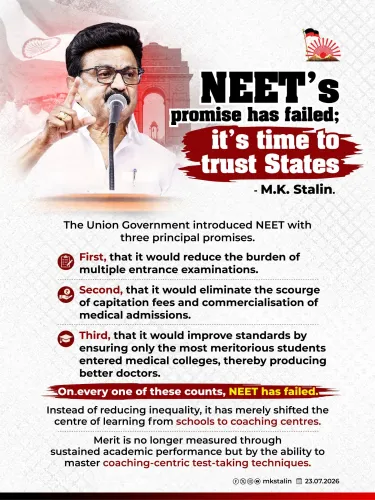
Tamil Nadu Health Minister renews NEET opposition, vows better govt hospital care
Synopsis
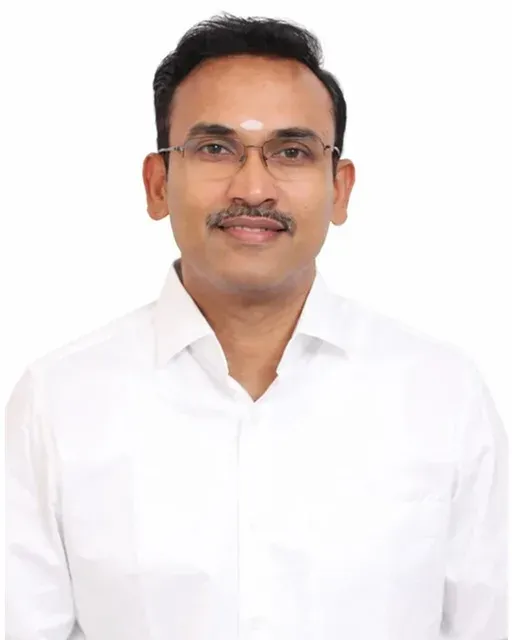
Tamil Nadu's new Health Minister Dr K.G. Arunraj used his very first official review — held at his own alma mater, Madras Medical College — to restate the state's uncompromising opposition to NEET and signal a patient-first overhaul of government hospitals. Two distinct battles, one opening statement.
Key Takeaways
Tamil Nadu Health Minister Dr K.G.
Arunraj reiterated the state's opposition to NEET on 20 May 2025 at his first official review meeting.
The review was held at Madras Medical College (MMC) , Chennai — the minister's own alma mater.
Arunraj described NEET as a system that ‘goes against the rights of states’ and disproportionately affects students from poor and disadvantaged backgrounds .
Tamil Nadu has passed assembly bills seeking a NEET exemption multiple times; none have received Presidential assent .
The minister directed Health Department officials to prioritise patient experience , cleaner facilities, and higher treatment standards in government hospitals.
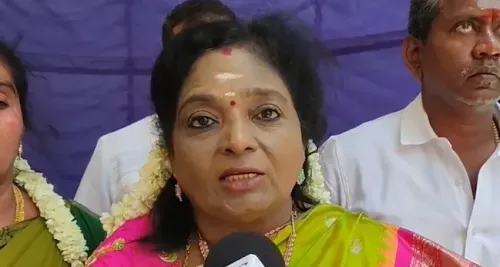
Tamil Nadu Health Minister Dr K.G. Arunraj on Wednesday, 20 May firmly restated the state government's opposition to the National Eligibility-cum-Entrance Test (NEET) at his first official review meeting at Madras Medical College (MMC) in Chennai, calling the centrally administered exam a threat to state autonomy and a barrier for students from economically weaker sections. The minister also laid out a clear healthcare agenda centred on improving patient experience in government hospitals across Tamil Nadu.
NEET Opposition: The State's Unchanged Stand
Dr Arunraj left no room for ambiguity on where the Dravida Munnetra Kazhagam (DMK)-led government stands. “We have repeatedly made our position clear. We are not in favour of NEET, and we continue to oppose it. It goes against the rights of states and affects students from poor and disadvantaged backgrounds,” he said.
The minister also criticised what he described as attempts to impose uniformity on a diverse nation through centralised systems, arguing that education policy must account for the distinct social and educational realities of each state. Tamil Nadu has maintained this position across successive governments, contending that NEET disproportionately disadvantages rural students and those from lower-income households who lack access to expensive coaching.
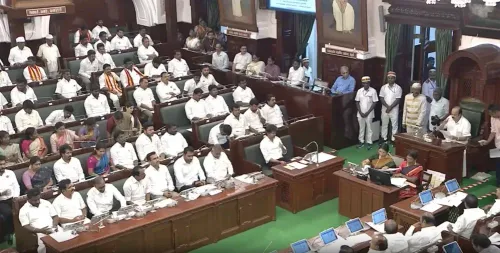
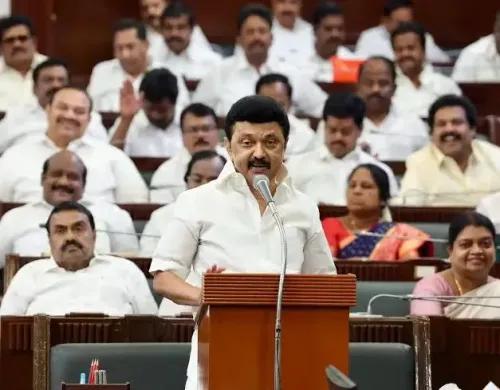
This comes amid a broader, years-long legislative push by Tamil Nadu — the state assembly has passed bills seeking exemption from NEET on multiple occasions, though those measures have not received Presidential assent. The issue remains one of the sharpest fault lines between Chennai and the Centre on education policy.
First Review at Alma Mater MMC
The review meeting at Madras Medical College carried personal significance for Dr Arunraj, who completed his own medical education at the institution. “MMC is my college. I studied medicine here and I am happy to return here,” he said, noting the occasion with evident pride.
The meeting brought together senior officials and healthcare personnel from the Tamil Nadu Health Department to assess priorities for the state's public health infrastructure.
Healthcare Vision: Patient Experience at the Centre
Beyond the political debate over medical admissions, Dr Arunraj used the platform to articulate the government's healthcare priorities. He instructed officials to focus on raising treatment standards and creating a more welcoming environment in government hospitals.
“The final outcome that matters is the quality of care given to patients. Healthcare and a positive hospital experience are basic human rights. We want people to have greater confidence in government hospitals and feel comfortable seeking treatment in clean and efficient environments,” he said.
The minister called on doctors and department officials to cooperate fully in implementing the government's healthcare agenda and rebuilding public trust in state medical institutions — a goal that has taken on renewed urgency as patient footfall in government facilities remains a persistent policy concern.
What to Watch Next
With Dr Arunraj now formally in charge of the Health Department, attention will turn to whether the government tables fresh legislative or legal action on NEET, and how quickly its hospital-improvement directives translate into measurable changes on the ground. Industry observers and patient advocacy groups are likely to track both fronts closely in the months ahead.
Point of View
With limited traction at the Centre. The more consequential signal from his first review may actually be the healthcare agenda: government hospital quality is a bread-and-butter issue that affects millions of Tamil Nadu residents daily, yet it rarely gets the same headline space as the NEET debate. If the patient-experience push comes with measurable targets and accountability mechanisms, it could matter more on the ground than the ongoing constitutional standoff over medical admissions. The real test for the new minister is whether he can deliver on both fronts simultaneously — or whether NEET politics ends up crowding out the harder, quieter work of fixing public health infrastructure.
NationPress
27 Sept 2026
Frequently Asked Questions
Why does Tamil Nadu oppose NEET?
Tamil Nadu argues that NEET undermines state autonomy over education and disproportionately disadvantages rural students and those from economically weaker backgrounds who lack access to expensive coaching. The state has passed assembly bills seeking exemption from NEET on multiple occasions, though none have received Presidential assent.
What did Health Minister Dr K.G. Arunraj say about NEET?
Dr Arunraj said the state government remains firmly opposed to NEET, calling it a system that ‘goes against the rights of states and affects students from poor and disadvantaged backgrounds.’ He made the remarks at his first official review meeting at Madras Medical College on 20 May 2025.
What healthcare reforms did the minister announce?
Dr Arunraj directed Health Department officials and doctors to prioritise patient welfare, raise treatment standards, and create cleaner, more welcoming environments in government hospitals. He described quality healthcare and a positive hospital experience as basic human rights.
What is the significance of the review being held at Madras Medical College?
Madras Medical College is Dr Arunraj's own alma mater, where he completed his medical education. Holding his first official review there carried personal significance, and the minister acknowledged it publicly during the meeting.
What happens next on the NEET issue in Tamil Nadu?
Tamil Nadu is expected to continue pressing its case against NEET through legislative and legal channels. With a new minister now formally in charge, observers will watch whether the government tables fresh action or pursues the matter through the courts or in consultations with the Centre.