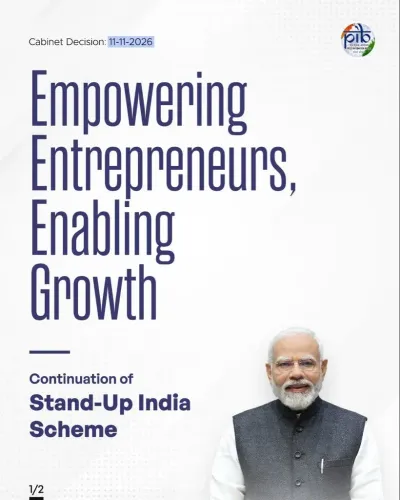
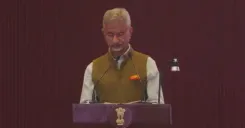
Amit Shah Hails Cabinet Nod to Extend Stand-Up India Scheme
Synopsis
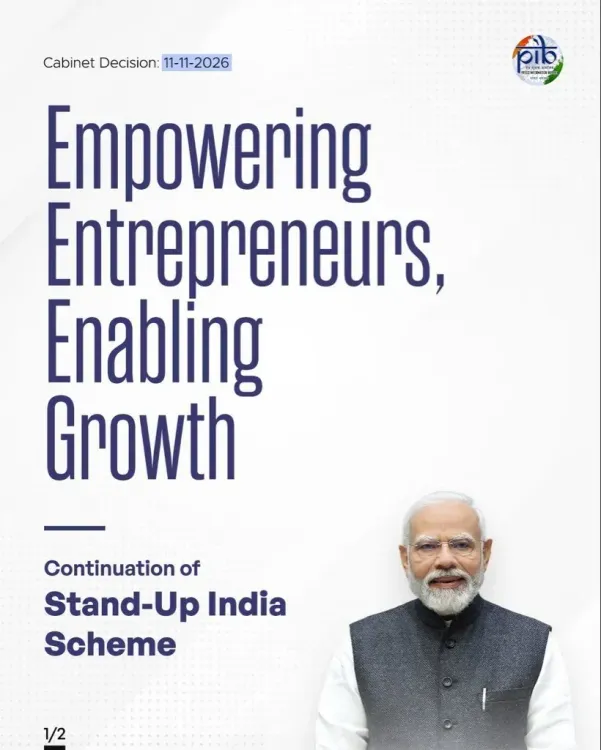
The Union Cabinet has approved a five-year extension of the Stand-Up India Scheme, retaining bank loans of ₹10 lakh to ₹1 crore for SC/ST and women entrepreneurs, with a fresh target of 2.5 lakh new enterprises. Home Minister Amit Shah linked the decision to PM Modi's Viksit Bharat vision.
Key Takeaways
The Union Cabinet has approved a five-year extension of the Stand-Up India Scheme , continuing support for SC/ST and women entrepreneurs.
The scheme offers term loans and composite loans from ₹10 lakh to ₹1 crore for greenfield business ventures.
The renewed phase sets a target of 2.5 lakh new enterprises to be supported over five years.
Originally launched on 5 April 2016 , Stand-Up India has operated for a decade alongside schemes like Mudra Yojana and PMEGP.
Home Minister Amit Shah linked the extension to PM Modi 's Viksit Bharat vision of inclusive economic growth.
Progress will be monitored through disbursement and repayment data reviewed by the Department of Financial Services .
A decade after its launch, Stand-Up India is getting five more years — and the Union Cabinet's approval signals that targeted credit for SC, ST, and women entrepreneurs remains a cornerstone of India's inclusive-growth agenda. Union Home Minister Amit Shah welcomed the decision on Wednesday, 11 November 2026, framing it as a direct expression of Prime Minister Narendra Modi's Viksit Bharat vision.
What the five-year extension means for 2.5 lakh entrepreneurs
At its core, Stand-Up India does one thing: it puts institutional bank credit — term loans and composite loans ranging from ₹10 lakh to ₹1 crore — within reach of first-generation entrepreneurs from Scheduled Caste, Scheduled Tribe communities and women who might otherwise never cross a bank's threshold. The Cabinet's renewed mandate sets a fresh target of 2.5 lakh new enterprises over the next five years.
Shah described the move as 'fulfilling the entrepreneurial dreams of people from the SC and ST communities and women,' adding that the scheme 'fires up India's growth journey with new energy.' The loan range — unchanged from the original design — ensures the scheme stays accessible to genuinely greenfield, micro-to-small ventures rather than drifting toward larger established businesses.
From 2016 launch to a decade-long credit intervention
The scheme was first launched on 5 April 2016 to plug a stubborn gap: formal credit had long flowed unevenly, bypassing historically underrepresented communities despite their entrepreneurial energy. By anchoring loans directly to scheduled commercial banks and tying disbursements to greenfield enterprise creation, the scheme built a measurable, auditable pipeline — one that successive reviews have retained without altering the basic eligibility framework.
It sits within a broader ecosystem of self-employment programmes — alongside Pradhan Mantri Mudra Yojana and the Prime Minister's Employment Generation Programme (PMEGP) — but it is unique in its explicit, legally-defined focus on SC/ST and women borrowers for greenfield ventures. That specificity is both its political signature and its operational discipline.
The 2.5 lakh enterprise target — and what comes next
The number to watch is the 2.5 lakh new enterprise milestone. Progress will hinge on how effectively the Department of Financial Services tracks loan disbursement rates, enterprise survival, and repayment health through mid-term reviews. Past extensions have shown that setting a headline target sharpens accountability at the branch-banking level — where the rubber meets the road for a first-time SC or ST borrower walking into a public-sector bank.
Whether the fresh five-year phase comes with updated operational guidelines or revised performance metrics remains to be confirmed by the government in formal notifications. What is clear is the political signal: inclusive entrepreneurship is not a footnote to Viksit Bharat — it is billed as one of its engines.
Five more years, 2.5 lakh new enterprises, one clear mandate: the government is betting that the most durable route to an inclusive economy runs straight through the ambitions of India's most underserved would-be founders.
Point of View
ST, and women communities is both a welfare imperative and a growth multiplier. The 2.5 lakh enterprise target gives the scheme a headline KPI that can be tracked, publicised, and campaigned on — a pattern evident in successive Mudra and PMEGP milestones. Amit Shah's framing of the extension as central to Viksit Bharat signals that inclusive entrepreneurship will be front-loaded in the government's economic narrative heading into the second half of the decade. The real test will be in disbursement quality and enterprise survival rates, not just loan numbers.
NationPress
11 Nov 2026
Frequently Asked Questions
What is the Stand-Up India Scheme?
Stand-Up India is a central government scheme launched on 5 April 2016 that provides bank loans between ₹10 lakh and ₹1 crore to SC/ST and women entrepreneurs for setting up greenfield enterprises.
Why has Stand-Up India been extended for five more years?
The Union Cabinet approved the five-year extension to continue providing institutional credit access to SC/ST and women borrowers, with a fresh target of creating 2.5 lakh new enterprises as part of the Viksit Bharat agenda.
Who is eligible for a Stand-Up India loan?
Borrowers from Scheduled Caste and Scheduled Tribe communities and women entrepreneurs are eligible, specifically for financing greenfield — that is, first-time — business ventures.
How much loan can be availed under Stand-Up India?
Eligible borrowers can avail term loans or composite loans ranging from ₹10 lakh to ₹1 crore under the scheme.
What is the target for new enterprises under the extended Stand-Up India Scheme?
The extended scheme aims to support 2.5 lakh new enterprises over the fresh five-year period, with loans disbursed through scheduled commercial banks.