Amit Shah: Cabinet Clears ₹62,370 Cr Rabi Fertiliser Subsidy
Synopsis
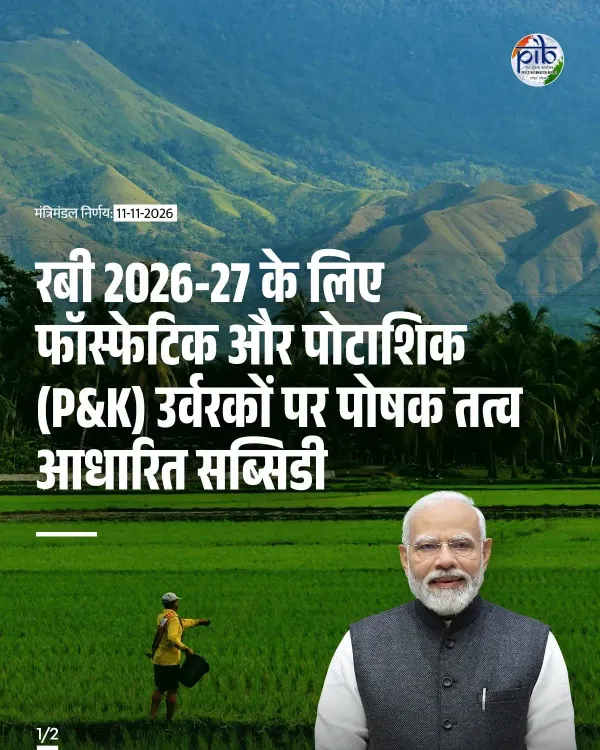
The Union Cabinet has approved a ₹62,370.02 crore Nutrient Based Subsidy on P&K fertilisers for Rabi 2026-27 — a ₹24,417.73 crore jump over the previous season — to shield Indian farmers from surging global DAP, MOP and sulphur prices from October 2026 to March 2027.
Key Takeaways
The Cabinet approved ₹62,370.02 crore in Nutrient Based Subsidy (NBS) for phosphatic and potassic fertilisers for Rabi 2026-27 .
The allocation is ₹24,417.73 crore higher than the previous Rabi season — roughly a 64 per cent year-on-year increase.
The subsidy covers DAP, MOP, NPKS and all P&K fertilisers for the full season: 1 October 2026 to 31 March 2027 .
The NBS scheme was introduced in April 2010 to link subsidy to nutrient content rather than fix retail prices directly.
The decision is aimed at neutralising global price volatility in urea, DAP, MOP and sulphur from reaching Indian farm gates.
Actual disbursement pace and any mid-season rate revisions remain the key developments to monitor through early 2027.
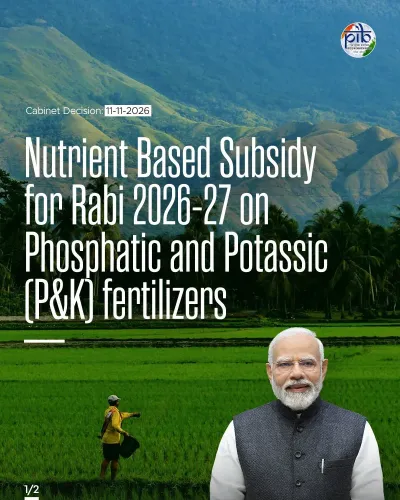
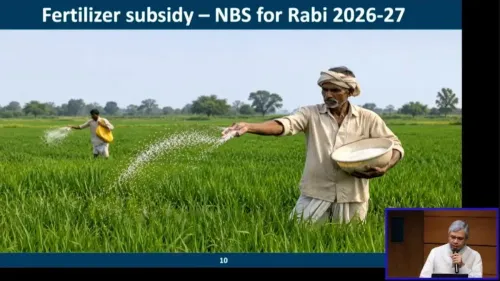
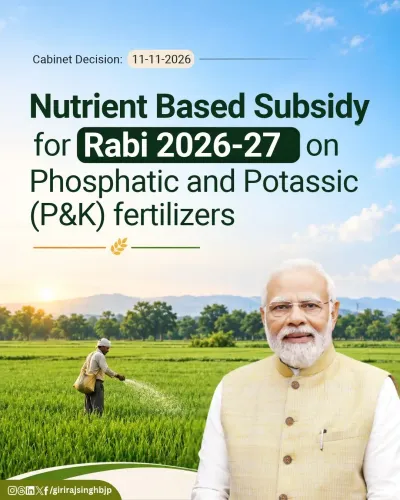
No matter how sharply global fertiliser prices climb, Indian farmers will not feel the shock at the retail counter — that is the guarantee the Union Cabinet has just backed with real money. Union Home Minister Amit Shah announced on Wednesday, 11 November 2026 that the Cabinet has approved a Nutrient Based Subsidy (NBS) of ₹62,370.02 crore on phosphatic and potassic (P&K) fertilisers for the Rabi season 2026-27.
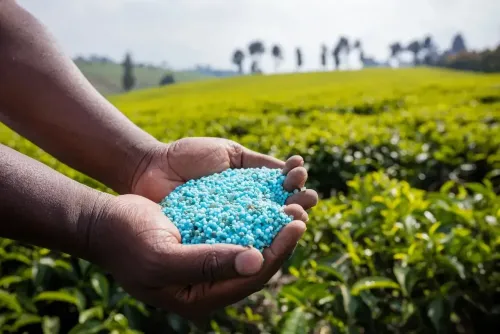
Posting in Hindi on X, Shah wrote: 'Antarrashtriya baazar mein yuriya, DAP, MOP va sulfar ki keemtein kitni bhi badhein' — 'however high the prices of urea, DAP, MOP and sulphur rise in the international market, the Modi government is ensuring that our farmers get fertilisers at affordable rates.' The sheer scale of the outlay underscores the commitment: compared to the previous Rabi season, the subsidy has been raised by ₹24,417.73 crore — a jump of roughly 64 per cent year-on-year.
What the ₹62,370 Crore Covers — and When It Kicks In
The enhanced NBS will cover DAP, MOP, NPKS and all other P&K fertilisers across the full Rabi window: 1 October 2026 to 31 March 2027. The Nutrient Based Subsidy scheme, introduced in April 2010, links government support directly to the nutrient content of decontrolled fertilisers rather than fixing retail prices administratively — a mechanism designed to keep both manufacturers and farmers insulated from international commodity swings.
Global markets have been volatile. DAP and MOP prices have tracked higher amid supply-chain disruptions and geopolitical pressures on key exporting regions, putting pressure on import-dependent economies like India. By stepping up the NBS rate ahead of the sowing season — Rabi crops such as wheat, mustard, and chickpea depend heavily on P&K inputs — the Cabinet is absorbing that volatility before it reaches the farm gate.
A Pattern of Buffer Spending, Now at a New Peak
India decontrolled P&K fertilisers in 2010, shifting from fixed retail prices to a subsidy-on-nutrient model. Since then, successive governments have revised NBS rates upward during global price spikes to prevent cost pass-throughs to farmers. The ₹62,370.02 crore allocation for a single Rabi season is the logical continuation of that pattern — but the magnitude of the year-on-year increase signals just how much international prices have moved.
The two key stakeholder groups watching this closely are Indian farmers — roughly 140 million cultivator households who depend on subsidised inputs — and P&K fertiliser manufacturers, whose working capital cycles are directly tied to how quickly NBS reimbursements flow from the government. Actual disbursement timelines and any mid-season rate revisions will be the next data points to track as the Rabi season progresses.
An outlay this large in a single season puts fertiliser subsidy back at the centre of the farm-economy conversation — and squarely on the agenda for the 2026-27 Budget session of Parliament.
Point of View
A trade-off that will draw scrutiny during the Budget session. At the same time, the speed of the Cabinet approval ahead of the sowing window suggests institutional responsiveness to international commodity cycles has improved since the scheme's 2010 rollout. The scale of the allocation makes fertiliser subsidy one of the largest single-season welfare expenditures on record, reinforcing its centrality to any honest analysis of India's rural spending architecture.
NationPress
11 Nov 2026
Frequently Asked Questions
What is the Nutrient Based Subsidy (NBS) scheme?
The Nutrient Based Subsidy scheme, launched in April 2010, provides a fixed per-nutrient subsidy on decontrolled phosphatic and potassic fertilisers, allowing manufacturers to set retail prices while the government reimburses a defined subsidy amount based on nutrient content — keeping fertilisers affordable for farmers without fixing retail prices administratively.
How much NBS has the Cabinet approved for Rabi 2026-27?
The Cabinet has approved ₹62,370.02 crore in NBS on P&K fertilisers for the Rabi 2026-27 season, covering DAP, MOP, NPKS and all phosphatic and potassic fertilisers from 1 October 2026 to 31 March 2027.
By how much has the fertiliser subsidy increased compared to last Rabi season?
The NBS for Rabi 2026-27 has been raised by ₹24,417.73 crore over the previous Rabi season — a substantial increase aimed at absorbing the rise in global DAP, MOP and sulphur prices before they reach Indian farmers.
Which fertilisers are covered under this Cabinet approval?
The approval covers all phosphatic (P) and potassic (K) fertilisers including DAP (Di-Ammonium Phosphate), MOP (Muriate of Potash), NPKS complex fertilisers, and other P&K variants for the entire Rabi sowing and harvesting window.
Why does India need such large fertiliser subsidies?
India decontrolled P&K fertilisers in 2010, making domestic prices sensitive to international commodity markets. Since India imports a large share of its DAP and MOP requirements, global price spikes directly threaten farm input costs. The NBS acts as a fiscal buffer, with the government absorbing the difference so farmers pay stable, affordable prices.