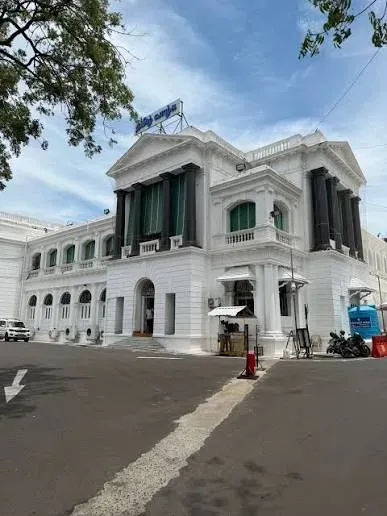
Tamil Nadu PWD to restore 264 heritage buildings for tourism, sustainable use
Synopsis
Tamil Nadu's PWD is moving beyond passive conservation — its plan to commercially repurpose 264 heritage structures, spanning Chola to Colonial eras, could redefine how Indian states fund and sustain architectural heritage. With light-and-sound shows, cafés and interpretation centres on the table, the initiative is as much an economic model as it is a preservation drive.
Key Takeaways
The Tamil Nadu PWD is planning to restore and commercially repurpose 264 heritage structures across the state.
Chennai has the highest count at 58 buildings, followed by Coimbatore ( 20 ) and Thanjavur ( 17 ).
Buildings span the Chola , Nayak , Mughal and British Colonial periods and are currently occupied largely by government departments.
Structural alterations and poor upkeep by occupying departments have compromised the architectural character of several properties.
The state is in discussions with the Tamil Nadu Tourism Department to convert restored buildings into revenue-generating tourism assets.
Alternative models under consideration include light-and-sound shows , heritage interpretation centres and cafés .
The Tamil Nadu Public Works Department (PWD) is drawing up a comprehensive plan to restore, preserve and commercially repurpose 264 heritage structures across the state, aiming to protect their architectural legacy while generating sustainable revenue for long-term upkeep. The initiative, disclosed by senior department officials, marks one of the most systematic heritage conservation drives the state has undertaken in recent years.
Scale and Spread of Heritage Structures
Chennai leads with the highest concentration of heritage buildings at 58, followed by Coimbatore with 20 and Thanjavur with 17. Kanyakumari, Madurai and Salem each account for 12 structures, while Pudukkottai has 10 and Tiruppur and Tiruvannamalai have nine each. The remaining districts hold one or two PWD-administered heritage properties apiece.
These buildings span multiple historical periods — from the reigns of the Cholas, Nayaks and other South Indian dynasties to the Mughal and British Colonial eras — representing significant chapters in Tamil Nadu's cultural and administrative history.
The Problem: Neglect and Unauthorised Alterations
A majority of the 264 structures are currently occupied by government departments including Health and Family Welfare, the Judiciary, Higher Education and the Revenue Department. Several others have fallen into disrepair owing to inadequate maintenance and the absence of conservation-focused management.
According to a senior PWD official, many occupying departments are unaware of the heritage value of the buildings they use. This has led to structural alterations, modern additions and poor upkeep that have, over the years, compromised the original architectural character of these properties.
What the PWD Is Planning
The department has begun identifying the most deteriorated structures for priority restoration, with funds already earmarked for conservation works. Officials have, however, cautioned that simply renovating buildings and returning them to government offices risks exposing them to further deterioration — repeating the cycle that allowed many to decay in the first place.
Instead, the state is actively exploring converting restored heritage properties into tourism assets. Discussions are reportedly underway with the Tamil Nadu Tourism Department to identify suitable projects capable of drawing visitors and sustaining regular maintenance through commercial activity.
Alternative Revenue Models Under Consideration
If the Tourism Department does not absorb the properties, the PWD is considering a range of alternative models. These include establishing light-and-sound shows, heritage interpretation centres, cafés and other visitor-friendly facilities within restored premises. Officials said the goal is to strike a balance between heritage conservation and economic sustainability — ensuring these historic buildings remain vibrant public spaces rather than neglected monuments.
This comes amid growing national interest in adaptive reuse of heritage infrastructure, with states such as Rajasthan and Gujarat having already monetised colonial-era and pre-colonial structures through hospitality and tourism frameworks. Tamil Nadu's move signals a shift from passive preservation to active stewardship, with the state's architectural wealth potentially becoming a driver of cultural tourism in the years ahead.
Point of View
But the track record of state-led heritage monetisation in India is patchy at best. The core risk is institutional: the same government departments that allowed structural alterations and neglect are being asked to now champion conservation. Unless the Tourism Department or an independent body takes clear operational ownership — with ring-fenced revenue and maintenance accountability — restored buildings could slide back into decay within a generation. The adaptive-reuse models being floated, cafés and light-and-sound shows, work only when footfall is guaranteed and management is professionalised. Tamil Nadu has the heritage stock; what it needs is a governance model, not just a restoration fund.
NationPress
24 Oct 2026
Frequently Asked Questions
How many heritage buildings does Tamil Nadu's PWD manage?
The Tamil Nadu Public Works Department manages 264 heritage structures across the state. These buildings span multiple historical periods, from the Chola and Nayak dynasties to the Mughal and British Colonial eras.
Which district has the most heritage buildings in Tamil Nadu?
Chennai has the highest number of PWD-administered heritage buildings at 58 , followed by Coimbatore with 20 and Thanjavur with 17 .
Why are Tamil Nadu's heritage buildings in poor condition?
Many of the buildings are occupied by government departments that are reportedly unaware of their heritage value. This has resulted in structural alterations, modern additions and inadequate maintenance that have compromised their original architectural character over time.
What is Tamil Nadu planning to do with the restored heritage buildings?
The state is exploring converting restored properties into tourism assets capable of generating revenue. Options include light-and-sound shows, heritage interpretation centres and cafés. Discussions are underway with the Tamil Nadu Tourism Department to identify suitable projects.
How does this initiative compare to heritage conservation efforts in other states?
States such as Rajasthan and Gujarat have already monetised colonial-era and pre-colonial structures through hospitality and tourism frameworks. Tamil Nadu's plan follows a similar adaptive-reuse approach, signalling a shift from passive preservation to active, revenue-linked stewardship.