What New Steps Are Being Taken for Kadambur Biodiversity Park?
Synopsis
The Tamil Nadu government has initiated a groundbreaking ecological restoration project for the Kadambur Biodiversity Conservation Park near Chengalpattu. This ambitious plan aims to foster sustainable eco-tourism, enhance climate resilience, and restore local ecosystems, making it a cornerstone for future conservation efforts.
Key Takeaways
Kadambur Biodiversity Conservation Park aims to restore and enhance local ecosystems.
The project is supported by the World Bank under the TN-SHORE program.
It spans 137.65 hectares and will promote sustainable eco-tourism.
The project includes a comprehensive Environmental and Social Management Plan .
Local community involvement is a key focus of the initiative.
Chennai, Jan 20 (NationPress) The government of Tamil Nadu has embarked on a significant ecological restoration initiative by calling for proposals for the creation of the Kadambur Biodiversity Conservation Park located near Chengalpattu.
This project will be executed as part of the World Bank-supported Tamil Nadu Strengthening Coastal Resilience and Economy (TN-SHORE) program, aiming to rehabilitate degraded landscapes while enhancing climate resilience and fostering sustainable eco-tourism.
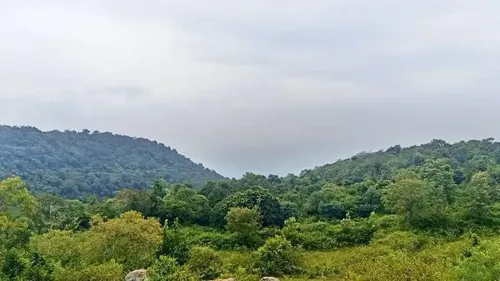
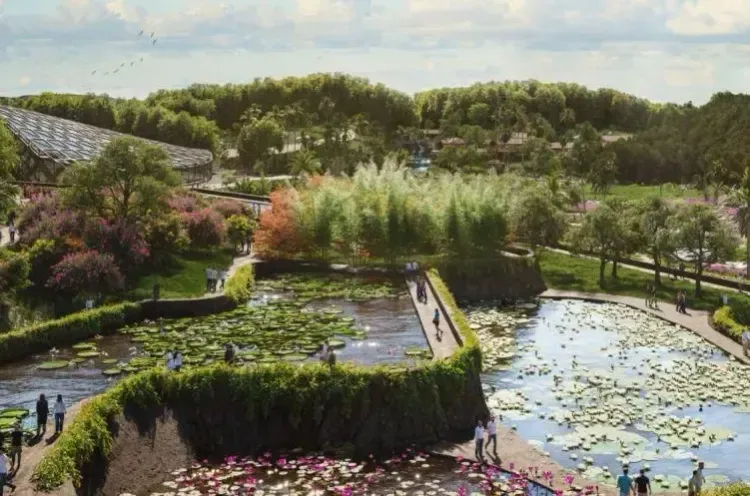
Spanning an area of 137.65 hectares, the Kadambur park is designed to be a multifunctional ecological area that integrates conservation, education, and low-impact tourism. The goal is to rejuvenate fragile ecosystems and transform underused land into a thriving biodiversity-rich zone that functions as both a conservation center and a public learning facility.
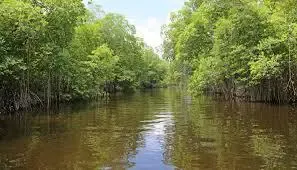
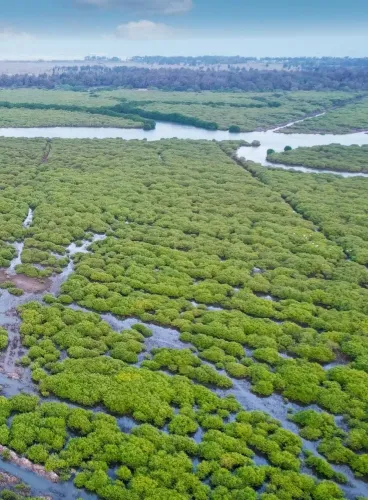
Officials indicated that the initiative would significantly bolster the ecological security of the region while establishing green recreational infrastructure. A primary aspect of the project involves rejuvenating the Kadambur eri (lake) and its associated wetlands, which are vital for local hydrology and biodiversity.
The master plan includes recreating the five classical Tamil Sangam landscapes—Kurinji, Mullai, Marutham, Neithal, and Palai—each representing unique ecological zones. The park will also incorporate thematic gardens, a cloud-forest conservatory, a herbarium, seed banks, cultural villages, cycling paths, observation decks, and additional eco-friendly visitor amenities.
Execution is planned in two phases. The initial pre-construction phase will encompass topographical and ecological assessments, soil evaluations, obtaining necessary approvals, and eradicating invasive species like Prosopis juliflora. The following construction phase will involve desilting and reinforcing the Kadambur eri, implementing rainwater harvesting, restoring wetlands, developing native landscapes, and erecting essential facilities, including the proposed Megam Katu Conservatory.
To address environmental and social issues, the project features a comprehensive Environmental and Social Management Plan (ESMP). This plan details strategies for soil and water conservation, controlling dust and noise during construction, and protecting biodiversity through designated no-go zones around sensitive habitats.
Furthermore, it includes protocols for safe wildlife relocation, local job creation, a grievance resolution system, and safeguards against gender-based violence at construction sites. The State Forest Department’s Chengalpattu Division will oversee the project execution, with supervision from the TN-SHORE State Project Management Unit and the World Bank.
With an allocation of Rs 32.70 lakh for implementing the ESMP and Rs 12 lakh for monitoring, this initiative is anticipated to significantly boost biodiversity, enhance climate resilience, and establish the region as a benchmark for sustainable nature-based tourism.
Point of View
The ongoing efforts in Tamil Nadu to develop the Kadambur Biodiversity Conservation Park exemplify a proactive approach to environmental restoration and sustainable tourism. This initiative, backed by international funding, reflects a growing recognition of the importance of biodiversity in mitigating climate change and enhancing community resilience. It is crucial for other states to emulate such forward-thinking projects for a sustainable future.
NationPress
29 Sept 2026
Frequently Asked Questions
What is the purpose of the Kadambur Biodiversity Park?
The Kadambur Biodiversity Park aims to restore degraded landscapes, enhance climate resilience, and promote sustainable eco-tourism while serving as a hub for biodiversity conservation.
How large is the Kadambur park?
The Kadambur park spans an area of 137.65 hectares.
What are the planned features of the park?
The park will include thematic gardens, a cloud-forest conservatory, a herbarium, seed banks, cultural villages, cycling tracks, and eco-friendly visitor facilities.
Who is overseeing the project?
The project will be executed by the State Forest Department’s Chengalpattu Division, with oversight from the TN-SHORE State Project Management Unit and the World Bank.
How will the project address social and environmental concerns?
The project incorporates a detailed Environmental and Social Management Plan (ESMP) that includes measures for biodiversity protection, local employment generation, and community engagement.