Tarang Shakti 2026: Rajnath Singh calls for defence self-reliance at IAF's multinational air exercise
Synopsis
India's largest multinational air exercise, Tarang Shakti 2026, concluded at Jodhpur with Defence Minister Rajnath Singh issuing a dual call: build indigenous capability at home while deepening technology-and-trust partnerships abroad. With 7 air forces, 32 observer nations, and indigenous platforms like Tejas and Prachand flying alongside global counterparts, the exercise doubled as a live showcase of India's aerospace ambitions — and a signal of where its defence diplomacy is headed.
Key Takeaways
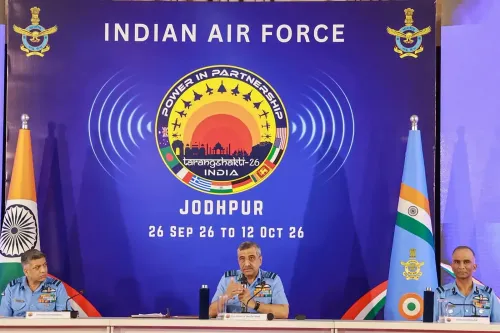
Exercise Tarang Shakti 2026 ran from 26 September to 12 October at Jodhpur Air Force Station , hosted by the Indian Air Force .
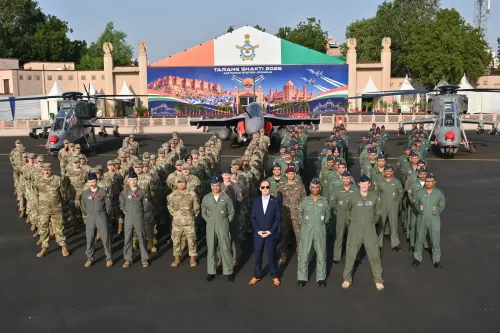
Air forces from 7 nations — Australia, Bangladesh, France, Germany, Sri Lanka, UAE and the USA — participated, with 32 nations as observers.
Defence Minister Rajnath Singh called Atmanirbharta (self-reliance) a national policy, while stressing co-development and co-production with trusted partners.
Indigenous platforms including LCA Tejas , LCH Prachand , Akash air defence system and AESA radars were highlighted as markers of India's aerospace progress.
The AMCA (Advanced Medium Combat Aircraft) programme was cited as India's pathway to fifth-generation stealth fighter technology.
This is the second edition of Tarang Shakti, following the inaugural exercise in 2024 .
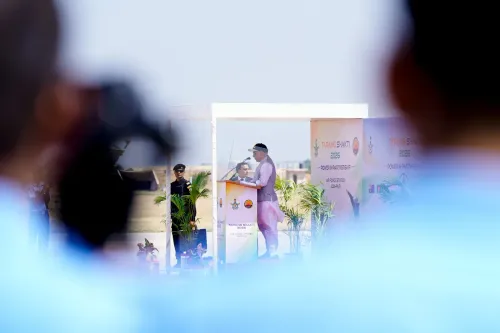
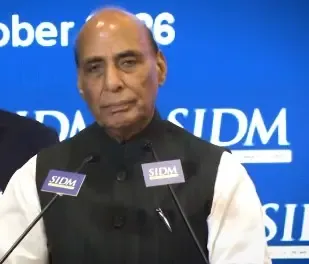
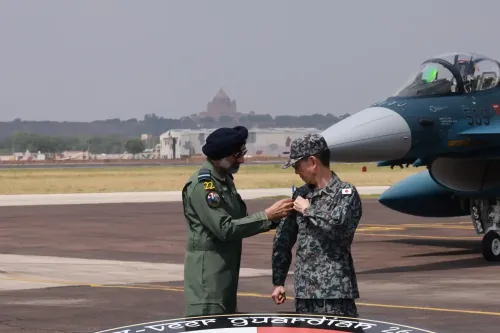
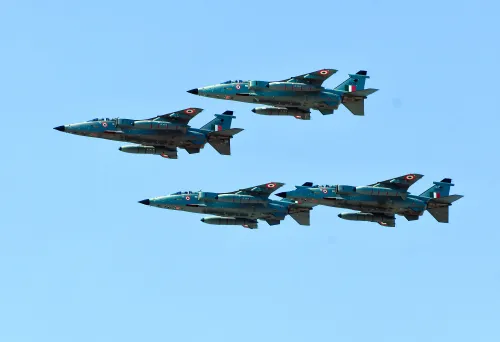
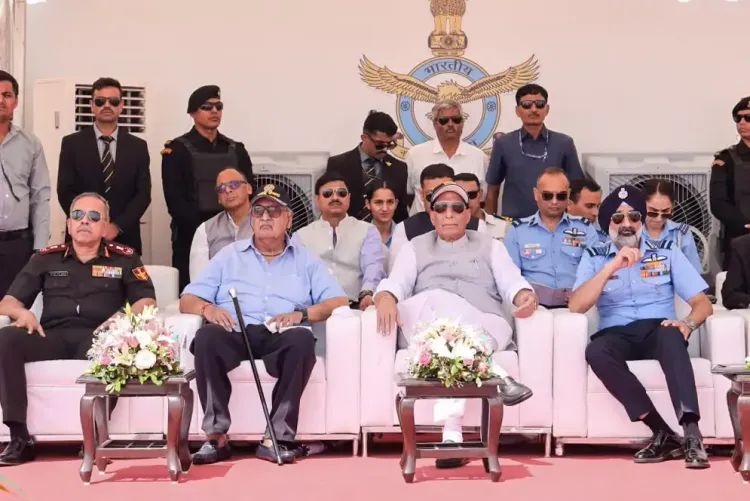
Defence Minister Rajnath Singh on Saturday, 10 October addressed the closing ceremony of Exercise Tarang Shakti 2026 at Jodhpur Air Force Station, calling for stronger self-reliance in defence manufacturing and deeper international aerospace cooperation. The exercise, hosted by the Indian Air Force (IAF) from 26 September to 12 October, is the largest multinational air exercise India has conducted, bringing together air forces from seven Friendly Foreign Countries (FFCs) and 32 observer nations.
Nations and Forces That Participated
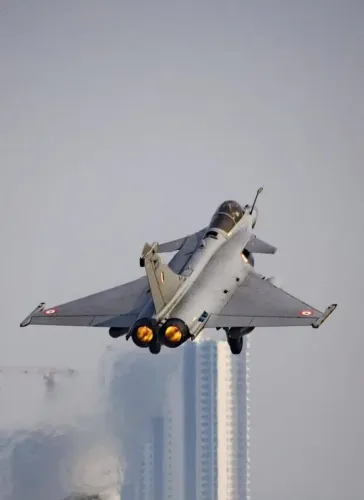
The seven participating nations were Australia, Bangladesh, France, Germany, Sri Lanka, the United Arab Emirates, and the United States of America. Their contingents brought diverse combat, transport, surveillance and air-to-air refuelling capabilities to the exercise, enabling joint mission planning, operational learning and enhanced interoperability. A total of 32 nations participated as observers, underscoring the global interest in India's growing aerospace profile.
Rajnath Singh on Modern Warfare and Atmanirbharta
Addressing the gathering, Singh stressed that modern warfare had moved well beyond the traditional domains of land, sea and air. 'Future military power will be defined less by the number of platforms we possess. It will be determined by the speed of sensing, understanding, deciding, and acting,' he said, highlighting speed, precision, information and integration as the defining attributes of contemporary military capability.
He pointed to the growing influence of unmanned systems, drones, artificial intelligence, electronic warfare and long-range precision weapons in reshaping military operations. Singh underscored that India, under Prime Minister Narendra Modi, had adopted Atmanirbharta — self-reliance in defence — as a national policy, arguing that a nation must be capable of producing its own weapons and critical technologies to sustain itself through prolonged conflicts.
Crucially, he clarified that Atmanirbhar Bharat did not mean isolation: 'The defence relationships of the future will be about technology and trust, not just about platforms,' he said, calling for co-development, co-production, maintenance, training and innovation partnerships with like-minded countries.
Indigenous Platforms in the Spotlight
Singh highlighted India's expanding aerospace and defence manufacturing ecosystem, citing indigenous programmes including the Tejas Light Combat Aircraft, helicopters such as Dhruv, Rudra, Prachand and the Light Utility Helicopter (LUH), the Akash air defence system, Active Electronically Scanned Array (AESA) radars and emerging unmanned technologies. He also referred to the Advanced Medium Combat Aircraft (AMCA) programme as a critical step toward mastering fifth-generation stealth fighter technology.
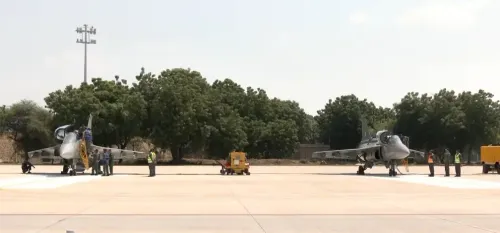
The participation of the LCA Tejas and the Light Combat Helicopter (LCH) Prachand in the exercise itself served as a live demonstration of India's indigenous aerospace engineering progress.
Operation Sindoor and the Exercise's Relevance
The exercise's contemporary relevance was reinforced by a reference to Operation Sindoor, which, according to officials, demonstrated the IAF's ability to execute precise, calibrated and effective operations in furtherance of national security objectives. The experience gained from that operational employment, officials noted, reinforces the value of multinational exercises such as Tarang Shakti in preparing forces for the evolving challenges of modern warfare.
Notably, this is the second edition of Exercise Tarang Shakti, building on its inaugural run in 2024. Singh described the spirit of the exercise succinctly: 'Different nations. Different aircraft. Different experiences. But one sky. That is the message of Tarang Shakti.'
Senior Leadership and What Comes Next
Chief of Defence Staff General N.S. Raja Subramani, Chief of the Air Staff Air Chief Marshal AP Singh, Chief of the Naval Staff Admiral Krishna Swaminathan, and senior officials from the Ministry of Defence and participating countries attended the event. Beyond flying operations, the exercise featured professional engagements, industrial visits, yoga sessions, heritage tours and an International Night celebrating the cultures of participating nations.
Singh called upon the IAF to incorporate the lessons of the exercise into its training, tactics, technology, doctrine and future capability development, expressing confidence that the participating nations would use the professional relationships forged at Jodhpur as a springboard for new avenues of aerospace and defence cooperation.
Point of View
But the real measure is whether programmes like AMCA and Tejas can move from showcase to scalable production within competitive timelines. The reference to Operation Sindoor is also notable — it signals that India is now comfortable weaving recent operational experience into multilateral diplomatic settings, a shift in strategic communication posture. Whether partner nations read that as confidence or provocation will shape the next chapter of India's defence diplomacy.
NationPress
10 Oct 2026
Frequently Asked Questions
What is Exercise Tarang Shakti 2026?
Exercise Tarang Shakti 2026 is a multinational air exercise hosted by the Indian Air Force at Jodhpur Air Force Station from 26 September to 12 October 2026. It brought together air forces from seven countries — Australia, Bangladesh, France, Germany, Sri Lanka, the UAE and the USA — along with 32 observer nations, making it India's largest such exercise to date.
What did Rajnath Singh say at Tarang Shakti 2026?
Defence Minister Rajnath Singh called for stronger self-reliance in defence manufacturing under the Atmanirbharta policy, while simultaneously emphasising the need for technology-based partnerships with trusted nations. He said future military power would be 'determined by the speed of sensing, understanding, deciding, and acting' rather than by the number of platforms a country possesses.
Which Indian indigenous platforms featured in Tarang Shakti 2026?
The LCA Tejas and the Light Combat Helicopter Prachand participated in the exercise, showcasing India's indigenous aerospace manufacturing. Singh also highlighted the Akash air defence system, AESA radars, Dhruv and Rudra helicopters, and the forthcoming AMCA fifth-generation stealth fighter programme.
How does Tarang Shakti 2026 relate to Operation Sindoor?
Officials at the exercise noted that Operation Sindoor demonstrated the IAF's ability to execute precise and calibrated operations in support of national security objectives. The operational experience gained reinforces the value of multinational exercises like Tarang Shakti in preparing forces for modern warfare scenarios.
Is Tarang Shakti a new exercise, and who attended the closing event?
Tarang Shakti 2026 is the second edition of the exercise, following its inaugural run in 2024. The closing event was attended by Chief of Defence Staff General N.S. Raja Subramani, Chief of the Air Staff Air Chief Marshal AP Singh, Chief of the Naval Staff Admiral Krishna Swaminathan, and senior Ministry of Defence officials alongside representatives of participating nations.