Haryana Cabinet extends Sixth Finance Commission rules for local body funds
Synopsis
With the Seventh Finance Commission yet to submit its report, the Haryana Cabinet has opted to keep the Sixth Commission's devolution norms alive from 2026-27 — channelling 7% of SOTR to local bodies under a 75:15:10 panchayat split. A new accountability clause penalises underperforming Urban Local Bodies, while the Deen Dayal Lado Lakshmi Yojana's income cap rises to ₹1.80 lakh, extending benefits to more women.
Key Takeaways
Haryana Cabinet on 10 October approved continuation of Sixth State Finance Commission norms for fund devolution from 2026-27 until the Seventh Commission reports.
7 per cent of the state's Own Tax Revenue (SOTR) will be devolved to local bodies, split 80% by population and 20% by area .
Inter-se distribution among Gram Panchayats , Panchayat Samitis , and Zila Parishads fixed at 75:15:10 .
Urban Local Bodies must achieve at least 85% of budgeted revenue or face a 20% cut in their Finance Commission grant.
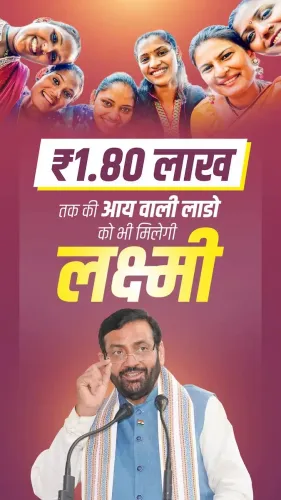
Annual family income limit under Deen Dayal Lado Lakshmi Yojana raised from ₹1 lakh to ₹1.80 lakh , benefiting over 10 lakh women currently enrolled.
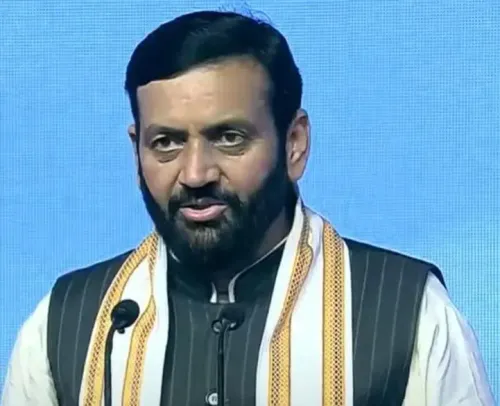
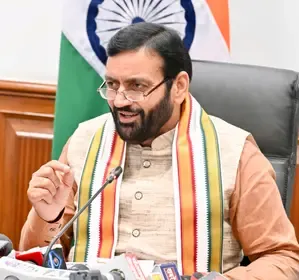
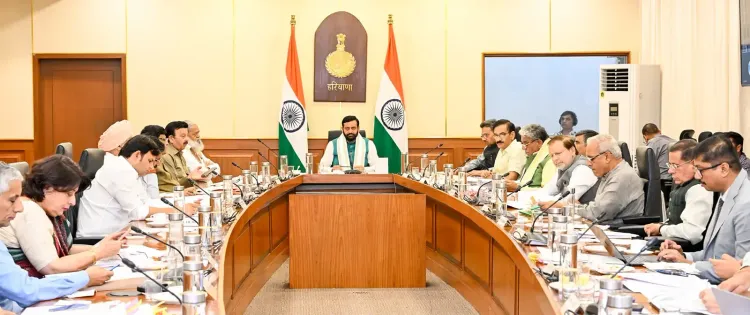
The Haryana Cabinet, chaired by Chief Minister Nayab Singh Saini in Chandigarh on Saturday, 10 October, approved the continuation of the Sixth State Finance Commission recommendations for the devolution of funds to rural and urban local bodies from 2026-27 onwards, until the next Finance Commission's recommendations come into force. The decision was necessitated by the Seventh Finance Commission's pending report, with the Cabinet opting to follow established precedent to ensure uninterrupted fund flow to grassroots bodies.
Key Framework for Fund Devolution
Under the approved framework, 7 per cent of the state's Own Tax Revenue (SOTR) on an actual basis will be devolved to local bodies. The distribution to Gram Panchayats and Urban Local Bodies will be weighted at 80 per cent for population and 20 per cent for area. Population data for Zila Parishads and Panchayat Samitis will be drawn from the Parivar Pehchan Patra Portal as of 31 December of each year.
The inter-se distribution among Gram Panchayats, Panchayat Samitis, and Zila Parishads will be maintained in the ratio of 75:15:10, respectively. Notably, local bodies will be permitted to use no more than 30 per cent of devolved funds for the paving of streets — a cap designed to prevent disproportionate spending on a single category of infrastructure.
Accountability Clause for Urban Local Bodies
The framework introduces a performance-linked accountability measure for Urban Local Bodies. Their actual revenue must be at least 85 per cent of their budgeted revenue, as reflected in audited accounts from the previous year. Any body failing to meet this threshold will face a 20 per cent reduction in its recommended State Finance Commission grant for the current year. This is a significant fiscal discipline measure aimed at discouraging revenue shortfalls at the local level.
Deen Dayal Lado Lakshmi Yojana Gets Wider Reach
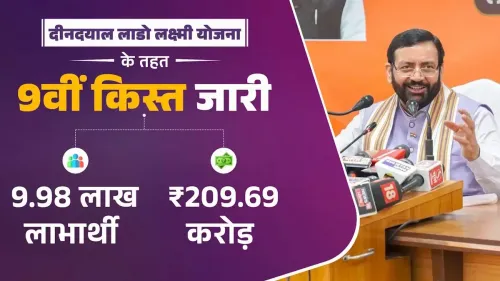
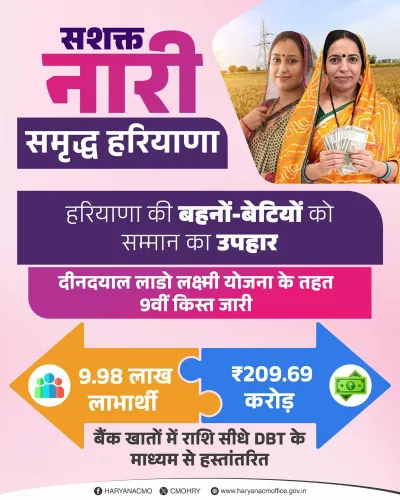
In a separate decision, the Cabinet approved key amendments to the Deen Dayal Lado Lakshmi Yojana, a scheme focused on women's financial empowerment and social security. The annual family income eligibility limit has been raised from ₹1 lakh to ₹1.80 lakh, broadening the scheme's reach to more households. The amendments also aim to simplify implementation and strengthen the delivery of financial assistance to beneficiaries.
According to officials, more than 10 lakh women currently benefit from the scheme. The income limit revision is expected to bring a significant additional cohort of women into the programme's fold, though exact projections were not immediately disclosed.
Why This Decision Matters
The continuation of Sixth Finance Commission norms ensures that Gram Panchayats, Panchayat Samitis, Zila Parishads, and Urban Local Bodies across Haryana do not face a funding vacuum while the Seventh Commission finalises its report. This comes amid a broader national push to strengthen the third tier of government following successive Central Finance Commission recommendations that have emphasised fiscal empowerment of local bodies. The accountability clause for urban bodies signals a shift toward outcome-linked devolution, a model that governance experts have long advocated. The Cabinet's decisions are expected to take effect from the 2026-27 financial year.
Point of View
And the gap creates uncertainty for local body planning cycles. The 20% revenue penalty for underperforming Urban Local Bodies is a welcome accountability mechanism, but its effectiveness hinges on the quality of audited accounts, which in many Haryana municipalities have historically lagged. The Deen Dayal Lado Lakshmi Yojana income limit revision is a positive step, yet the absence of any projection on additional beneficiaries makes it difficult to assess fiscal impact. More broadly, the 7% SOTR devolution figure, while consistent with the Sixth Commission's formula, remains below what successive Central Finance Commissions have recommended as a benchmark for genuine local fiscal autonomy.
NationPress
10 Oct 2026
Frequently Asked Questions
Why did the Haryana Cabinet extend the Sixth Finance Commission recommendations?
The Haryana Cabinet extended the Sixth State Finance Commission recommendations because the Seventh Finance Commission has not yet submitted its report to the government. To ensure uninterrupted fund devolution to rural and urban local bodies from 2026-27, the Cabinet approved continuation of the existing framework as per established precedent.
How will funds be distributed to local bodies under the approved framework?
Under the framework, 7 per cent of Haryana's Own Tax Revenue will be devolved to local bodies, with distribution weighted 80 per cent by population and 20 per cent by area. The inter-se split among Gram Panchayats, Panchayat Samitis, and Zila Parishads is fixed at 75:15:10.
What is the accountability clause for Urban Local Bodies?
Urban Local Bodies must generate actual revenue of at least 85 per cent of their budgeted revenue, as per audited accounts of the previous year. Bodies that fall short will face a 20 per cent reduction in their recommended State Finance Commission grant for the current year.
What changes have been made to the Deen Dayal Lado Lakshmi Yojana?
The Cabinet raised the annual family income eligibility limit under the Deen Dayal Lado Lakshmi Yojana from ₹1 lakh to ₹1.80 lakh, widening access to the scheme. Amendments also aim to simplify implementation and strengthen financial assistance delivery; over 10 lakh women currently benefit from the scheme.
From when will the extended Finance Commission framework apply?
The extended Sixth State Finance Commission framework will apply from the financial year 2026-27 and will remain in force until the Seventh Finance Commission's recommendations are formally adopted by the Haryana government.