Madhya Pradesh's 6th Finance Commission Aims to Enhance Local Governance
Synopsis
The Madhya Pradesh government has launched the 6th State Finance Commission to bolster the financial framework of local governance. Under the leadership of former minister Jaibhan Singh Pawaiya, the Commission aims to optimize resource distribution and improve the fiscal health of urban and rural bodies.
Key Takeaways
Establishment of the 6th State Finance Commission by the Madhya Pradesh government.
Focus on enhancing financial frameworks for local bodies.
Chairman: Jaibhan Singh Pawaiya , with a team including K.K.
Singh and Virendra Kumar.
Commission's recommendations due by October 31 .
Review of financial positions of municipalities and panchayats.
Bhopal, March 20 (NationPress) The government of Madhya Pradesh has established the 6th State Finance Commission. This Commission is set to enhance the financial framework of local entities, including urban areas and gram panchayats throughout the state.
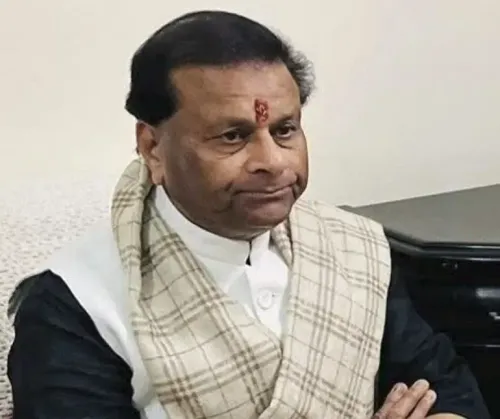
Jaibhan Singh Pawaiya, a former minister, has been designated as the Chairman of the Commission, with retired IAS officer K.K. Singh and Virendra Kumar appointed as a member and Member Secretary, respectively.
As per a notification released late Thursday, this Commission will be instrumental in advising on the distribution of financial resources between the state government and local bodies such as gram panchayats and urban civic organizations.
The Commission's mandate extends until October 31 of this year, although it may be prolonged if deemed necessary, as noted in the notification.
The Commission is tasked with evaluating the financial status of municipalities and panchayats, recommending the allocation of state taxes, duties, tolls, and fees across these local entities.
Furthermore, it will propose strategies to enhance the financial health of local bodies. The Commission is required to present its recommendations to the Governor by October 31 for the upcoming financial year starting April 1.
The notification also indicates that further members of the Commission will be appointed at a later date.
This Commission is focused on assessing the financial standing of Panchayats and Urban Local Bodies (ULBs), advising on tax distribution between the state and local organizations, and recommending improvements for the financial independence of these institutions.
With escalating demands for infrastructure and public services, the Commission's significance is heightened in achieving fair resource distribution.
The formation of the 6th State Finance Commission signifies a pivotal move by the Madhya Pradesh government aimed at empowering local governance. The insights provided will influence how effectively financial resources are allocated to villages and urban areas, ultimately affecting the state’s developmental path.
The recommendations regarding funding for local initiatives, essential services such as water supply, waste management, roadways, and healthcare, are expected to fortify grassroots governance in rural and urban settings.
Additionally, it will propose reforms to enhance fiscal management and governance at the local level.
Point of View
I observe that the establishment of the 6th State Finance Commission by Madhya Pradesh is a strategic move toward empowering local governance and ensuring equitable financial distribution. This initiative is crucial amidst rising demands for infrastructure and civic services, and it highlights the government's commitment to strengthening local entities.
NationPress
3 Oct 2026
Frequently Asked Questions
What is the purpose of the 6th State Finance Commission?
The 6th State Finance Commission aims to enhance the financial framework of local bodies in Madhya Pradesh, including recommending resource distribution between the state government and local institutions.
Who is leading the 6th State Finance Commission?
The Commission is chaired by former minister Jaibhan Singh Pawaiya, with K.K. Singh as a member and Virendra Kumar as the Member Secretary.
When is the Commission expected to submit its recommendations?
The Commission is required to submit its recommendations to the Governor by October 31 for the financial year starting April 1.
What will the Commission review?
The Commission will review the financial positions of municipalities and panchayats, and recommend the distribution of taxes, duties, tolls, and fees.
How will this Commission impact local governance?
The Commission's recommendations will play a vital role in improving the financial autonomy of local bodies, thereby enhancing governance and service delivery.