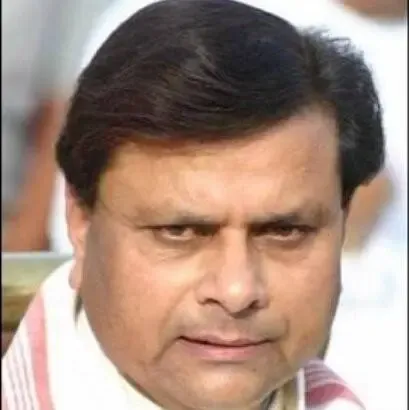
Jaibhan Singh Pawaiya Engages with Governor Patel as New Finance Commission Chairman
Synopsis
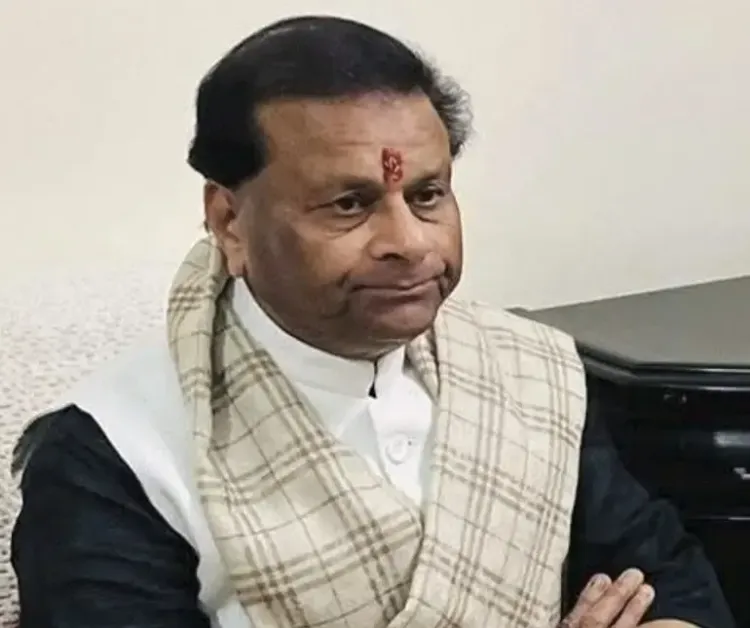
Jaibhan Singh Pawaiya, the newly appointed Chairman of the State Finance Commission, met with Governor Mangubhai Patel to discuss the Commission's objectives and responsibilities. This meeting marks a significant step in the Commission's role in enhancing the state's financial governance.
Key Takeaways
Jaibhan Singh Pawaiya is the new Chairman of the State Finance Commission.
Meeting with Governor Mangubhai Patel emphasized the Commission's objectives.
The Commission will operate until October 31, 2026 .
Key responsibilities include financial evaluations of municipalities and panchayats.
Recommendations will be crucial for enhancing local governance.
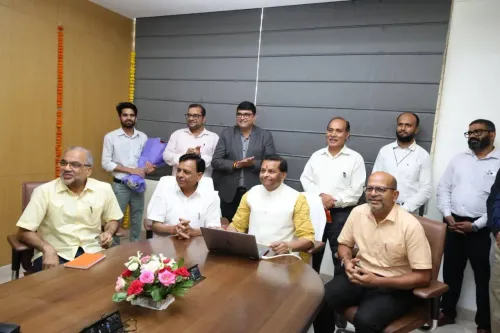
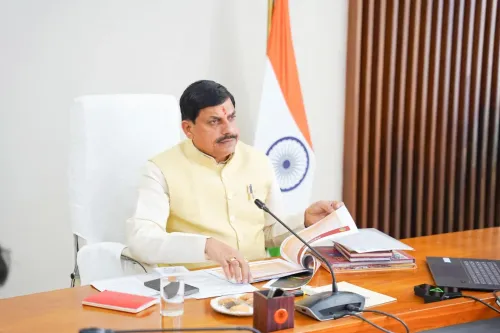
Bhopal, March 26 (NationPress) The newly appointed Chairman of the State Finance Commission and prominent Bharatiya Janata Party figure, Jaibhan Singh Pawaiya, held a meeting with Governor Mangubhai Patel at Lok Bhavan on Thursday to discuss his new role.
Following this introductory meeting, the Governor’s office reported that Patel offered insights into the Finance Commission's responsibilities, operations, and various initiatives.
He conveyed optimism that the State Finance Commission would align with its goals and significantly aid in the state’s progress.
As per a statement from the Governor’s office, Chairman Pawaiya reassured Governor Patel that the Commission would fulfill its duties with utmost commitment and contribute effectively to the state's growth.
Governor Patel also wished the Chairman and the Commission members success, emphasizing that executing their responsibilities with integrity represents true service to both the state and the nation.
It is noteworthy that the Madhya Pradesh government has established the sixth State Finance Commission, led by former minister Jaibhan Singh Pawaiya, alongside retired Indian Administrative Service officer K.K. Singh and Virendra Kumar as members.
The trio officially took office on March 23, 2026.
The Commission is set to operate until October 31 this year, with a possibility of extension if necessary, as stated in the notification.
The Commission’s mandate includes evaluating the financial conditions of municipalities and panchayats and recommending the allocation of state taxes, duties, tolls, and fees between these local bodies.
Moreover, it will propose strategies to enhance the financial health of local institutions. Recommendations are expected to be submitted to the Governor by October 31 for the financial year commencing April 1.
The Commission will focus on analyzing the financial status of panchayats and urban local bodies, suggesting the allocation of taxes, duties, tolls, and fees between the state and local entities, and recommending methods to improve the financial independence of local institutions.
The recommendations regarding funding for local development initiatives, essential service delivery—such as water supply, sanitation, roads, and healthcare—and the strengthening of grassroots governance in rural and urban areas will be vital.
Point of View
The appointment of Jaibhan Singh Pawaiya as the Chairman of the State Finance Commission signifies a strategic move in enhancing financial governance in Madhya Pradesh. The collaborative dialogue with Governor Patel highlights the importance of effective management of local finances, which is crucial for overall state development.
NationPress
25 Sept 2026
Frequently Asked Questions
Who is Jaibhan Singh Pawaiya?
Jaibhan Singh Pawaiya is a senior leader of the Bharatiya Janata Party and the newly appointed Chairman of the State Finance Commission in Madhya Pradesh.
What is the role of the State Finance Commission?
The State Finance Commission evaluates the financial status of municipalities and panchayats, recommends the distribution of state taxes, and suggests measures to improve local financial conditions.
When does the Commission's term end?
The Commission's current term is set to end on October 31, 2026, with a possibility of extension if needed.
Who are the members of the State Finance Commission?
The Commission includes Jaibhan Singh Pawaiya as Chairman, K.K. Singh, and Virendra Kumar as members.
What are the key responsibilities of the Commission?
The Commission is tasked with reviewing the financial positions of local bodies, recommending tax distributions, and suggesting improvements for local financial autonomy.