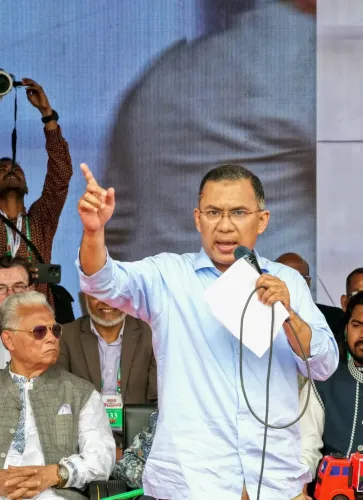
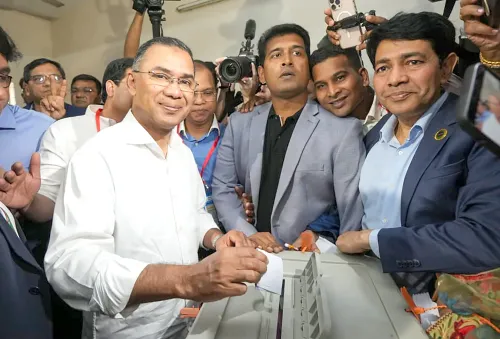
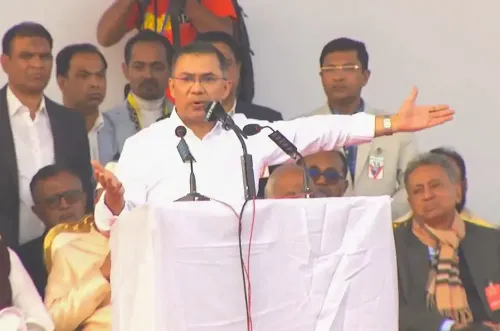
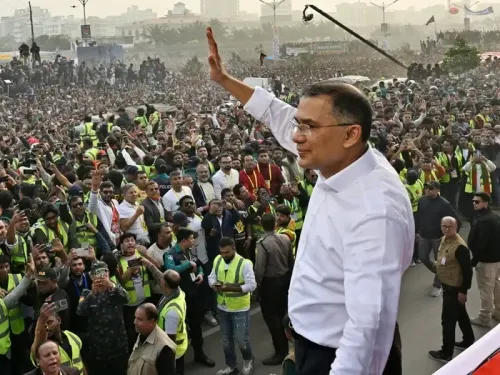
Does Tarique Rahman's Return Signal Reform or Increased Polarisation?
Synopsis
In a revealing interview, Sheikh Hasina asserts that Tarique Rahman's return from exile does not herald political reform but risks deepening divisions in Bangladesh. With elections approaching, the implications for the country's stability and minority communities are profound. Discover how this political drama unfolds as Bangladesh grapples with uncertainties.
Key Takeaways
Tarique Rahman's return may exacerbate political divisions in Bangladesh.
Sheikh Hasina's concerns focus on accountability and transparency in leadership.
Minority communities are facing increased violence and uncertainty.
The BNP alliance is gaining traction ahead of the general elections.
Legal challenges against Sheikh Hasina continue to mount since her ousting.
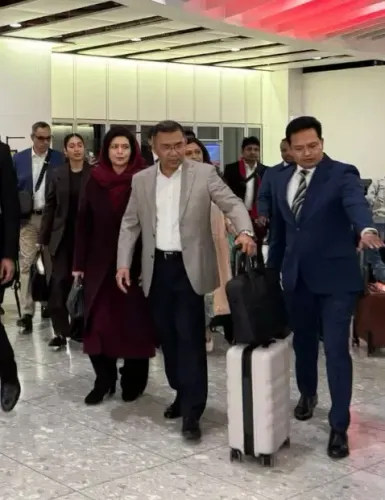
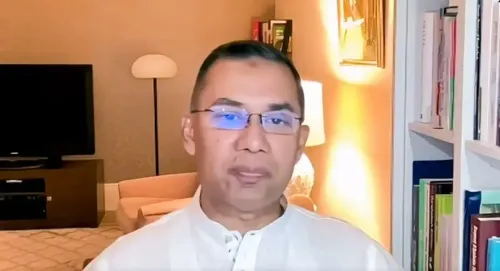
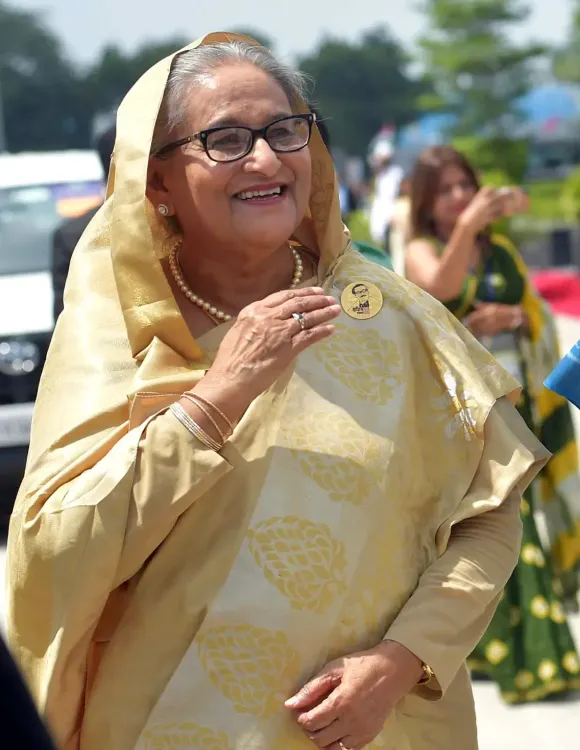
New Delhi, Jan 7 (NationPress) The return of Tarique Rahman, a prominent leader of the Bangladesh Nationalist Party (BNP), to Dhaka after a 17-year absence, is not a sign of renewal or reform for Bangladesh, but may instead exacerbate political divisions, according to Sheikh Hasina, the ousted Prime Minister of Bangladesh, in an exclusive interview with IANS on Wednesday.
“Tarique Rahman’s return does not signify renewal or reform; it signifies a return to a political landscape that has cost Bangladesh dearly,” remarked the 78-year-old former leader.
“He has enjoyed years of comfortable exile, disconnected from the daily struggles of the average Bangladeshi, having evaded accountability for corruption and misuse of power,” she added, noting her lineage as the daughter of Sheikh Mujibur Rahman, the founding father of Bangladesh.
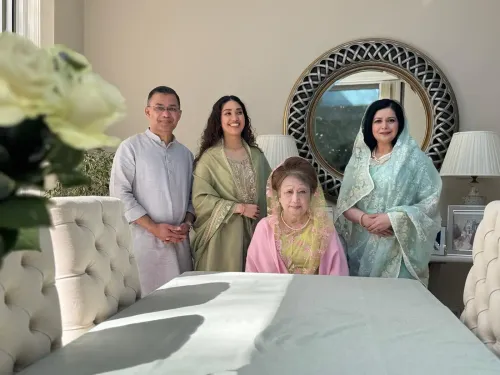
The 58-year-old, also known as Tarique Zia, is the son of former President Ziaur Rahman and the first female Prime Minister Khaleda Zia. He faces allegations from Hasina’s government regarding his involvement in corruption and operating a parallel power structure during Khaleda's tenure. As Bangladesh grapples with turmoil and violence, attention is now focused on Tarique Rahman, who is spearheading a BNP-led coalition in the upcoming general elections set for February 12.
His return to Dhaka after nearly two decades in the UK has reignited discussions on the future of India–Bangladesh relations. His actions are being closely observed not only by New Delhi but also by other nations.
While he appeals to the BNP's nationalist base, which often harbors skepticism towards India, he is attempting to portray himself as a protector of Bangladesh's sovereignty, signaling a balanced stance towards India, China, and Pakistan.
However, Sheikh Hasina stated to IANS that instead of moving towards renewal or reform, Tarique’s return may deepen the existing political polarization in Bangladesh.
Currently, Bangladesh faces uncertainty and fear, particularly for minority communities, following Sheikh Hasina's ousting. There has been a notable increase in mob violence and targeted attacks against minorities, especially Hindus.
Reports indicate that at least 11 Hindus have been killed across Bangladesh within a span of 35 days.
This reflects a troubling trend of escalating violence against minority groups since Hasina's removal in 2024.
The recent lynching incidents involving members of minority communities have raised alarms among international human rights organizations.
“His presence is likely to intensify political polarization rather than reconcile it. Effective leadership demands accountability, transparency, and engagement with the populace, rather than directives from abroad followed by a sudden return when conditions seem advantageous,” said Sheikh Hasina.
The BNP alliance is currently considered to be gaining traction ahead of the February 12 elections.
Tarique Rahman, often referred to as the “dark prince,” appears to be leading the race for the position of Bangladesh’s next Prime Minister, according to various reports.
“Recently, we have witnessed a disturbing wave of intimidation and coercion by BNP supporters compelling ordinary Bangladeshis, including Awami League backers, to vote for their party under threats of violence or destruction,” Hasina informed IANS.
Expressing her concerns about the future in light of the upcoming elections, the former Prime Minister emphasized, “Bangladesh’s future cannot rely on individuals whose political legacies are marred by corruption, violence, and alliances with extremist factions.”
Meanwhile, a court in Dhaka has scheduled January 21 to present charges in a high-profile sedition case involving approximately 285-286 accused, including the former Prime Minister.
This is one of multiple legal proceedings against Sheikh Hasina since her ousting, with a separate tribunal in November issuing a death sentence in absentia over “crimes against humanity” allegations, according to reports.
Point of View
It is imperative to approach the developments regarding Tarique Rahman's return with a balanced perspective. The situation reflects not only the complexities of Bangladesh's political climate but also the potential implications for minority communities and regional stability. The focus should remain on fostering dialogue and understanding amid rising tensions.
NationPress
19 Sept 2026
Frequently Asked Questions
What are the implications of Tarique Rahman's return?
His return could intensify political polarisation in Bangladesh, potentially affecting the country's stability and minority rights.
How does Sheikh Hasina view this return?
Sheikh Hasina believes Tarique's return does not represent reform and fears it may worsen existing political divides.
What is the current political climate in Bangladesh?
The political climate is fraught with uncertainty, with rising violence against minority communities and fears of intimidation during elections.
What is the significance of the upcoming elections?
The elections scheduled for February 12 could have significant implications for the political landscape and governance in Bangladesh.
What actions are being taken against Sheikh Hasina?
Sheikh Hasina faces several legal challenges, including a high-profile sedition case and a death sentence in absentia.