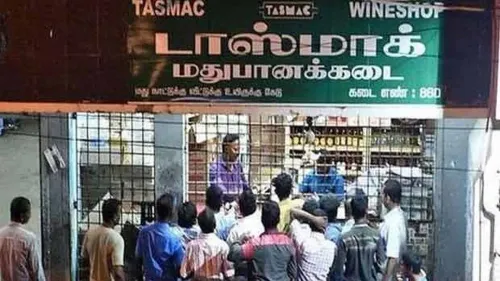
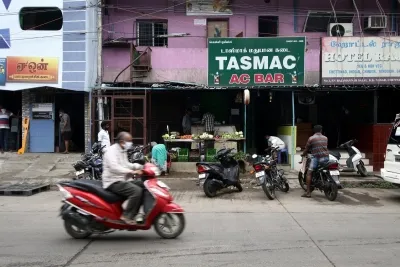
TASMAC shifts to demand-based liquor supply across Tamil Nadu from Monday
Synopsis
Tamil Nadu's TASMAC has scrapped its uniform liquor distribution policy — introduced just two months ago by the TVK government — after consumers complained that preferred brands were routinely unavailable while unpopular bottles piled up unsold. The new demand-based system lets each of the state's 4,000 outlets request stocks based on actual sales patterns, a practical course-correction that quietly acknowledges the limits of top-down supply management.
Key Takeaways
TASMAC introduced a demand-based stock supply system effective 21 September 2026 , replacing the uniform distribution model.
The earlier policy, in force since 20 July , required equal procurement from 11 spirits companies and 7 beer manufacturers with uniform distribution to all outlets.
Tamil Nadu has nearly 4,000 TASMAC liquor outlets across the state.
The old system caused stock mismatches — popular brands ran short while slow-moving bottles accumulated unsold.
Under the new system, district managers must assess individual outlet requirements before placing orders, guided by sales performance and consumer preference data.
The TASMAC Managing Director has directed all senior regional, district, and warehouse managers to comply immediately.
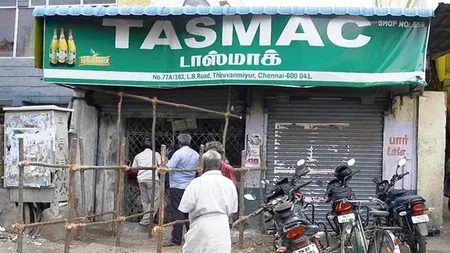
Tamil Nadu State Marketing Corporation (TASMAC) has replaced its uniform liquor distribution mechanism with a demand-based stock supply system effective Monday, 21 September 2026, allowing each of the state's nearly 4,000 outlets to receive stocks in line with local sales patterns and consumer preferences. The move marks the rollback of a key retail policy introduced after the Tamilaga Vettri Kazhagam (TVK) government assumed office.
Background: Why the Old System Was Introduced
When the TVK government came to power, it directed TASMAC to procure liquor in equal quantities from all approved manufacturers and distribute stocks uniformly across every outlet in the state. The policy came into force on 20 July, covering brandies, whiskies, and other spirits sourced from 11 companies, as well as beer from 7 manufacturers. The intent was to ensure equitable access to all licensed producers across the retail network.
What Went Wrong With Uniform Distribution
The system reportedly created operational difficulties across multiple outlets because consumer preferences varied significantly by locality. Shoppers complained that their preferred brands were frequently out of stock, while slower-moving products accumulated unsold on shelves and in warehouses. The mismatch between centrally dictated supply and ground-level demand triggered a review by the TASMAC administration.
How the New System Works
Under the revised arrangement, district managers have been directed to assess each outlet's requirements before placing stock requests. Officials responsible for supply must factor in sales performance, consumer preferences, and recorded demand volumes at individual shops before dispatching bottles. The TASMAC Managing Director has formally directed senior regional managers, district managers, and warehouse managers to comply with the revised procedure. The earlier practice of purchasing and distributing equal quantities to every outlet will be discontinued.
Expected Impact on Outlets and Inventory
The demand-aligned model is expected to reduce the accumulation of slow-moving and unsold stock at both shops and warehouses, while ensuring that popular brands are replenished in step with local demand. Officials say the change will improve stock management, minimise avoidable inventory costs, and make the retail distribution network more responsive. The revised system will be monitored through sales and inventory records to verify that supplies accurately reflect demand at TASMAC shops across Tamil Nadu.
What to Watch Next
With the rollout beginning this week, the effectiveness of the demand-based model will depend on how accurately district-level managers read consumption trends and how quickly the warehousing chain adapts. A continued failure to match supply with demand — in either direction — could renew pressure on TASMAC to revisit its procurement policy once again.
Point of View
But it runs headlong into the economics of consumer preference — and in a state-run retail monopoly, unsold inventory is a public-money problem. The demand-based correction is sensible, but it also quietly signals that ideologically driven procurement policies can create supply-chain distortions that ultimately hurt the consumers they were meant to serve. The harder question TASMAC must now answer is whether its district managers have the data infrastructure and operational autonomy to genuinely track hyperlocal demand — or whether the new system will simply replicate old inefficiencies with a different label.
NationPress
21 Sept 2026
Frequently Asked Questions
What is the new TASMAC demand-based liquor supply system?
TASMAC has replaced its uniform stock distribution model with a demand-based supply system, effective 21 September 2026, under which each outlet receives stocks according to its own sales patterns and consumer preferences rather than a centrally fixed quantity. District managers must assess individual shop requirements before placing orders.
Why did TASMAC scrap the earlier uniform distribution policy?
The uniform distribution policy, introduced on 20 July, led to frequent shortages of popular brands at outlets while slower-moving products piled up unsold in shops and warehouses. Consumer complaints about unavailability of preferred brands prompted TASMAC to review and reverse the policy.
When did the old TASMAC uniform distribution system come into force?
The uniform distribution system was introduced on 20 July by the TVK government, requiring equal procurement from all approved manufacturers and even distribution across TASMAC's roughly 4,000 outlets statewide.
How many liquor outlets does TASMAC operate in Tamil Nadu?
TASMAC operates nearly 4,000 liquor retail outlets across Tamil Nadu. Under the previous policy, all these shops received stocks in equal measure regardless of local demand patterns.
Who is responsible for implementing the new demand-based supply system?
The TASMAC Managing Director has directed senior regional managers, district managers, and warehouse managers to comply with the revised order. Officials must factor in sales performance, consumer preference, and recorded demand volumes at each outlet before dispatching stocks.