Jungle Raj in Bihar: Tejashwi Slams Samrat Govt Over Crime Surge
Synopsis
Tejashwi Yadav has declared 'Jungle Raj' is back in Bihar, targeting CM Samrat Choudhary over a Dalit child murder in Purnea, chain snatching in Sitamarhi, and multiple killings in Madhubani — as RJD forms inquiry panels and dares the NDA government to respond.
Key Takeaways
Tejashwi Yadav accused Bihar CM Samrat Choudhary of enabling "Jungle Raj" , alleging a complete breakdown of law and order across the state on April 23, 2025 .
A chain-snatching incident in Sitamarhi — where two criminals robbed a woman in broad daylight — was cited as a symbol of the government's failure to protect citizens.
Six-year-old Dalit girl Soumya Kumari was murdered in Purnea district (Case No.
192/2026), prompting the RJD to form a five-member inquiry committee chaired by Dilip Kumar Yadav .
Two separate seven-member panels have been constituted to probe murders in Madhubani district — the killing of Jitendra Yadav (Case No.
156/2026) and JCB driver Mohammad Nadeem (Case No.
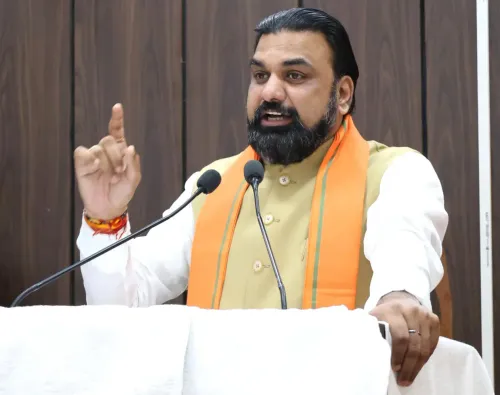
RJD State President Mangni Lal Mandal alleged that criminals no longer fear the law and accused the administration of being ineffective in curbing rising crime.
Tejashwi's remark that "criminals have become Samrats" was widely seen as a personal dig at CM Samrat Choudhary , escalating the political war of words in Bihar.
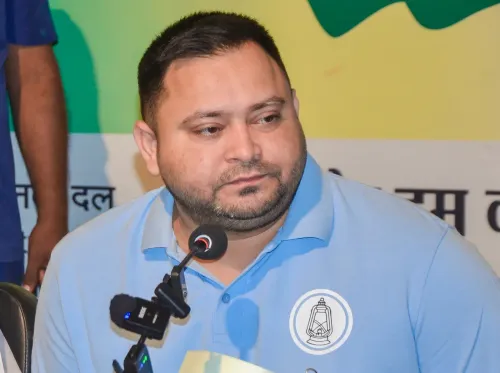
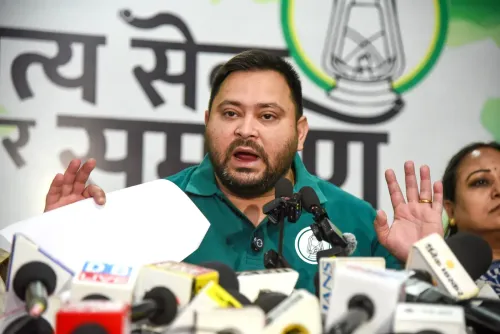
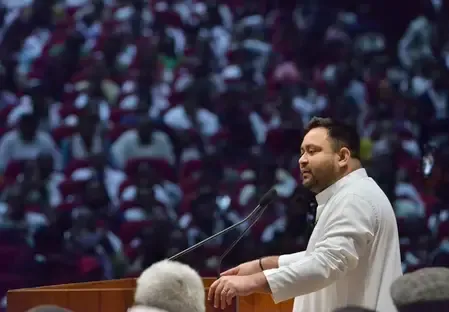
Patna, April 23: Opposition leader Tejashwi Yadav launched a fierce broadside against the Bihar government on Wednesday, accusing Chief Minister Samrat Choudhary of presiding over a total collapse of law and order and declaring that "Jungle Raj" has returned to the state. The attack came amid a spate of reported murders and street crimes across multiple districts, intensifying political pressure on the NDA administration in Bihar.
Tejashwi's Jungle Raj Charge Against Samrat Choudhary
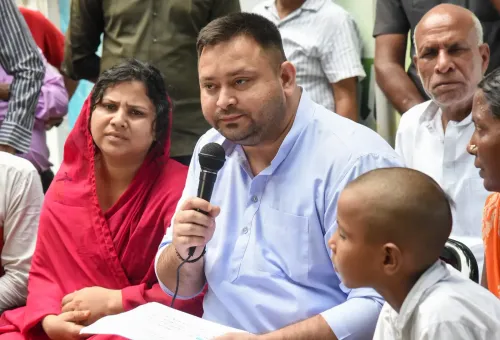
In a pointed video statement, Tejashwi Yadav — Leader of the Opposition in the Bihar Assembly — alleged that women across the state live in constant fear and cited a brazen chain-snatching incident in Sitamarhi, where two assailants reportedly robbed a woman of her gold chain in broad daylight. "Jungle Raj in Bihar! Women are unsafe everywhere… such incidents expose the reality behind the tall claims of NDA leaders," he declared.
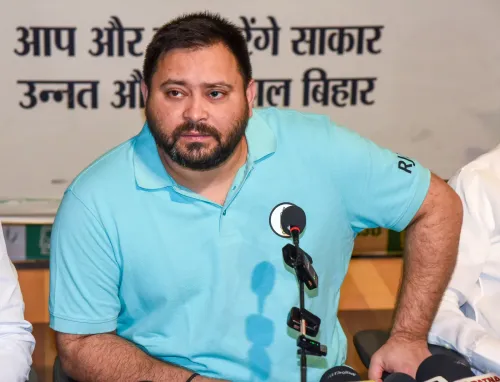
Yadav has been relentlessly targeting the Samrat Choudhary-led government since it assumed office, using social media as his primary battleground. In a recent post that drew wide attention, he remarked that "criminals have become emperors (Samrats)" — a remark widely interpreted as a sharp personal jab at the Chief Minister, whose first name is Samrat.
This rhetorical escalation signals that the Rashtriya Janata Dal (RJD) is building a sustained narrative around crime ahead of future electoral cycles in Bihar, echoing the same "Jungle Raj" terminology that was historically used against RJD patriarch Lalu Prasad Yadav during the 1990s — now turned against opponents in a striking political reversal.
RJD Forms Inquiry Panels After String of Murders
RJD State President Mangni Lal Mandal announced that the party has constituted multiple inquiry committees to investigate a disturbing series of killings reported from Purnea, Madhubani, and other districts of Bihar.
The most heart-wrenching case involves six-year-old Soumya Kumari, daughter of Manzil Harijan from Madhwa Kola under the Amaur Police Station limits in Purnea district. The child, who belonged to the Dalit community, was murdered in what the party described as a deeply disturbing crime. A five-member inquiry committee, chaired by Purnea District President Dilip Kumar Yadav, has been tasked with meeting the victim's family and examining Amur Police Station Case No. 192/2026.
In Madhubani district, two separate panels have been formed. A seven-member committee led by District President Veer Bahadur Rai will probe the killing of Jitendra Yadav alias Jitan Yadav under Phulparas Police Station (Case No. 156/2026). A second seven-member panel, headed by District General Secretary Anil Kumar Yadav, will investigate the murder of Mohammad Nadeem, a JCB driver from Gidarganj village under Andhrathadhi area (Loukaha PS Case No. 91/2026).
Party functionary Ejaz Ahmed stated that all committees are mandated to visit crime scenes, interact with victims' families, collect police records, and submit detailed reports to the RJD state leadership.
The Dalit Angle: A Deeper Political Fault Line
The murder of Soumya Kumari, a Dalit child in Purnea, adds a critical social dimension to the political storm. Bihar's Dalit population constitutes a significant vote bank, and crimes against Dalits carry outsized political weight in the state's electoral arithmetic.
Notably, the RJD's decision to specifically highlight this case — and constitute a dedicated inquiry panel — suggests a deliberate strategy to consolidate Dalit and backward-class support by positioning the party as the defender of vulnerable communities. This mirrors the party's historical identity under Lalu Prasad Yadav, who built his political empire on championing the rights of EBC, OBC, and Dalit communities.
Critics, however, argue that inquiry committees formed by opposition parties rarely produce actionable outcomes and are primarily political instruments designed to generate media visibility rather than deliver justice.
Law and Order in Bihar: A Pattern, Not an Anomaly
Mangni Lal Mandal alleged that law and order in Bihar has "completely collapsed" and that criminals no longer fear the law. "Such incidents indicate that the government's authority has weakened, while fear among common people continues to grow," he said.
This comes amid a broader pattern of reported crimes in Bihar that opposition parties have been cataloguing systematically. The Sitamarhi chain-snatching, the Purnea child murder, and the Madhubani killings are being presented as evidence of systemic failure rather than isolated incidents — a framing that is gaining traction on social media and in regional news cycles.
It is worth noting that Bihar has historically struggled with crime data credibility. According to NCRB reports, Bihar consistently ranks among states with high rates of reported violent crimes per lakh population. The current political debate, however, risks reducing a complex law enforcement challenge to electoral point-scoring, potentially delaying real policy interventions.
What Comes Next: Political and Administrative Implications
The Samrat Choudhary government is yet to issue a formal, detailed response to the opposition's allegations, and the ruling NDA's silence on specific cases is likely to be exploited further by the RJD and allied opposition parties in the coming days.
With Bihar local body elections and the longer shadow of the 2025 state assembly cycle looming, the law and order narrative is set to become a defining battleground. The inquiry committee reports, once submitted, are expected to be used as political ammunition in press conferences, assembly sessions, and social media campaigns.
Observers of Bihar politics note that the opposition's sustained "Jungle Raj" campaign, if backed by documented evidence from these inquiry panels, could meaningfully shift public perception — particularly among Dalit, OBC, and women voters — ahead of the next electoral contest.
Point of View
Revealing how effectively the RJD has rebranded its political identity. What's striking is not just the rhetoric but the strategic targeting of Dalit victims to reactivate the party's social coalition. The NDA's muted response to specific cases like the murder of six-year-old Soumya Kumari is a governance failure that no amount of development messaging can paper over. Bihar's real test is not who controls the crime narrative, but whether any government — past or present — has the institutional will to make its streets safe for the most vulnerable.
NationPress
5 Oct 2026
Frequently Asked Questions
What did Tejashwi Yadav say about law and order in Bihar?
Tejashwi Yadav declared that 'Jungle Raj' prevails in Bihar under Chief Minister Samrat Choudhary, alleging that women are unsafe and criminals operate freely. He cited a chain-snatching incident in Sitamarhi and multiple murders across the state as evidence of a law and order collapse.
Who is Soumya Kumari and why is her case significant?
Soumya Kumari was a six-year-old Dalit girl from Madhwa Kola village in Purnea district, Bihar, who was murdered — registered as Amur PS Case No. 192/2026. Her case has drawn political attention because she belonged to a marginalised community, prompting the RJD to form a dedicated five-member inquiry committee.
What inquiry committees has the RJD formed in Bihar?
The RJD has constituted three inquiry panels: a five-member committee for the Soumya Kumari murder in Purnea, and two seven-member committees for killings in Madhubani — one for the Jitendra Yadav case and another for the Mohammad Nadeem murder. All panels are tasked with visiting crime scenes and submitting reports to party leadership.
What is the political significance of Tejashwi's 'criminals have become Samrats' remark?
Tejashwi Yadav's statement that 'criminals have become emperors (Samrats)' is widely seen as a direct personal jibe at Chief Minister Samrat Choudhary, whose first name means 'emperor.' The remark is part of a broader RJD strategy to brand the NDA government as soft on crime ahead of future elections.
How has the Bihar government responded to the law and order allegations?
As of April 23, the Samrat Choudhary-led Bihar government had not issued a detailed formal response to the specific crime incidents cited by the opposition. The NDA's silence on individual cases has been flagged by opposition leaders as an admission of administrative failure.