Tejashwi Yadav sounds battle cry against 'democracy's killers'
Synopsis
RJD leader Tejashwi Yadav declared on September 30, 2026 that 'the bugle has sounded against the killers of democracy,' signalling an intensified Bihar opposition campaign against the Nitish Kumar-led ruling alliance and its BJP partners.
Key Takeaways
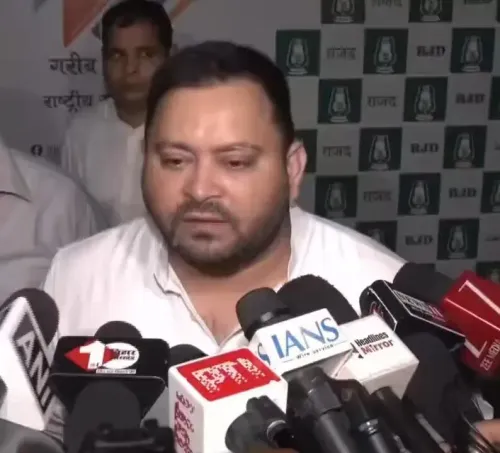
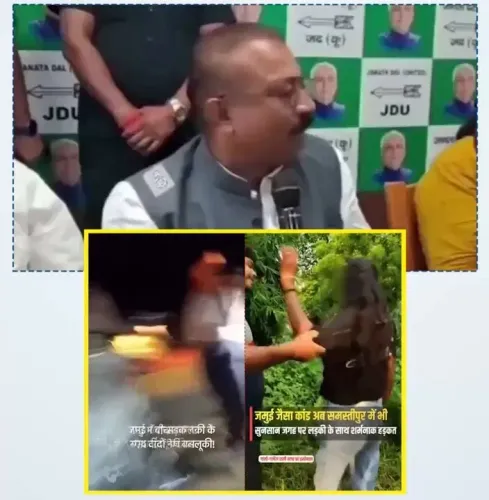
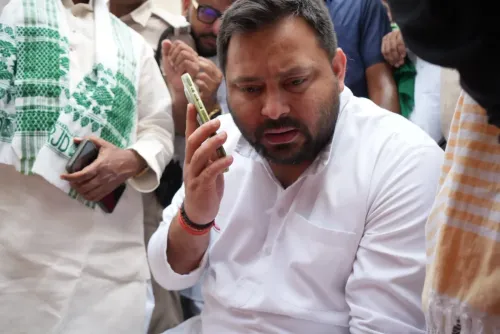
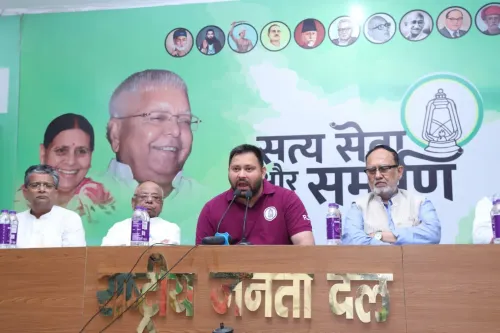
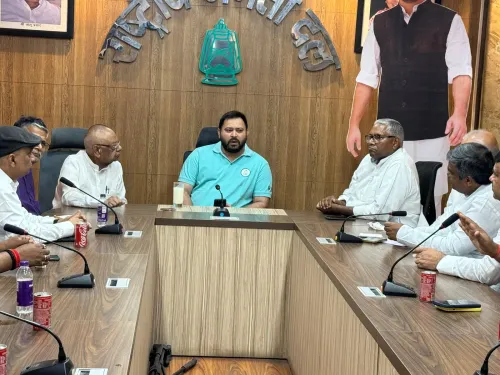
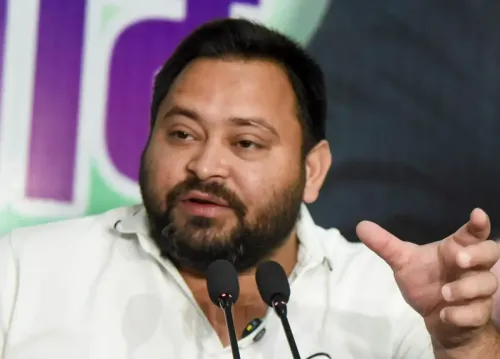
Tejashwi Yadav posted a sharp Hindi declaration on September 30, 2026 stating 'the bugle has sounded against the killers of democracy.' The post was accompanied by four images , suggesting coordinated political messaging rather than a spontaneous remark.
Tejashwi serves as Leader of the Opposition in the Bihar Legislative Assembly and is the RJD 's most prominent face after Lalu Prasad Yadav.
The RJD has been in opposition in Bihar since the 2022 grand alliance with Nitish Kumar collapsed.
The 'democracy under threat' framing is a recurring tool of Indian opposition politics, historically intensifying before state or national elections.
A war bugle, not a press conference — that is how RJD leader Tejashwi Yadav chose to open Wednesday, September 30, 2026, posting a sharp seven-word declaration on X that signals the Bihar opposition is moving from defensive posture to open political offensive.
The post, in Hindi, reads: 'Loktantra ke hatyaaron ke khilaf bigul baj chuka hai' — 'The bugle has sounded against the killers of democracy.' Accompanied by four images, the message carries the deliberate cadence of a campaign launch rather than a routine political jab.
The language of democratic crisis — and why it lands in Bihar
Phrases like 'killers of democracy' have a specific charge in Indian opposition politics — they invoke institutional overreach, electoral manipulation, and the curbing of dissent. For Tejashwi Yadav, Leader of the Opposition in the Bihar Legislative Assembly, deploying this language is also a direct challenge to the Nitish Kumar-led ruling alliance that has governed the state with BJP backing. The Rashtriya Janata Dal — led by his father Lalu Prasad Yadav — has maintained a near-constant drumbeat of criticism against Bihar's ruling combine since the alliance it was part of collapsed.
The imagery of a bugle — bigul — is purposeful. It is military, it is urgent, and it implies that whatever follows is organised, not improvised. Opposition messaging in Bihar has historically sharpened ahead of assembly elections, and a declaration this stark rarely arrives without a coordinated follow-through.
RJD's opposition arc — from coalition to confrontation
The RJD has oscillated between power and opposition in Bihar since the mid-2000s. Tejashwi served as Deputy Chief Minister during the 2015–2017 Grand Alliance government and again in the brief 2022 alignment — each stint ending in political rupture. That back-and-forth has made the party simultaneously experienced in governance and battle-hardened in opposition, giving its attack lines a credibility that newer outfits cannot easily match.
Indian opposition groups — particularly those within the INDIA bloc — have increasingly framed state and central governance through a democratic-backsliding lens. Whether that narrative gains traction depends on what concrete grievances Tejashwi and his allies attach to it in the days ahead.
The bugle has been blown. Bihar — and the ruling coalition — will now be watching to hear what the charge actually sounds like.
Point of View
Framing local grievances as part of a national institutional struggle. For the RJD specifically, this kind of rhetorical escalation often precedes concrete electoral mobilisation rather than serving merely as social media noise. The use of a militaristic metaphor — the bugle — suggests the party is signalling to allies within the INDIA bloc that Bihar's opposition is ready to move from reactive criticism to proactive campaign. Sustained traction will depend on how quickly Tejashwi anchors this declaration to specific, verifiable complaints that voters feel directly.
NationPress
30 Sept 2026
Frequently Asked Questions
What did Tejashwi Yadav post on September 30 2026?
Tejashwi Yadav posted in Hindi: 'Loktantra ke hatyaaron ke khilaf bigul baj chuka hai,' meaning 'The bugle has sounded against the killers of democracy,' accompanied by four images on X.
Who are the 'killers of democracy' Tejashwi Yadav is referring to?
Tejashwi did not name specific individuals in the post. In RJD's political context, such language is typically directed at the BJP and the Nitish Kumar-led ruling alliance in Bihar, though the specific trigger for this statement has not been officially clarified.
What is Tejashwi Yadav's current political position?
Tejashwi Yadav is the Leader of the Opposition in the Bihar Legislative Assembly and the most prominent leader of the Rashtriya Janata Dal after his father, Lalu Prasad Yadav. He previously served as Deputy Chief Minister of Bihar.
Is Bihar heading for elections soon?
Bihar's next state assembly election is expected in 2025 or the period following. Opposition messaging of this intensity typically escalates ahead of election cycles, though no election date had been announced at the time of this post.
What is the RJD's current political situation in Bihar?
The RJD is currently in opposition in Bihar after its alliance with Chief Minister Nitish Kumar collapsed. It is aligned with the national INDIA bloc and continues to be the principal opposition force in the state.