Tejashwi slams Bihar govt over Samastipur girl harassment

Synopsis
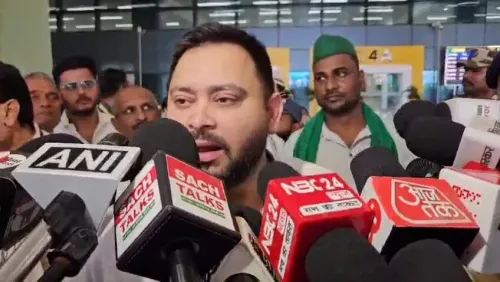
RJD leader Tejashwi Yadav condemned the open harassment of a minor girl in Samastipur, accusing Bihar's NDA government of caste-filtered justice and total law-and-order failure, and naming Union Minister Jitan Ram Manjhi in the broadside.
Key Takeaways
RJD leader Tejashwi Yadav posted on September 24, 2026 condemning the public harassment of a minor girl in Samastipur, Bihar .
He accused Bihar's ruling government of allowing caste identity to determine whether criminals are honoured or prosecuted.
Tejashwi predicted the government would dismiss the incident as a 'stray event' to avoid accountability.
Union Minister Jitan Ram Manjhi was named directly, with Tejashwi alleging he would attempt to shield the accused through personal connections.
RJD has repeatedly raised crimes against women as a governance failure of the NDA government since the 2020 Bihar assembly elections .
The Bihar government and police had not issued a formal response at the time of publication.
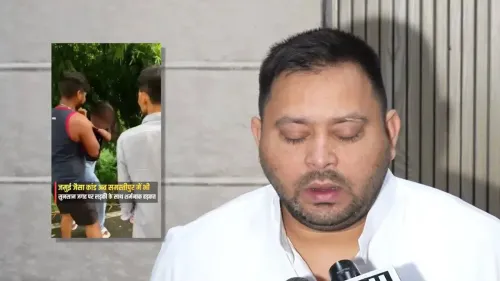
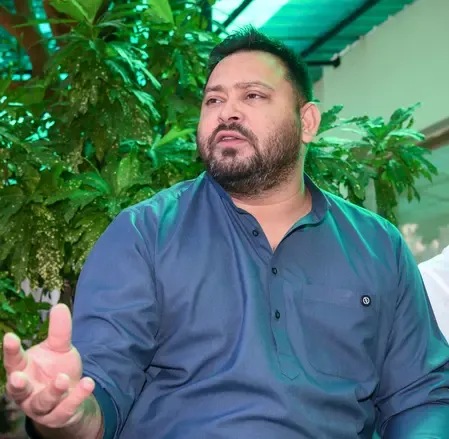
A video of young men openly harassing a minor girl on the streets of Samastipur has drawn sharp political fire — and RJD leader Tejashwi Yadav is pointing straight at the top of Bihar's government. In a post on X on September 24, 2026, the Leader of the Opposition called the incident definitive proof that law and order in BJP-ruled Bihar has completely collapsed.
Tejashwi's post, in Hindi, pulled no punches: 'समस्तीपुर में नाबालिग लड़की के साथ सरेआम युवकों द्वारा छेड़खानी प्रत्यक्ष प्रमाण है' — ('The open molestation of a minor girl in Samastipur is direct evidence') that law and order in BJP-ruled Bihar has been buried. He predicted the government's playbook: 'Shameless ministers will shrug this off as a stray incident too.'
The caste-and-crime charge Tejashwi is making
The sharpest edge of Tejashwi's attack is not just the incident itself — it is the allegation of caste-filtered justice. He accused the Chief Minister of honouring criminals based on their caste identity, and warned that the same caste calculus will decide whether the Samastipur case is prosecuted or buried. 'When the state's Chief Minister has a criminal disposition — someone who honours criminals by looking at their caste — such anarchic situations are inevitable,' he wrote.
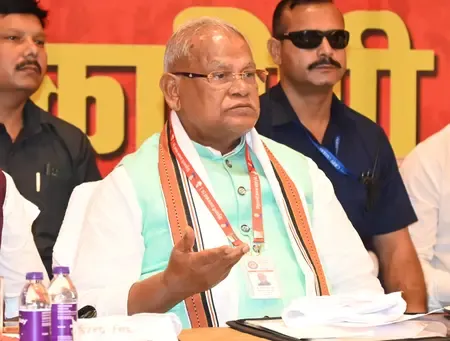
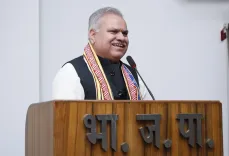
He then trained his sights on Union Minister Jitan Ram Manjhi, a veteran Bihar leader and former Chief Minister, alleging that Manjhi would find some family connection to the accused to deflect accountability. The closing word — 'Sharmnaak!' (Shameful!) — was designed to land like a verdict.
A recurring fault line in Bihar politics
This is not a new battlefield. RJD has consistently raised law-and-order failures and crimes against women in Bihar assembly sessions since the 2020 state elections, turning each high-profile incident into a referendum on the NDA government's governance record. The ruling alliance, led by Chief Minister Nitish Kumar, has long positioned itself on law-and-order credentials — making opposition attacks on that very plank politically potent.
Accusations of caste-based selective enforcement cut especially deep in Bihar, where caste arithmetic shapes every electoral and administrative calculation. By naming both the Chief Minister and a Union Cabinet minister in a single post, Tejashwi is framing the Samastipur case as a systemic indictment, not a local failure.
The Bihar government and police have yet to issue a formal response to the viral incident. Whether the state administration moves swiftly on the case — and who it moves against — will be watched as the real answer to Tejashwi's challenge.
Point of View
Tejashwi escalates the attack beyond a single incident into a structural indictment — one that resonates with both Dalit communities and women voters Bihar's NDA coalition cannot afford to lose. Naming Union Minister Jitan Ram Manjhi alongside the CM signals a coordinated effort to fracture NDA's Mahadalit support base ahead of any electoral reckoning. The ruling alliance's silence, for now, leaves the frame entirely in the opposition's hands.
NationPress
24 Sept 2026
Frequently Asked Questions
What happened in Samastipur that Tejashwi Yadav is talking about?
A video reportedly showing young men harassing a minor girl in public in Samastipur, Bihar went viral, prompting Tejashwi Yadav to post a sharp condemnation of the state government on September 24, 2026.
What did Tejashwi Yadav say about the Bihar government?
He said the incident is direct proof that law and order in BJP-ruled Bihar has collapsed, and accused the Chief Minister of honouring criminals based on their caste rather than enforcing the law equally.
Why did Tejashwi name Jitan Ram Manjhi in his post?
Tejashwi alleged that Union Minister Jitan Ram Manjhi would try to find a personal connection to the accused to deflect accountability, using it to illustrate what he called systemic political protection for criminals.
What is RJD's broader criticism of Bihar's law and order?
RJD has repeatedly raised concerns about crimes against women and selective enforcement based on caste in Bihar assembly sessions since the 2020 state elections, making it a central plank of the opposition's anti-NDA campaign.
Has the Bihar government responded to the Samastipur incident?
As of the time of Tejashwi's post on September 24, 2026, no formal response from the Bihar government or state police had been publicly issued.