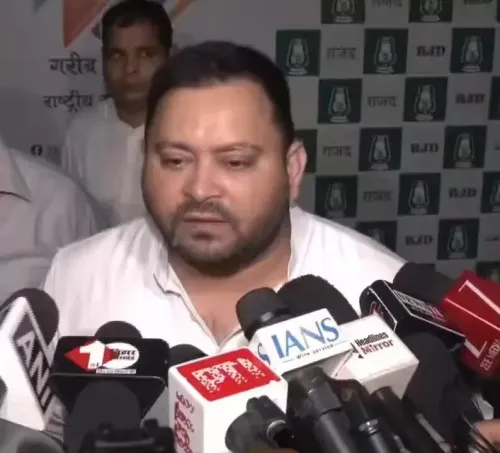
Tejashwi Yadav demands treason case against Gyanesh Kumar
Synopsis
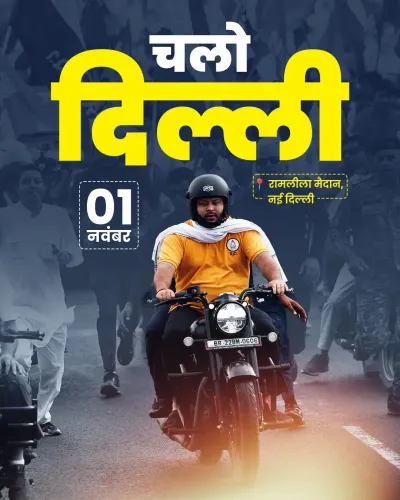
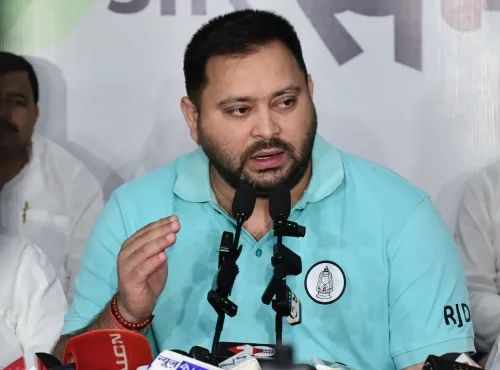
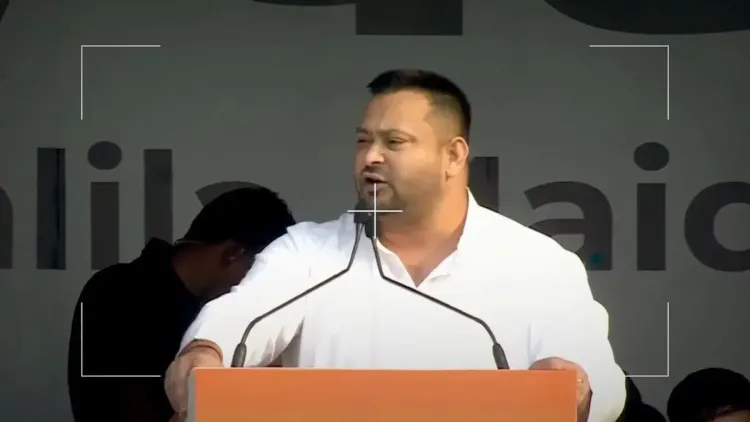
RJD leader Tejashwi Yadav, addressing a Delhi Ramleela Maidan rally on November 1, 2026, demanded a sedition case against Gyanesh Kumar, framing India's electoral contest as a Mahabharata-style war between 'voters' and 'cheaters of the nation.'
Key Takeaways
Tejashwi Yadav posted on November 1, 2026 calling for a treason case against Gyanesh Kumar over alleged electoral malpractice.
He framed the contest as a battle between 'the voters of the nation' and 'the cheaters of the nation.' Yadav invoked the Mahabharata's Shakuni — a symbol of manipulation — to characterise alleged vote rigging.
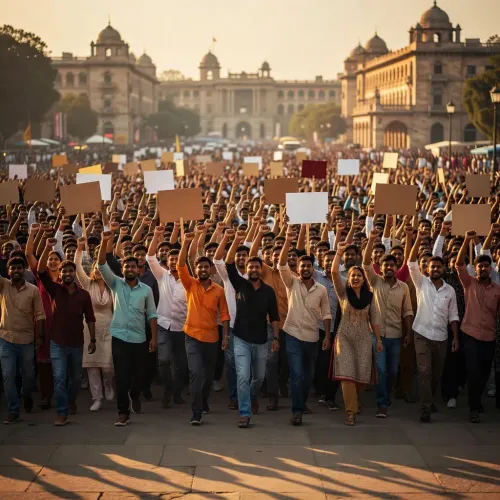
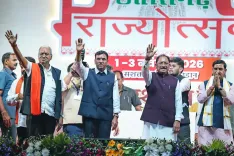
A rally was held at Ramleela Maidan, Delhi , which Yadav described as a Mahabharata gathering, not a Ramayana performance.
The post marks a shift from systemic EVM criticism to a direct, named accusation against an individual official.
The Election Commission of India had not publicly responded at the time of publication.
From the opposition benches of Bihar to the national spotlight, RJD leader Tejashwi Yadav has sharpened his attack on the electoral process — calling for a sedition case against Gyanesh Kumar and framing the fight over votes as nothing less than a modern Kurukshetra.
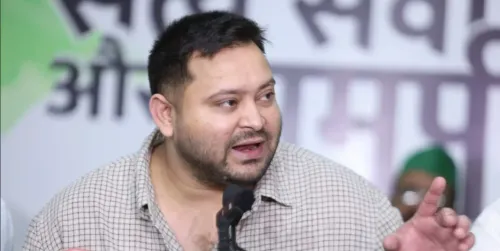
In a post on Sunday, November 1, 2026, Yadav declared: 'Ab yeh ladai 'desh ke voters' aur 'desh ke cheetaron' ke beech hai' — 'This fight is now between the voters of the nation and the cheaters of the nation.' The phrasing was pointed, personal, and unmistakably escalatory.
Ramleela Maidan becomes political battleground
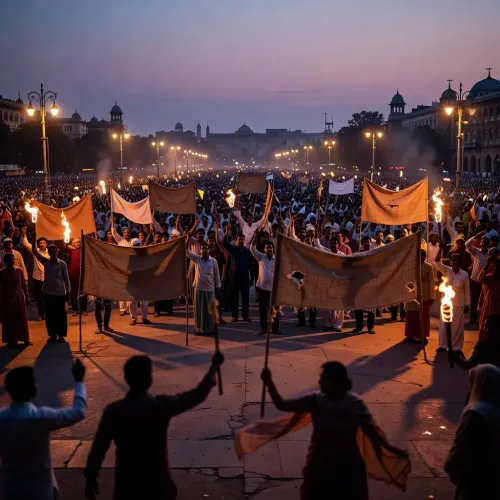
Yadav anchored his post to a rally held Sunday at Ramleela Maidan in Delhi — the vast public ground that has hosted everything from religious spectacles to landmark protest movements. He declared that the gathering was not a staging of the Ramayana but of the Mahabharata. The distinction carries weight in Indian political idiom: the Ramayana is a story of exile and righteous return; the Mahabharata is a story of dynastic war, betrayal, and a battlefield where no one walks away clean.
'When Shakuni is playing his game,' Yadav wrote, 'fighting against vote thieves becomes necessary.' The Shakuni reference — invoking the Mahabharata's master manipulator — is a recurring device in Indian opposition rhetoric when alleging electoral malpractice. Yadav deployed it here with maximum visibility, attaching a video to the post for amplification.
The demand that lands hardest: 'Treason charges against Gyanesh Kumar'
The sharpest line in the post was its closing salvo: 'Gyanesh Kumar par deshdroh ka muqadma chalna chahiye' — 'Gyanesh Kumar must face a treason case.' Naming an individual in such terms raises the political temperature considerably. The research does not verify Kumar's exact role or the specific context that drew Yadav's fire; NationPress will not speculate beyond what the post states.
What the post does confirm is the broader Opposition posture: that electoral machinery is being manipulated, that specific officials are complicit, and that the moment demands confrontation — not petition. 'Ab yeh Kurukshetra ban chuka hai,' Yadav wrote. 'This has now become Kurukshetra.'
A pattern sharpening into direct accusation
Opposition parties including the RJD have, over successive election cycles, raised concerns about electronic voting machines and the integrity of vote counting. What marks this post as a step further is the move from systemic critique to personal accusation — naming an individual and calling for criminal charges. That shift from 'the system is flawed' to 'this person must be prosecuted' is a significant rhetorical and legal escalation.
The Election Commission of India has not publicly responded to the post. Whether Yadav's demand translates into a formal legal complaint — and how the named individual or authorities respond — will determine whether this stays in the register of political rhetoric or moves into institutional confrontation.
In a democracy, the sharpest battles are fought over who counts the votes. Tejashwi Yadav just declared the battlefield open.
Frequently Asked Questions
What did Tejashwi Yadav say about Gyanesh Kumar?
Tejashwi Yadav demanded that a treason case be filed against Gyanesh Kumar, alleging his complicity in vote theft, in a post on November 1, 2026.
What happened at Ramleela Maidan Delhi on November 1 2026?
An opposition rally was held at Ramleela Maidan in Delhi, which Tejashwi Yadav described as a Mahabharata-style confrontation over alleged electoral fraud — not a religious Ramayana event.
What does 'Kurukshetra' mean in Tejashwi Yadav's election speech?
By calling the electoral fight a 'Kurukshetra,' Yadav invoked the great battle of the Mahabharata to signal that the opposition considers this a decisive, no-retreat confrontation over electoral integrity.
What are RJD's allegations about vote theft in Indian elections?
The RJD and other opposition parties have repeatedly alleged irregularities in electronic voting machines and vote counting across the 2019 and 2024 general elections, demanding stronger accountability mechanisms.
Has the Election Commission of India responded to Tejashwi Yadav's demands?
As of the time of publication, the Election Commission of India had not issued a public response to Yadav's post or his demand for a treason case against Gyanesh Kumar.