Telangana inspects private universities under Supreme Court order
Synopsis
The Supreme Court's crackdown on India's private university boom has reached Telangana: a six-member state committee is now auditing every private university across nine dimensions — from land grants to faculty qualifications to admission integrity — with findings to be submitted as a sworn affidavit to the bench in the Ayesha Jain vs. Union of India case.
Key Takeaways
The Telangana government has launched Supreme Court-mandated inspections of all private universities in the state, as of 19 July .
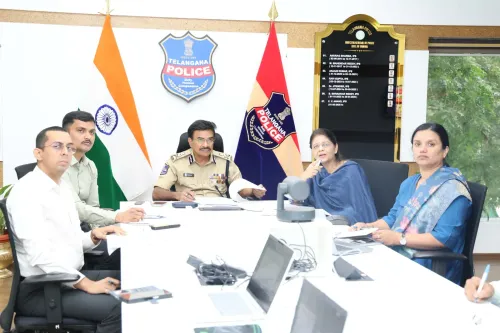
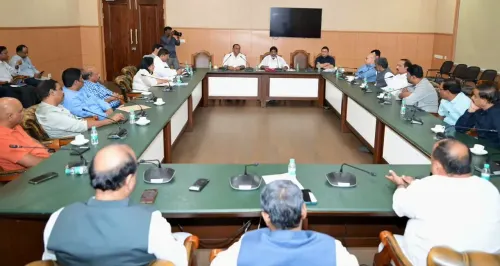
The inspection committee is chaired by the Commissioner of Collegiate Education (CCE) and includes officials from JNTU , Palamuru University , and Osmania University .
Inspections cover nine specific aspects ordered by the Supreme Court , including management composition, land benefits, faculty qualifications, and admission procedures.
The mandate arises from the Ayesha Jain vs.
Union of India case, in which the Court received widespread complaints about arbitrary private university operations.
Findings will be compiled into a comprehensive affidavit to be submitted to the Supreme Court , after which the state will act on the Court's further directions.
The Telangana government has deployed a high-level inspection committee to conduct comprehensive audits of every private university in the state, acting in direct compliance with a Supreme Court directive. The inspections, under way as of 19 July, cover nine specific aspects mandated by the Court and will culminate in a formal affidavit to be submitted before the bench.
Who Is on the Inspection Committee
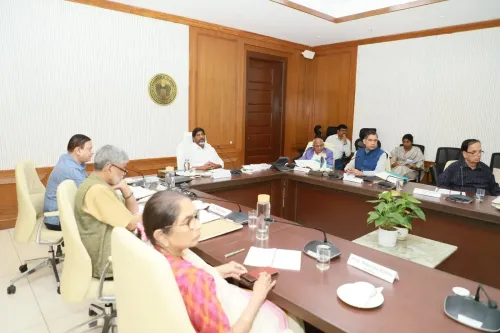
The committee is chaired by the Commissioner of Collegiate Education (CCE), with the Secretary of the Telangana Council of Higher Education (TGCHE) serving as Convener and the Registrar of JNTU as Member-Convener. Additional members include the Registrar of Palamuru University, the Chief Finance and Accounts Officer of Osmania University, and the Assistant Director (Academic-C) from the Department of Technical Education. The state government has also authorised the panel to co-opt a subject expert wherever necessary.
What Triggered the Supreme Court Order
The inspections stem from the Ayesha Jain vs. Union of India case, during which the Supreme Court received numerous complaints about the unchecked proliferation of private universities across India. The Court turned its attention to the underlying motives behind the establishment of such institutions, the actual objectives of their promoters, and the academic qualifications of their faculty. Noting the reportedly arbitrary manner in which several private universities operate, the bench directed all state governments to inspect every aspect — from the intent behind their founding to the quality of education delivered — and to submit detailed affidavits.
Nine Key Aspects Under Scrutiny
According to a statement from the Chief Minister's Office, the inspection team is examining the following areas:
1. Rationale for establishment: The reasons and objectives behind the university's founding, including whether a feasibility study was conducted and whether any policy considerations were undertaken beforehand.
2. Government benefits extended: Whether the state government allocated land or conferred other benefits, and the terms and conditions attached to them.
3. Actual management: The identity and selection process of management committee members, and the person effectively running the institution. Universities must furnish comprehensive details on this.
4. Student admission procedures: The standards and regulations governing the entrance process, their legal compliance, and whether the state government reviewed and validated the admission modalities.
The remaining five aspects, as directed by the Court, are being examined alongside other relevant matters. A comprehensive report will be prepared and submitted as an affidavit to the Supreme Court.
What Happens After the Inspection
Once the affidavit is submitted, the Telangana government has stated it will take further action strictly in accordance with the Court's subsequent orders. The exercise is being closely watched by higher-education stakeholders across the country, given that similar inspections have been ordered in other states under the same Supreme Court directive.
Point of View
Which has expanded rapidly with limited regulatory oversight. Telangana's compliance is procedurally sound, but the real test lies in the affidavit's candour — states have historically filed broad assurances rather than granular findings in such exercises. The nine-point framework is notably comprehensive, touching on land allocation and management selection, areas where political and commercial interests have historically intersected. Whether the Court uses these affidavits to set binding national standards or merely nudges compliance will determine whether this becomes a structural reform or another round of paperwork.
NationPress
19 Oct 2026
Frequently Asked Questions
Why is the Telangana government inspecting private universities?
The Telangana government is inspecting private universities in compliance with a Supreme Court order arising from the Ayesha Jain vs. Union of India case, in which the Court received numerous complaints about arbitrary operations and the unchecked proliferation of private universities across India. The state must submit a detailed affidavit of findings to the Court.
What are the nine aspects being inspected in private universities?
The Supreme Court has directed inspection across nine specific aspects, including the rationale for the university's establishment, feasibility studies conducted, government land or benefits extended, the composition and selection of the management committee, and the standards governing student admissions. The remaining aspects are also under examination alongside other relevant matters.
Who is on the Telangana private university inspection committee?
The committee is chaired by the Commissioner of Collegiate Education (CCE). Its members include the Secretary of TGCHE as Convener, the Registrar of JNTU as Member-Convener, the Registrar of Palamuru University, the Chief Finance and Accounts Officer of Osmania University, and the Assistant Director (Academic-C) from the Department of Technical Education. A subject expert may also be co-opted if needed.
What is the Ayesha Jain vs. Union of India case?
It is a case before the Supreme Court of India in which the bench has been examining complaints related to the proliferation and arbitrary functioning of private universities nationwide. The Court's scrutiny covers the intent behind their establishment, faculty qualifications, and admission practices, and it has ordered state-by-state inspections as part of the proceedings.
What happens after the inspection is completed?
The inspection team will compile its findings into a comprehensive affidavit, which the Telangana government intends to submit to the Supreme Court. Following the Court's review of the affidavit, the state government will take further action in accordance with whatever directions the bench issues.