Telangana CM Revanth Reddy Plans AI Tools to Boost GST Revenue

Synopsis
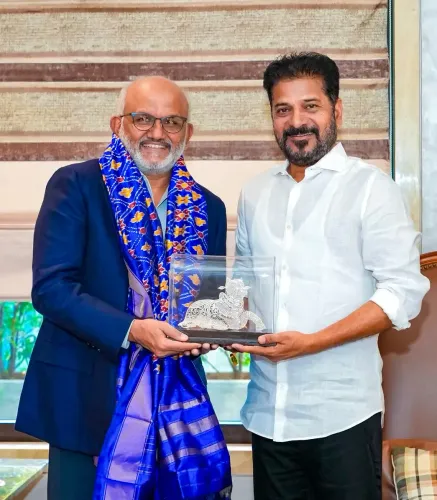
Telangana CM Revanth Anumula and economist Arvind Subramanian met on 7 August 2026 to design an AI-powered GST enforcement system that cross-links municipal, RERA, excise and power department data — aiming to seal construction-sector tax leakage without burdening businesses.
Key Takeaways
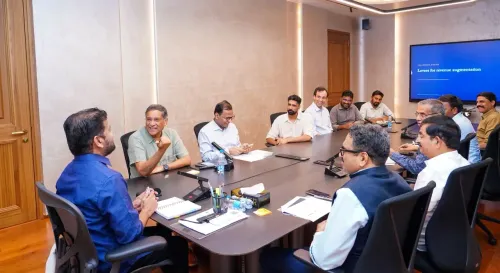
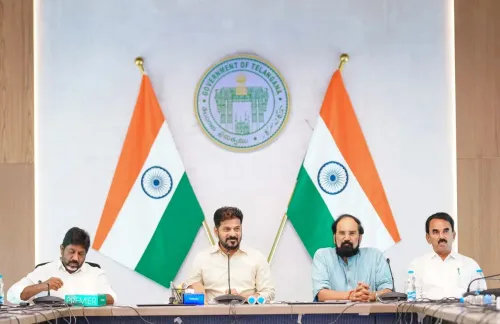
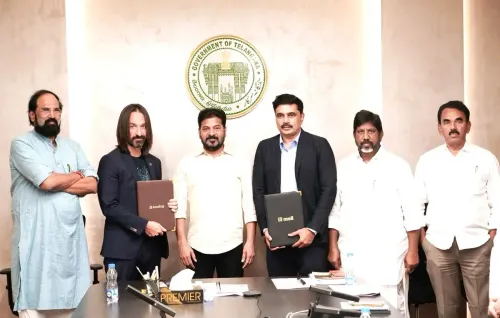
Chief Minister Revanth Anumula held a high-level meeting at MCR HRD Bodhi Pavilion, Hyderabad on 7 August 2026 with former CEA Arvind Subramanian on GST and excise reforms.
Telangana plans a dedicated AI-based information system for GST officials to simplify enforcement and improve revenue detection.
The construction and building materials sector was identified as the primary source of tax leakage due to poor inter-departmental coordination.
An AI-powered coordination mechanism linking Municipal, RERA, Panchayat Raj, Electricity, Finance, and Commercial Taxes departments is proposed.
Tax estimates for large buildings and contracts will be recorded at the permit-application stage itself, integrated with MeeSeva, Aarogyasri, and CM Relief Fund data.
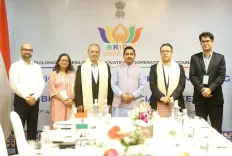
Senior officials including Chief Secretary Sanjay Jaju , Commercial Taxes Secretary Raghunandan Rao , and Excise Commissioner CH Harikiran attended the meeting.
Telangana is betting on artificial intelligence to close the gap between what businesses owe and what the state actually collects. The Chief Minister's Office of Telangana announced on 7 August 2026 that Chief Minister Revanth Anumula held extensive discussions with former Chief Economic Adviser Arvind Subramanian on deploying AI-driven systems to strengthen GST and excise revenues — without adding friction for businesses operating in the state.
What Was Decided at the MCR HRD Bodhi Pavilion Meeting
The meeting took place at the MCR HRD Bodhi Pavilion, Hyderabad, bringing together senior state officials alongside Subramanian. The agenda was precise: identify where tax revenue is leaking, and plug those gaps using technology rather than additional regulatory burden. The CMO stated that a dedicated AI-based information system will be made available to GST officials to simplify enforcement and detection.
Subramanian, who steered national economic advisory during a formative period of GST's rollout between 2014 and 2018, stressed that technology adoption must serve a dual purpose — growing state treasury receipts while simultaneously improving Ease of Doing Business. The principle: smarter systems, not heavier compliance loads.
Construction Sector in the Crosshairs of Tax Leakage
Chief Minister Revanth Anumula zeroed in on a specific vulnerability: the building and construction materials sector. He pointed to coordination failures across departments — Municipal, RERA, Panchayat Raj, Electricity, Finance, and Commercial Taxes — as the primary reason tax leakage persists. The proposed fix is an AI-powered cross-departmental coordination system that links these agencies in real time.
The plan goes further. From the permit-application stage itself, construction projects would be required to record material requirements and corresponding tax estimates. That data would then be integrated with existing platforms — MeeSeva, Aarogyasri, and the CM Relief Fund — to create a unified administrative intelligence layer. The logic is elegant: if the state knows what a building needs before the first brick is laid, it knows what taxes are due before evasion becomes possible.
Who Was in the Room
The meeting included CM Adviser K. Ramakrishna Rao, Telangana Chief Secretary Sanjay Jaju, Commercial Taxes Department Secretary Raghunandan Rao, and Excise Commissioner CH Harikiran, alongside other senior officials. The breadth of representation — spanning revenue, excise, and administrative leadership — signals that this is being treated as a whole-of-government initiative rather than a departmental pilot.
Telangana's AI Revenue Push in a Wider National Context
Telangana is not moving in isolation. Across India, states have increasingly turned to data analytics and AI for GST compliance since the tax's 2017 unification. What distinguishes Telangana's approach is the ambition to integrate siloed departmental databases — municipal records, real estate filings, health scheme data — into a single compliance backbone. If it works, the model could offer a replicable blueprint for revenue-hungry state governments nationwide.
The state's economy, anchored in IT services, pharmaceuticals, and a booming construction sector, gives this reform particular urgency. A fast-growing economy that outpaces its tax collection infrastructure is leaving money on the table. Closing that gap, without spooking investors, is the tightrope Revanth Anumula is now walking.
Whether AI can actually deliver where inter-departmental coordination has historically failed is the question that will define this initiative's legacy.
Point of View
Data-integrated compliance — a maturation of the 2017 GST reform's original promise. By looping in Arvind Subramanian, a figure with credibility across political lines, CM Revanth Anumula signals that the reform is designed to withstand scrutiny beyond a single electoral cycle. The construction-sector focus is politically shrewd: it targets a high-leakage, high-growth segment without directly threatening the IT or pharma industries that define Telangana's investor identity. The real test will be whether the state can overcome the inter-departmental data-sharing inertia that has stalled similar initiatives elsewhere.
NationPress
7 Aug 2026
Frequently Asked Questions
Why is Telangana using AI for GST collection?
Telangana is deploying AI to detect tax leakage and improve coordination among departments like Municipal, RERA, and Excise, which currently operate in silos. The goal is to raise state revenue without adding compliance burdens on businesses.
Who is Arvind Subramanian and why did he meet CM Revanth Reddy?
Arvind Subramanian is an Indian economist who served as Chief Economic Adviser to the Government of India from 2014 to 2018. He met CM Revanth Anumula on 7 August 2026 to advise on GST and excise reforms for Telangana.
What is the construction sector tax leakage problem in Telangana?
Tax leakage in construction occurs because departments handling building permits, real estate regulation, electricity connections, and commercial taxes do not share data. The proposed AI system would link these agencies so material requirements and tax dues are tracked from the permit stage.
How will MeeSeva and Aarogyasri data be used in Telangana's tax reform?
CM Revanth Anumula proposed integrating MeeSeva, Aarogyasri, and CM Relief Fund data with the new AI tax system to create a unified administrative intelligence layer that improves governance and cross-verification of tax compliance.
Will Telangana's AI tax system affect businesses negatively?
According to the CMO, the system is explicitly designed to avoid disrupting businesses. Economist Arvind Subramanian emphasised that technology use must improve Ease of Doing Business while boosting state revenue — not increase compliance friction.