India-Iran education ties: Joshi, Shams-Bakhsh meet at BRICS summit in Bhubaneswar
Synopsis
On the sidelines of the 13th BRICS Education Ministers' Meeting in Bhubaneswar, India and Iran held a bilateral exchange aimed at converting centuries-old civilisational ties into concrete academic and research partnerships — a quiet but potentially consequential diplomatic signal within a multilateral setting that also produced a landmark BRICS Education Declaration.
Key Takeaways
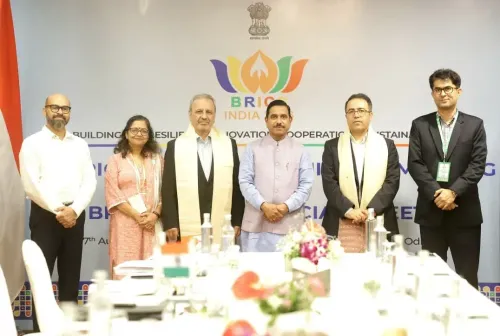
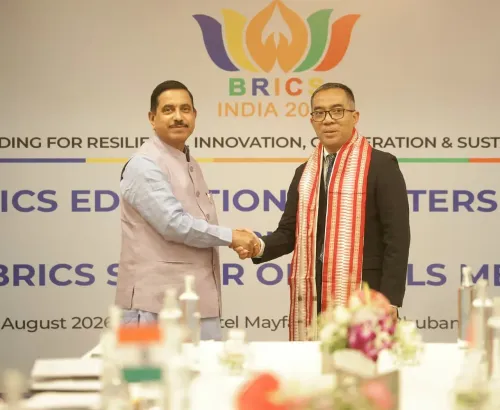
Pralhad Joshi and Iran's Masoud Shams-Bakhsh met on 7 August in Bhubaneswar on the sidelines of the 13th BRICS Education Ministers' Meeting .
Discussions covered academic linkages, student and researcher exchanges, digital education, and joint innovation opportunities.
The BRICS Education Ministers' Declaration was unanimously adopted, focusing on five priority areas including skill development, early childhood education, and collaborative research.
The summit was held under India's BRICS chairship for the third time, with delegates from 8 member nations .
The meeting was preceded by the third BRICS Education Senior Officials' Meeting on 5 August 2025 .
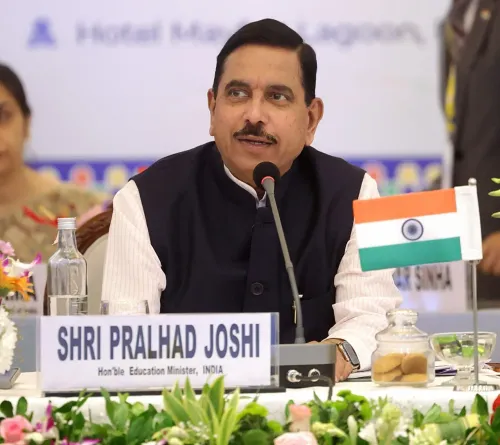
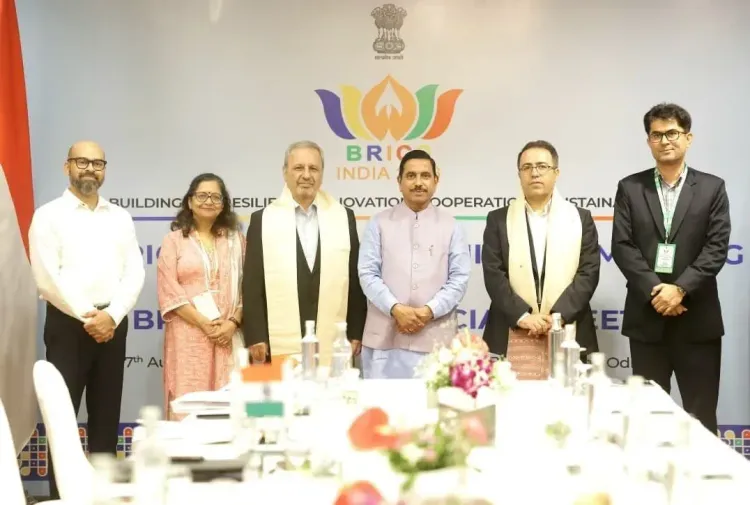
Pralhad Joshi, India's Minister of Education, and Masoud Shams-Bakhsh, Acting Minister of Science, Research and Technology of the Islamic Republic of Iran, met on Friday, 7 August on the sidelines of the 13th BRICS Education Ministers' Meeting in Bhubaneswar to explore deepening bilateral cooperation in education, research, technology and innovation. The bilateral exchange drew on the two nations' longstanding civilisational ties as a foundation for building modern academic and institutional partnerships.
Key Discussions Between the Two Ministers
According to the Embassy of Iran in India, the talks covered a broad agenda: strengthening academic and research cooperation, enhancing institutional linkages between scientific and educational bodies, expanding opportunities for students and researchers, and leveraging digital education tools. Both sides emphasised utilising existing capacities to deepen scientific collaboration and create fresh avenues for youth empowerment and innovation.
'The two sides also emphasised the importance of utilising existing capacities to deepen scientific and educational cooperation further and create new opportunities for empowering young people and promoting innovation,' the Embassy noted in a post on X.
BRICS Education Ministers' Declaration Adopted
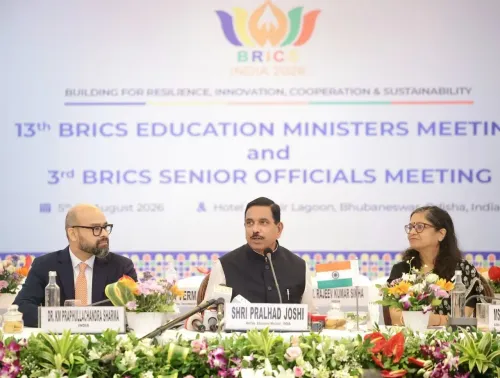
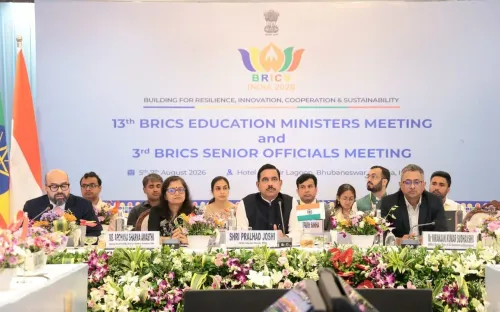
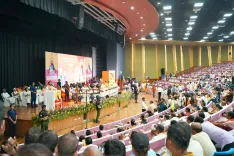
Earlier on the same day, the 13th BRICS Education Ministers' Meeting unanimously adopted the BRICS Education Ministers' Declaration, marking a significant milestone in multilateral education cooperation. The summit, held under India's BRICS chairship for the third time, brought together Education Ministers, delegates and senior officials from Brazil, Russia, China, South Africa, Indonesia, Iran, the United Arab Emirates (UAE) and Ethiopia.
Theme and Five Priority Areas
This year's summit theme — 'Building Resilience and Innovation for Cooperation and Sustainability' — placed a strong emphasis on youth participation and people-to-people exchanges. Minister Joshi outlined five key priorities enshrined in the declaration: strengthening early childhood care and education; skill development; mutual recognition of qualifications and enhanced cooperation under the BRICS TVET Cooperation Alliance; promotion of collaborative research, innovation and start-ups; and capacity building for academic leadership.
Context and Background
The ministerial meeting was preceded by the third BRICS Education Senior Officials' Meeting, held in Bhubaneswar on 5 August. India-Iran academic ties, while historically rooted in shared Persian and subcontinental cultural heritage, have seen limited institutional formalisation in recent decades. This bilateral engagement, conducted within the BRICS multilateral framework, signals a renewed push to translate civilisational affinity into structured scientific and educational exchange. Notably, both countries are BRICS members, providing a ready institutional architecture for follow-through.
Whether the discussions translate into formal agreements — such as joint degree programmes, researcher exchange protocols, or co-funded innovation labs — will determine the real-world impact of Friday's meeting.
Point of View
Held within a BRICS setting, is easy to overlook as protocol — but it carries diplomatic weight. With India managing a careful balancing act between Western partners and non-aligned relationships, academic diplomacy with Tehran offers a low-friction channel that sidesteps sanctions optics while preserving strategic depth. The invocation of 'civilisational ties' is deliberate framing: it grounds the relationship in a pre-political history that neither side needs to justify. The real test, as with most such ministerial meetings, is whether institutional follow-through materialises — joint programmes, researcher mobility frameworks, or co-funded labs — or whether Friday's exchange remains a warm handshake on a conference sideline.
NationPress
7 Aug 2026
Frequently Asked Questions
What did India and Iran discuss at the BRICS Education Ministers' Meeting in Bhubaneswar?
India's Education Minister Pralhad Joshi and Iran's Acting Minister of Science, Research and Technology Masoud Shams-Bakhsh met on 7 August 2025 in Bhubaneswar to discuss cooperation in education, research, technology and innovation. Key topics included strengthening academic linkages, expanding student and researcher opportunities, and leveraging digital education.
What is the BRICS Education Ministers' Declaration adopted in Bhubaneswar?
The BRICS Education Ministers' Declaration is a multilateral agreement unanimously adopted at the 13th BRICS Education Ministers' Meeting on 7 August 2025. It outlines five priority areas: early childhood care and education, skill development, mutual recognition of qualifications under the BRICS TVET Alliance, collaborative research and innovation, and academic leadership capacity building.
Which countries participated in the 13th BRICS Education Ministers' Meeting?
The meeting brought together Education Ministers, delegates and senior officials from Brazil, Russia, China, South Africa, Indonesia, Iran, the United Arab Emirates, and Ethiopia, with India hosting as BRICS chair.
Why is the India-Iran education meeting significant?
The bilateral meeting signals a renewed effort to translate longstanding civilisational and cultural ties between India and Iran into structured academic and scientific partnerships. It is significant because both nations are BRICS members, providing a ready institutional framework for follow-through on any agreed cooperation.
What was the theme of the 2025 BRICS Education Summit?
The theme was 'Building Resilience and Innovation for Cooperation and Sustainability', with a strong focus on youth participation and people-to-people exchanges. It was held under India's BRICS chairship for the third time.