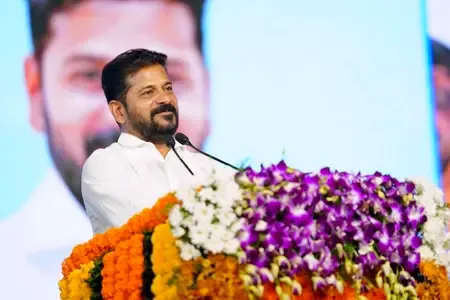
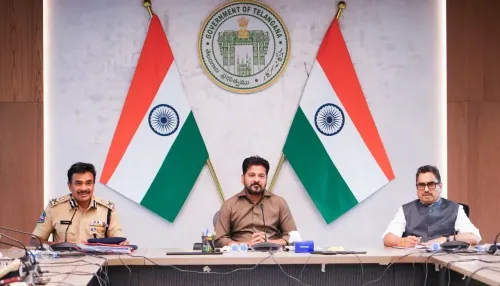
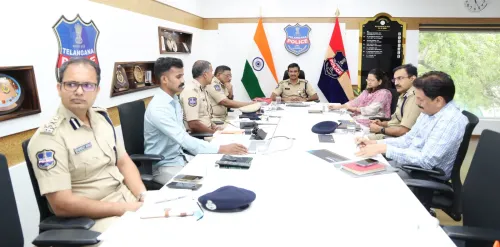
Telangana CM Revanth Reddy launches TG-TMARS traffic bureau
Synopsis
Telangana CM Revanth Reddy has formally established TG-TMARS via GO 135 — a dedicated traffic and road-rail safety bureau headquartered in Hyderabad, overseen by an ADGP or IGP, covering 32,000+ km of roads, with 24x7 accident response officers and a fund fed by 40% of traffic fines.
Key Takeaways
TG-TMARS (Telangana Traffic Management, Road and Rail Safety Bureau) has been formally constituted via Government Order 135 under the State Road Safety Council, reporting to the Chief Minister.
The bureau will be headquartered in Hyderabad and led by an officer of ADGP or IGP rank.
It will oversee traffic on 32,000+ km of roads and monitor 1.8 crore+ registered vehicles , including metro and railway safety.
Every police station will have a Road Accident Response Officer on duty 24x7 to transport crash victims to hospital within the 'golden hour'.
Highway Patrolling Units with speed detectors and surveillance cameras will be deployed on the Outer Ring Road and highways longer than 50 km.
40% of all traffic fine revenue will be redirected into a dedicated Traffic Management Fund for training, technology, vehicles, and road repairs.
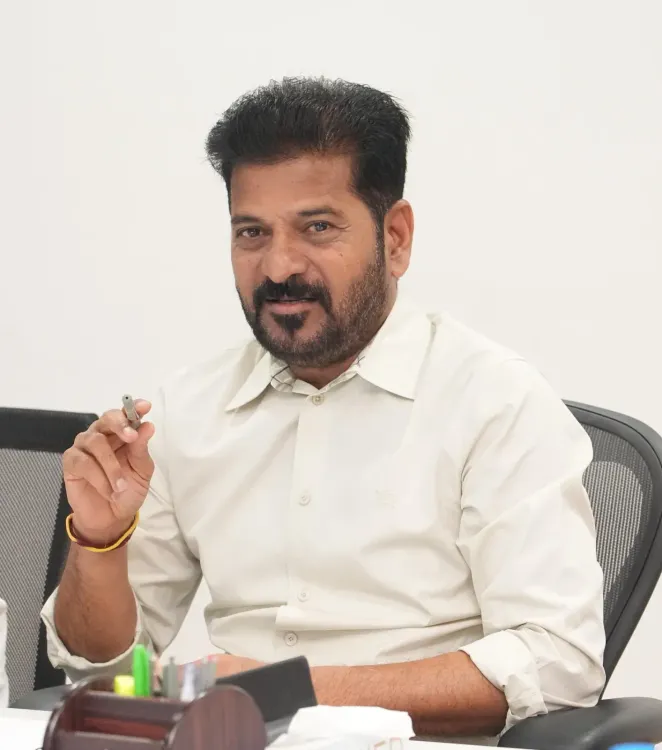
A new era of road safety has arrived in Telangana — not with a promise, but with a government order. Chief Minister Revanth Reddy has formally established the Telangana Traffic Management, Road and Rail Safety Bureau (TG-TMARS), a dedicated agency that moves well beyond challan collection to deliver scientific traffic control and on-the-spot emergency medical response across the state.
The Chief Minister's Office announced the move on Thursday, 24 September 2026, detailing the bureau's mandate through Government Order 135 (GO 135). The new body will operate under the State Road Safety Council, reporting directly to the Chief Minister's Office — a structural choice that signals the administration's intent to push implementation without bureaucratic delay.
What TG-TMARS will actually do
The bureau's brief is deliberately wide. It will oversee traffic movement across more than 32,000 kilometres of roads and monitor the movement of over 1.8 crore registered vehicles across Telangana. Critically, its remit is not limited to road transport — metro rail and railway safety have also been brought under its umbrella, making it one of the more comprehensively scoped traffic bodies in any Indian state. Headquartered in Hyderabad, the bureau will be led by an officer of Additional Director General of Police (ADGP) or Inspector General of Police (IGP) rank — a seniority level that gives it real institutional weight.The 'golden hour' mandate and round-the-clock responders
Perhaps the most consequential element is the 'golden hour' protocol. Every police station in the state will be required to have a designated Road Accident Response Officer available around the clock. Their sole job: reach an accident scene immediately and transport the injured to hospital within the critical window when survival odds are highest. This is a direct acknowledgement that the gap between a crash and medical care — not just the crash itself — costs lives. Getting that gap to near zero is the whole point.Highway Patrolling Units on ORR and long-distance roads
On the Outer Ring Road (ORR) and on highways stretching beyond 50 kilometres, dedicated Highway Patrolling Units equipped with speed detectors and high-end surveillance cameras will maintain continuous watch. The ORR, which encircles Hyderabad and carries heavy freight and passenger traffic at high speeds, has long been a stretch where enforcement has struggled to keep pace with volume.40% of traffic fines to feed a dedicated fund
Funding the bureau's operations is a notable mechanism: 40 per cent of all traffic fine revenue collected by police will be directly channelled into a new Traffic Management Fund. That money is earmarked specifically for staff training, advanced technology procurement, patrolling vehicles, and emergency road repairs — closing the loop between enforcement revenue and safety investment. The model draws from a well-established national pattern. After the Motor Vehicles (Amendment) Act of 2019 stiffened penalties across India, several state governments recognised that higher fines alone did not translate into safer roads. Supreme Court directives through the 2010s had already nudged states toward building structured, technology-backed road safety mechanisms rather than relying on ad-hoc enforcement. Telangana's TG-TMARS is a pointed response to both. Whether GO 135 translates into deployed officers and operational patrol units on schedule will be the real test — and the numbers it eventually produces on response times and fatality rates will be the only verdict that matters.Point of View
Creating accountability at the station level. The self-financing mechanism — routing 40% of fines back into the fund — is textbook sustainable-governance design, aligning the enforcement incentive with the safety outcome rather than with general revenue. The broader signal is that Telangana is positioning itself as a governance-innovation state, with road safety as a test case that is both politically visible and quantifiably verifiable.
NationPress
24 Sept 2026
Frequently Asked Questions
What is TG-TMARS in Telangana?
TG-TMARS stands for Telangana Traffic Management, Road and Rail Safety Bureau, a new government body established by Chief Minister Revanth Reddy via GO 135 to scientifically manage traffic, reduce road accidents, and provide emergency medical response across Telangana.
What is the Traffic Management Fund in Telangana?
The Traffic Management Fund is a dedicated fund created under TG-TMARS into which 40% of all traffic fine revenue collected by police will be deposited. It will be used for staff training, advanced technology, patrolling vehicles, and emergency road repairs.
What does a Road Accident Response Officer do in Telangana?
A Road Accident Response Officer is a designated official stationed at every police station in Telangana, available 24 hours a day, whose responsibility is to reach an accident site immediately and rush injured victims to a hospital within the critical 'golden hour' to improve survival chances.
Who heads the TG-TMARS bureau and where is it based?
TG-TMARS is headquartered in Hyderabad and will be headed by an officer of Additional Director General of Police (ADGP) or Inspector General of Police (IGP) rank.
Does TG-TMARS cover railways and metro safety in Telangana?
Yes. In addition to road transport, TG-TMARS has been given responsibility for metro rail and railway safety in Telangana, making it a combined road-and-rail safety authority.