Kashmir terrorism still a challenge for security forces: RSS leader Indresh Kumar
Synopsis
Even as overall militancy in Jammu and Kashmir has dropped sharply, the targeted killing of Head Constable Ashiq Hussain Qureshi in Anantnag on Friday is a stark reminder that isolated attacks on security personnel persist. RSS leader Indresh Kumar's measured acknowledgement — praising the decline while calling out the residual threat — captures the paradox at the heart of J&K's security situation today.
Key Takeaways
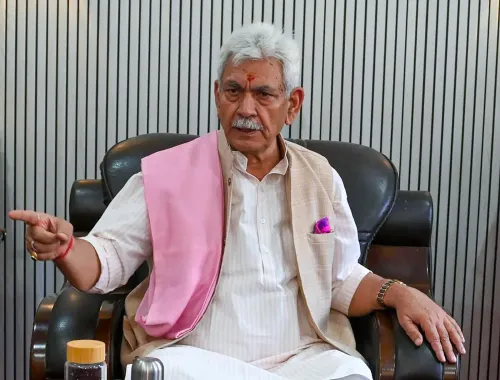
RSS leader Indresh Kumar on 24 July said terrorism in Jammu and Kashmir remains a 'challenge' for security forces despite a drastic overall decline.
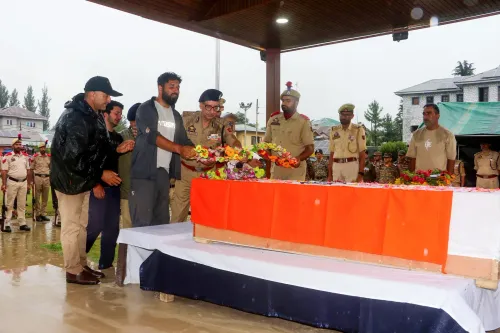
Head Constable Ashiq Hussain Qureshi was shot dead at close range by a terrorist while on patrol in Anantnag .
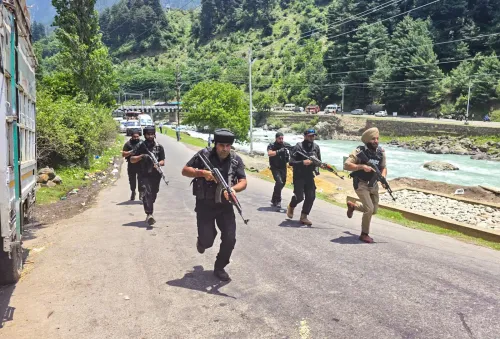
Police launched a manhunt and circulated the suspect's photograph for public identification.
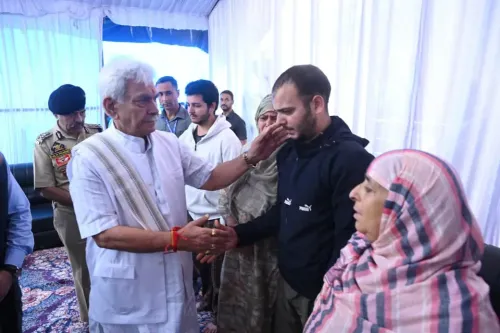
Lieutenant Governor Manoj Sinha visited the family of the slain constable on Friday .
Kumar expressed confidence that Jammu and Kashmir — including the Kashmir Valley — will eventually be completely free of terrorism.
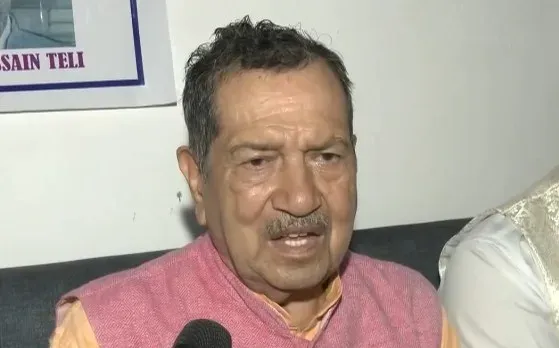
Rashtriya Swayamsevak Sangh (RSS) leader Indresh Kumar on Friday, 24 July acknowledged that while terrorist incidents in Jammu and Kashmir have fallen sharply, eliminating residual militancy remains a 'challenge' for security forces and society alike. His remarks came hours after Head Constable Ashiq Hussain Qureshi was shot at close range by a terrorist while on patrolling duty in Anantnag, and was declared brought dead on arrival at hospital.
What Indresh Kumar Said
'Slowly, Jammu and Kashmir is becoming free from terrorism. I would like to congratulate the government, the Army, and society for this. However, some isolated incidents and violent incidents are still taking place. These are very sad, and no amount of condemnation is enough for them,' Kumar said.
He described such violence as 'a sign of cowardice' and 'a sign of cruelty,' adding that perpetrating such acts 'also reflects their weakness.' He expressed confidence that the Union Territory — particularly the Kashmir Valley — would eventually be completely free of terrorism, citing the already 'drastic fall' in militant activity as grounds for optimism.
Kumar also noted that despite attempts by terrorists to spread fear, 'the people of the country have shown that they are not scared and they will never be so.'
The Anantnag Attack
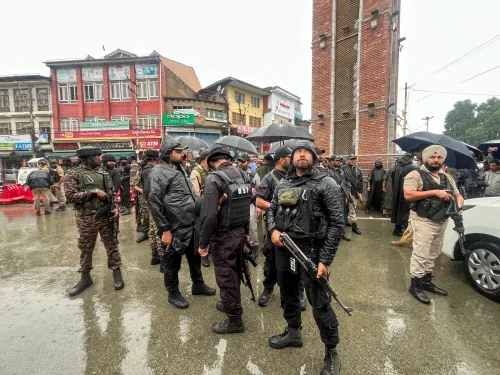
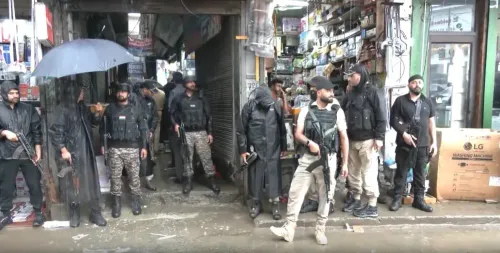
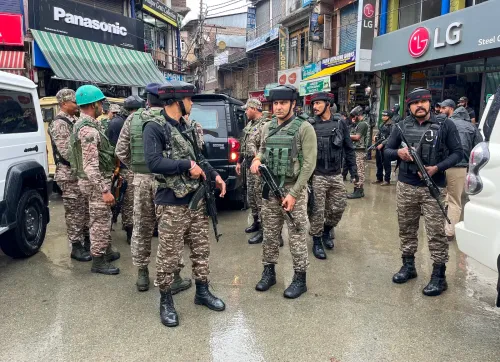
Head Constable Ashiq Hussain Qureshi was shot by a terrorist from close range while conducting a patrol in Anantnag. He was killed on the spot, and doctors confirmed he was brought dead to the hospital. Following the attack, police launched an aggressive manhunt for the assailant, circulating the suspect's photograph among the general public to aid identification and reporting.
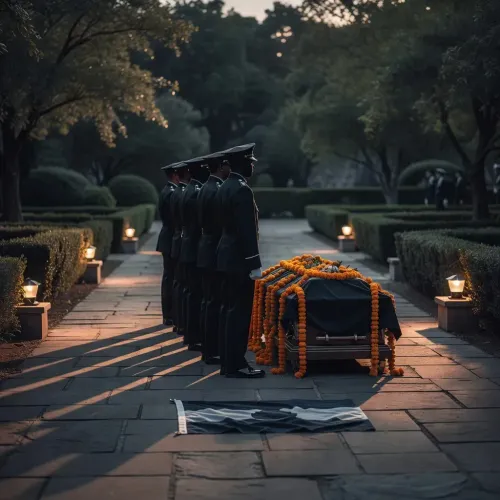
Jammu and Kashmir Lieutenant Governor Manoj Sinha visited the family of the slain constable on Friday to offer condolences.
Kumar on Pakistan and Pakistan Occupied Kashmir
Responding to a question about the recent police crackdown on protesters in Pakistan Occupied Kashmir, Kumar said: 'In Pakistan, there is severe oppression even against Pakistanis themselves. Therefore, Pakistan is on the verge of breaking apart because of its own actions. In 1971, it had already broken. After that, today Balochistan, and the people of Sindh are also continuously struggling to separate from it.'
Broader Security Context
The killing of Head Constable Qureshi underscores the persistent threat posed by isolated militant actors even as overall terror incidents in Jammu and Kashmir have declined significantly over recent years. Security analysts have repeatedly noted that while large-scale coordinated attacks have become rarer, targeted killings of security personnel and civilians remain a stubborn feature of the conflict. The incident is the latest in a series of attacks on security forces in the Union Territory in 2025, reinforcing the RSS leader's assessment that the final phase of counter-insurgency carries its own distinct risks.
As the manhunt for the Anantnag attacker continues, all eyes will be on whether security forces can make an early arrest — a result that would signal the effectiveness of the intelligence grid that has driven the broader decline in militancy.
Point of View
Low-signature violence that is harder to pre-empt. The real measure of J&K's security trajectory is not just the headline count of incidents, but whether the state can protect the rank-and-file personnel who bear the daily burden of counter-insurgency. On that metric, Friday's attack is a sobering data point.
NationPress
24 Jul 2026
Frequently Asked Questions
What did RSS leader Indresh Kumar say about terrorism in Jammu and Kashmir?
Indresh Kumar said that while terrorist incidents have drastically declined in Jammu and Kashmir, eliminating residual militancy remains a 'challenge' for security forces and society. He congratulated the government, Army, and society for the progress made, but stressed that isolated violent incidents are still occurring.
Who was Head Constable Ashiq Hussain Qureshi?
Ashiq Hussain Qureshi was a Head Constable with the Jammu and Kashmir Police who was shot at close range by a terrorist while on patrolling duty in Anantnag. He was killed on the spot and declared brought dead at the hospital.
What action did police take after the Anantnag attack?
Police launched an aggressive manhunt for the assailant immediately after the attack. The suspect's photograph was circulated among the general public to help identify and report his whereabouts.
What did Indresh Kumar say about Pakistan Occupied Kashmir?
Kumar said Pakistan exercises 'severe oppression' even against its own citizens, and argued the country is 'on the verge of breaking apart.' He referenced the 1971 partition and pointed to ongoing separatist struggles in Balochistan and Sindh as evidence of Pakistan's internal fragility.
Did any official visit the family of the slain constable?
Yes, Jammu and Kashmir Lieutenant Governor Manoj Sinha visited the family of Head Constable Ashiq Hussain Qureshi on Friday to offer his condolences following the attack in Anantnag.