CM Himanta chairs NDDB meet to boost Assam dairy sector
Synopsis
Chief Minister Himanta Biswa Sarma chaired a meeting with NDDB and Assam's Cooperation Department on 25 July 2026, focusing on new milk processing units in Jorhat, Dhemaji and Dibrugarh, a ₹200 crore Tetra Pak plant, indigenous breed conservation, and a possible NDDB regional office in Assam.
Key Takeaways
CM Himanta Biswa Sarma chaired a meeting with the NDDB and Assam's Cooperation Department on 25 July 2026 to accelerate dairy sector growth.
The government plans to fast-track 2.5 lakh litres per day milk processing units across Jorhat , Dhemaji , and Dibrugarh .
A ₹200 crore Tetra Pak milk processing and packaging plant is being advanced to enable value-added dairy products.
The meeting discussed simplifying milk producer registration to bring more smallholder farmers into the formal cooperative network.
NDDB support has been sought for conserving and promoting Assam's indigenous cattle breeds , aligning with the national Rashtriya Gokul Mission.
The government is exploring setting up an NDDB Regional Office in Assam , which could benefit dairy development across the wider Northeast.
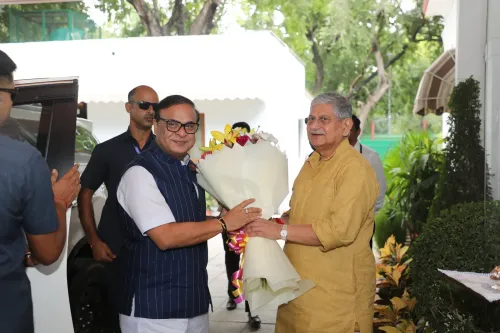
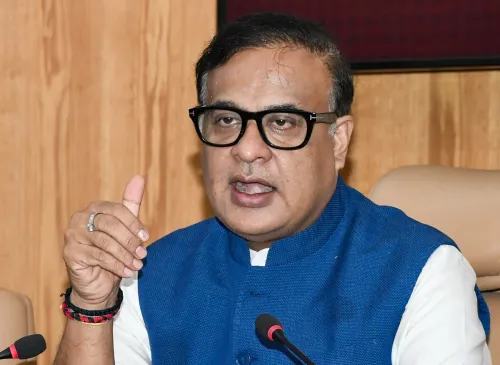
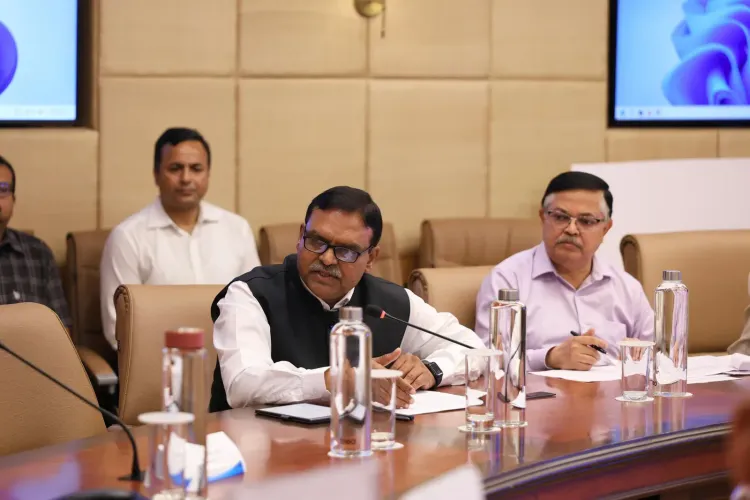
The Chief Minister's Office of Assam announced on Friday, 25 July 2026 that Chief Minister Dr. Himanta Biswa Sarma chaired a high-level meeting with the National Dairy Development Board (NDDB) and the state's Cooperation Department to accelerate growth in Assam's dairy sector across production, processing, and breed conservation.
The meeting identified five priority areas: simplifying milk producer registration, fast-tracking new processing units, advancing a major packaging plant, conserving indigenous cattle breeds, and exploring a dedicated NDDB regional presence in the state.
Context
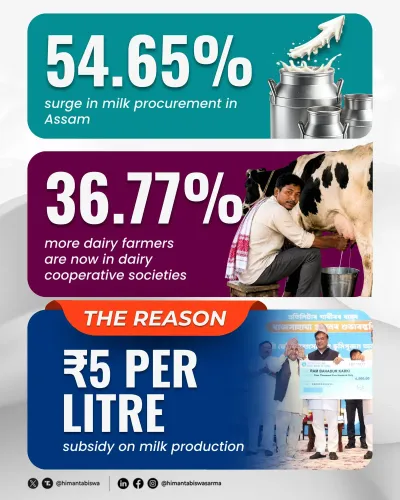
Assam has historically depended on milk supplies from neighbouring states to meet local demand, leaving its dairy sector underdeveloped relative to its agricultural base. The Sarma government has been pushing cooperative-led rural income growth since 2021, and this meeting represents a structured attempt to close the infrastructure gap in the Upper Assam dairy belt.
According to the Chief Minister's Office, the discussion zeroed in on easing the registration burden for milk producers — a step aimed at bringing more smallholder farmers into the formal cooperative network and boosting aggregate milk output across the state.
Policy Backdrop
The NDDB, established in 1965 under the Ministry of Fisheries, Animal Husbandry and Dairying, has long supported state-level dairy infrastructure through its replication of the Anand cooperative model. Assam has previously accessed central support under the Dairy Processing and Infrastructure Development Fund notified in 2017.
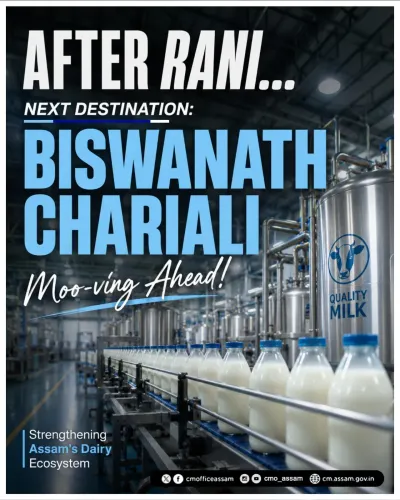
The proposed 2.5 lakh litres per day milk processing cluster spanning Jorhat, Dhemaji, and Dibrugarh — three districts in Upper Assam — would significantly expand the state's cold-chain and processing footprint. Alongside this, the government is advancing a ₹200 crore Tetra Pak milk processing and packaging plant, which would enable value-added, shelf-stable milk products suited for both local consumption and wider distribution.
The conservation of Assam's indigenous cattle breeds was also on the agenda, with NDDB support sought for genetic preservation efforts. This aligns with the national Rashtriya Gokul Mission framework, which prioritises climate-resilient and genetically superior indigenous livestock breeds across states.
Stakeholders and Impact
Dairy farmers and milk producers across Jorhat, Dhemaji, and Dibrugarh districts stand to benefit most directly from the proposed processing infrastructure, which would reduce post-harvest losses and offer farmers a reliable, proximate market for raw milk. Indigenous cattle breeders in the Brahmaputra valley could gain from structured NDDB-backed breed conservation programmes.
The proposed NDDB Regional Office in Assam — currently being explored — would institutionalise the board's presence in the Northeast, potentially benefiting dairy development across the wider region beyond Assam's borders. Similar state-NDDB partnerships have been pursued in other northeastern states as part of a broader push for regional self-sufficiency in milk and milk products.
What's Next
The commissioning timelines for the Jorhat, Dhemaji, and Dibrugarh processing units and a formal proposal for the NDDB regional office will be the key developments to watch in the coming months. The government's ability to fast-track land acquisition, cooperative onboarding, and central funding approvals will determine how quickly the planned capacity translates into on-ground impact.
If the processing infrastructure and the Tetra Pak plant come online as planned, Assam could move from being a milk-deficit state to a net contributor to the northeastern dairy supply chain — a structural shift that would have lasting implications for rural livelihoods and cooperative economics across the region.
Point of View
Infrastructure-led transformation of Assam's cooperative dairy economy. By anchoring the plan around three Upper Assam districts and a ₹200 crore packaging facility, the state is positioning itself to capture value higher up the dairy supply chain rather than simply increasing raw milk output. The push for an NDDB regional office reflects a longer strategic play — institutionalising federal dairy expertise in the Northeast, where such presence has historically been thin. If timelines hold, this could become a template for other milk-deficit states in the region seeking to replicate the Anand cooperative model under modern processing conditions.
NationPress
25 Jul 2026
Frequently Asked Questions
What was discussed in CM Himanta Biswa Sarma's meeting with NDDB?
The meeting focused on simplifying milk producer registration, fast-tracking 2.5 lakh litres per day processing units in Jorhat, Dhemaji and Dibrugarh, advancing a ₹200 crore Tetra Pak plant, conserving indigenous cattle breeds, and exploring an NDDB regional office in Assam.
Where will the new milk processing units in Assam be set up?
The proposed milk processing units, with a combined capacity of 2.5 lakh litres per day , are planned for Jorhat , Dhemaji , and Dibrugarh in Upper Assam.
What is the ₹200 crore Tetra Pak plant in Assam?
It is a proposed milk processing and packaging facility backed by an investment of ₹200 crore that would enable production of shelf-stable, value-added dairy products in Assam.
What is the NDDB and what role does it play in Assam's dairy sector?
The National Dairy Development Board (NDDB) is a statutory body established in 1965 that promotes dairy cooperatives across India. It has been engaged by the Assam government to support processing infrastructure, breed conservation, and cooperative development in the state.
Why does Assam want an NDDB regional office?
An NDDB regional office in Assam would institutionalise the board's technical and operational support in the Northeast, helping accelerate cooperative dairy development across multiple states in the region that currently lack strong NDDB presence.