TRF claims Anantnag cop killing in bid to revive J&K terror network
Synopsis
The TRF's claim of the Anantnag cop killing is less about the attack itself and more about what it signals: a deliberate ISI-orchestrated effort to rebuild a home-grown terror network in Jammu and Kashmir after months of near-silence. With Hizbul Mujahideen revival having failed, the TRF is now the ISI's last viable proxy — and intelligence agencies warn the smaller strikes will keep coming as it hunts for local recruits.
Key Takeaways
Head Constable Ashiq Hussain of the J&K Police was shot dead near Lal Chowk, Anantnag on Wednesday, 23 July .
The Resistance Front (TRF) , a Lashkar-e-Taiba proxy, claimed responsibility via a social media post.
Intelligence officials say the claim is designed as a recruitment signal targeting local youth in Jammu and Kashmir.
Pakistan's ISI is reportedly pushing TRF to revive after earlier attempts to reactivate Hizbul Mujahideen failed.
Agencies warn of more smaller attacks in the near term as TRF attempts to rebuild local traction before targeting larger strikes.
Security was significantly tightened across Jammu and Kashmir following Operation Sindoor , sharply reducing terror incidents.
The Resistance Front (TRF), a proxy outfit of the Lashkar-e-Taiba, has claimed responsibility for the killing of a Jammu and Kashmir Police head constable in Anantnag on Wednesday, 23 July, in what intelligence officials describe as a calculated attempt to reassert its presence in the Union Territory after months of near-silence. The attack is being read by security agencies as a signal that Pakistan's Inter-Services Intelligence (ISI) is pushing the TRF to stage a comeback following the group's sharp decline after the Pahalgam terror attack in April last year.
The Anantnag Attack
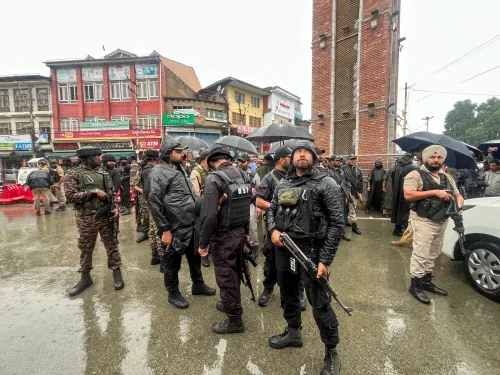
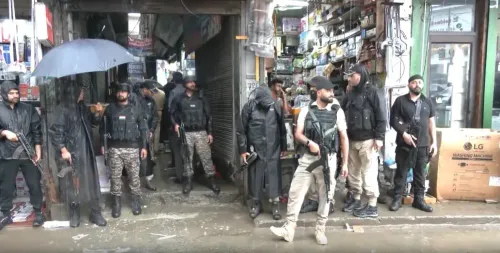
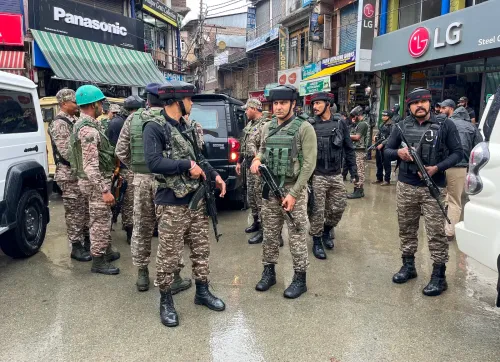
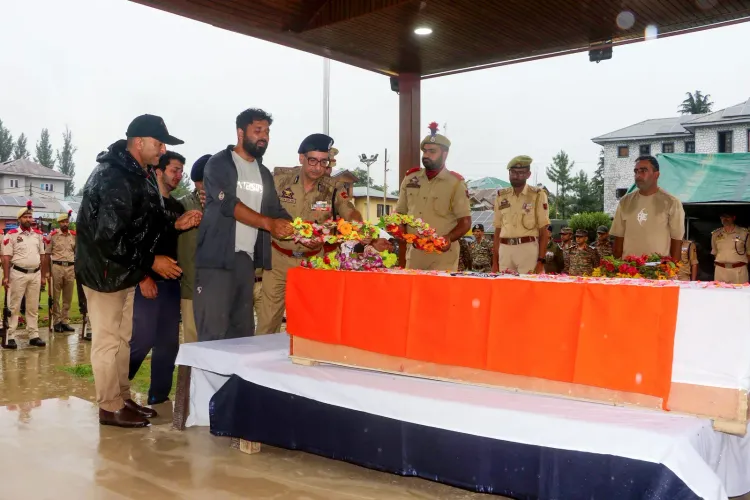
Head Constable Ashiq Hussain, deployed on security duties for the Amarnath Yatra, was shot by terrorists near Lal Chowk in Anantnag on Wednesday. He was rushed to the Government Medical College Hospital in Anantnag, where doctors declared him brought dead on arrival. The TRF claimed responsibility for the killing through a post on social media shortly after the incident.
What Intelligence Agencies Are Saying
Officials say the TRF's claim of responsibility is not merely tactical — it is also a recruitment signal aimed at local youth in Jammu and Kashmir. According to an Intelligence Bureau official, the outfit is seeking to gauge public and security response to both the attack and its public claim, in an apparent attempt to assess whether it can attract fresh recruits and rebuild local traction.
The same official noted that the ISI had previously attempted to revive the Hizbul Mujahideen in Jammu and Kashmir, but those efforts failed to gain traction. The ISI has also reportedly been building a new network of overground workers (OGWs), as many existing operatives had come under security agencies' radar and carried criminal records. Notably, officials said efforts are reportedly underway to establish an all-women OGW network as well.
Why TRF Remains the ISI's Best Bet
For years, Pakistan has sought to cultivate a home-grown terror outfit in Jammu and Kashmir, primarily to create plausible deniability by framing attacks as the work of local militants rather than Pakistan-backed groups. That strategic need has grown more acute following the Pahalgam attack, after which India adopted a new security doctrine treating acts of terrorism not merely as cross-border incidents but as acts of war.
'This shift makes it even more important for the ISI to cultivate a home-grown outfit comprising only local operatives,' an official said. In that context, the TRF — despite its current weakness — remains the ISI's most viable instrument in the Valley.
Security Tightened After Operation Sindoor
Following Operation Sindoor, security across Jammu and Kashmir was significantly reinforced, resulting in a sharp decline in terror incidents. Enhanced border surveillance and sustained counter-terror operations have made infiltration across the Line of Control (LoC) considerably harder, placing Pakistan-backed groups under mounting pressure.
Officials caution, however, that the TRF's current strategy involves smaller, targeted strikes — building visibility and local recruitment before attempting larger operations. 'Currently it does not have either the traction or desired strength locally to carry out a big attack in Jammu and Kashmir,' an official said. Agencies warn that this incremental approach could evolve if left unchecked.
What Comes Next
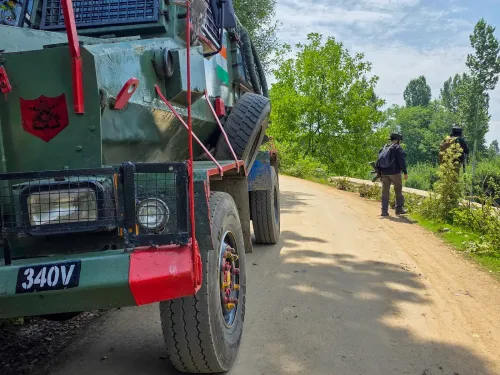
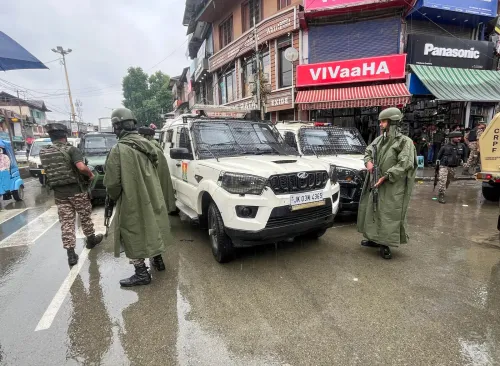
Security agencies have warned of further smaller attacks in the near term as the TRF attempts to regroup and rebuild its local base. Officials say the group's immediate emphasis will be on recruitment rather than spectacle. The Anantnag investigation is ongoing, and security deployments across the Union Territory remain at heightened levels.
Point of View
Not just a terror incident. The TRF's decision to publicly claim a single constable's murder — rather than stay silent — tells you the group is in recruitment mode, not operational mode. The ISI's fingerprints are visible in the sequencing: Hizbul Mujahideen revival failed, so the proxy of choice reverts to TRF. What mainstream coverage underweights is the all-women OGW network detail — that is a structural shift in how Pakistan is trying to evade security profiling in the Valley. If agencies do not disrupt recruitment pipelines now, the 'smaller attacks' phase will not stay small for long.
NationPress
22 Oct 2026
Frequently Asked Questions
Who was killed in the Anantnag terror attack on 23 July?
Head Constable Ashiq Hussain of the Jammu and Kashmir Police was shot and killed near Lal Chowk in Anantnag on Wednesday, 23 July. He had been deployed on security duties for the Amarnath Yatra and was declared brought dead on arrival at the Government Medical College Hospital in Anantnag.
Which group claimed responsibility for the Anantnag cop killing?
The Resistance Front (TRF), a proxy of the Lashkar-e-Taiba, claimed responsibility through a social media post shortly after the attack. The claim is still being investigated by security agencies.
Why is the TRF trying to revive its activities in Jammu and Kashmir?
Intelligence officials say Pakistan's ISI is pushing the TRF to stage a comeback after the group went largely silent following the Pahalgam terror attack and Operation Sindoor. Earlier ISI efforts to revive Hizbul Mujahideen failed, making TRF its most viable home-grown proxy in the Valley.
What is the TRF's current strategy in Jammu and Kashmir?
According to officials, the TRF is currently focused on smaller, targeted attacks and local recruitment rather than large-scale operations. The group reportedly lacks the local strength for a major strike and is using the Anantnag attack's public claim as a recruitment signal aimed at local youth.
How has security changed in Jammu and Kashmir after Operation Sindoor?
Security across Jammu and Kashmir was significantly reinforced following Operation Sindoor, leading to a sharp decline in terror incidents. Enhanced border surveillance and sustained counter-terror operations have made infiltration across the Line of Control considerably harder for Pakistan-backed groups.