Uddhav, Raj Thackeray to lead joint protest march in Mumbai on July 26
Synopsis
Estranged Thackeray brothers Uddhav and Raj are uniting on the streets of Mumbai on July 26 — a rare political convergence driven by student fury over paper leaks, exam failures, and a Union Education Minister who, critics argue, should have resigned. With 98 protests already held across Maharashtra and Delhi's Jantar Mantar still live, this march could be the movement's most visible moment yet.
Key Takeaways
Uddhav Thackeray (Shiv Sena-UBT) and Raj Thackeray (MNS) have announced a joint protest march in Mumbai on 26 July .
The march backs students demanding the resignation of the Union Education Minister Dharmendra Pradhan over paper leaks and student suicides.
Raj Thackeray will hold a press conference on Thursday morning to share further details of the rally.
A National Anthem event has been called for 24 July at 4 pm at Shivaji Park , Mumbai by Aditya Thackeray .
A total of 98 protests have been held across Maharashtra in support of the movement, according to official sources.
Mumbai Police conducted 14 days of continuous social media monitoring and avoided lathi charges, unlike in Delhi.
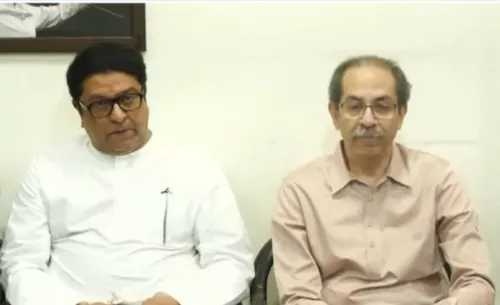
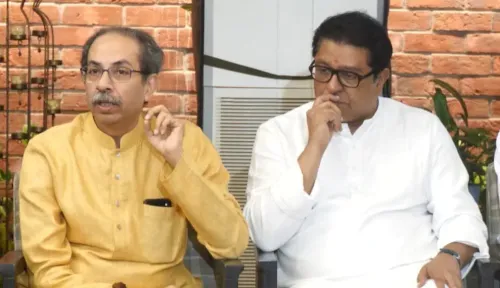
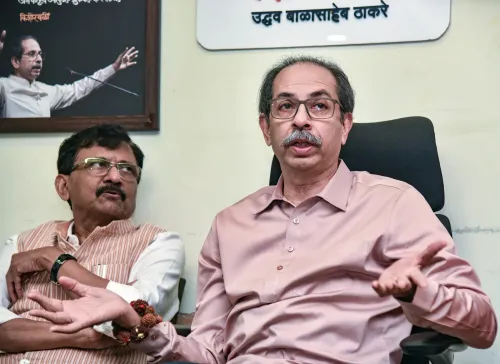
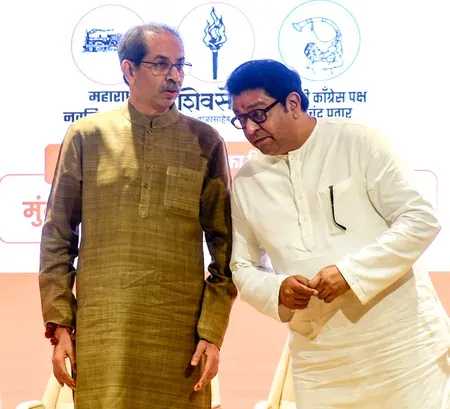
Shiv Sena (UBT) chief Uddhav Thackeray and Maharashtra Navnirman Sena (MNS) chief Raj Thackeray on Wednesday announced a joint protest march in Mumbai on 26 July, rallying behind students demanding the resignation of the Union Education Minister. The rare alliance between the estranged Thackeray brothers marks a significant escalation of the student protest movement that has gripped Maharashtra and the national capital.
What the March Is About
The joint demonstration follows weeks of student agitation, anchored by Cockroach Janta Party (CJP) founder Abhijit Dipke, who has been protesting at Jantar Mantar in New Delhi over issues including paper leaks, student suicides, and the central government's silence on the Education Minister's continuation in office. Both Thackeray leaders have extended formal backing to Dipke's movement and are now moving beyond symbolic support to street-level mobilisation.
Ahead of the march, Raj Thackeray is scheduled to hold a press conference on Thursday morning to share further operational details of the rally.
Aditya and Amit Thackeray Visit Protesters
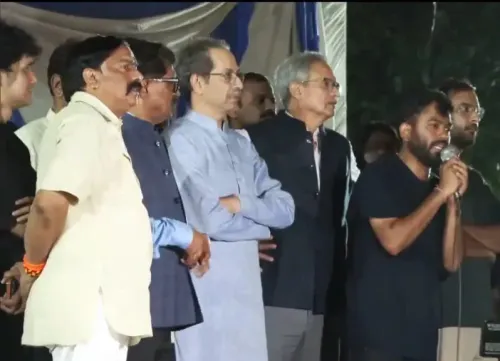
Earlier on Wednesday, MNS leader Amit Thackeray and Shiv Sena (UBT) leader Aditya Thackeray visited protesting students at Shivtirth in Mumbai. Addressing the crowd, Aditya Thackeray said, 'First of all, the fact that you all have gathered here demonstrates the power of the youth. It is extremely important that we all come together like this. Is there anyone here representing a political party? Are there any Urban Naxals or terrorists here? Everyone here who is an Indian citizen, chant Vande Mataram and Bharat Mata Ki Jai. This is our true strength.'
He also drew a contrast between the police response in Delhi and Mumbai: 'What happened in Delhi was not done by the Mumbai Police. They did not lay a finger on anyone, and for that, we should express our gratitude to them.' Taking a firm stance, he added, 'Do not let your passion cool down; Dharmendra Pradhan's resignation must happen.'
Aditya Thackeray further announced a collective singing of the National Anthem on 24 July at 4 pm at Shivaji Park in Mumbai, urging youth to gather 'not under any political party flag, but under the Indian national flag.'
What Uddhav Thackeray Said
Uddhav Thackeray directly addressed protest organiser Abhijit Dipke, assuring him of sustained backing: 'You continue the protest in Delhi; my effort will be to ensure this movement stays active across the country. We have initiated it in Maharashtra, and the state stands firmly with you. I am proud that the youth of Maharashtra are leading this cause.'
He also framed the movement in broader terms, saying, 'Abhijit Dipke has sparked a flame. Photographs of the students who lost their lives have been displayed here. It is tragic that in an independent country, students are committing suicide due to paper leaks — we must honour their memory. Merely one resignation will not suffice; the entire system needs to change. Until the government changes, nothing in our lives will change.'
Police Preparations Across Maharashtra
According to official sources, a total of 98 protests were conducted across Maharashtra in support of the CJP movement. Anticipating large-scale demonstrations, the Mumbai Police undertook 14 days of continuous social media monitoring, intelligence gathering, and on-ground tactical planning — drawing lessons from the heavy-handed response seen in Delhi.
Authorities reportedly conducted special digital patrolling across platforms, tracking hashtags, keywords, and accounts frequently posting about the movement. The advance intelligence helped police plan crowd management without resorting to lathi charges, a restraint that drew praise from both Thackeray leaders.
Why This Alliance Matters
The Thackeray brothers have had a politically fractious relationship for years, but this is not the first time they have set aside differences for a shared cause. The two previously joined hands over the protection of the Marathi language. Their renewed unity — this time over student welfare and exam integrity — signals that the protest movement has gained enough momentum to bridge deep political divides. With Prime Minister Narendra Modi and Home Minister Amit Shah yet to publicly address the Education Minister controversy, all eyes are on what the 26 July march will demand and deliver.
Point of View
Which suggests the education protest movement has real cross-ideological traction. Yet the demands remain vague beyond one ministerial resignation: neither leader has spelled out what systemic change they are asking for, or how a street march translates into policy accountability. The Centre's continued silence from Prime Minister Modi and Home Minister Shah is itself a political calculation — and the Thackerays are betting that silence becomes untenable after July 26. Whether the march produces pressure or merely optics will depend on the numbers it draws and the specificity of what follows.
NationPress
21 Oct 2026
Frequently Asked Questions
What is the Uddhav-Raj Thackeray joint protest march about?
The joint protest march, scheduled for 26 July in Mumbai, is in support of students demanding the resignation of Union Education Minister Dharmendra Pradhan over paper leaks and the alleged mishandling of student suicides. Both Shiv Sena (UBT) and MNS chiefs announced the march on Wednesday after visiting protesting students in the city.
Why are the Thackeray brothers joining hands again?
Uddhav Thackeray and Raj Thackeray, who have had a long-standing political rivalry, have previously united over the cause of the Marathi language. This time, they are coming together to back the student movement led by CJP founder Abhijit Dipke, who has been protesting at Delhi's Jantar Mantar demanding educational accountability and ministerial resignation.
Who is Abhijit Dipke and what is the CJP protest?
Abhijit Dipke is the founder of the Cockroach Janta Party (CJP) and is currently leading a protest at Jantar Mantar in New Delhi, demanding the resignation of the Union Education Minister over paper leaks and the deaths of students. Both Uddhav and Raj Thackeray have formally endorsed his movement.
What events are planned before the July 26 march?
Raj Thackeray will hold a press conference on Thursday morning to share details of the march. Additionally, Aditya Thackeray has called for a collective National Anthem singing event on 24 July at 4 pm at Shivaji Park in Mumbai, asking youth to gather under the Indian national flag rather than any party banner.
How has the Mumbai Police handled the student protests so far?
According to official sources, the Mumbai Police conducted 14 days of continuous social media monitoring, intelligence gathering, and tactical planning ahead of the demonstrations, enabling them to maintain order without resorting to lathi charges. A total of 98 protests were held across Maharashtra in connection with the movement.