Anurag Thakur Hails GSLV-F18 NVS-03 Launch, NavIC Milestone
Synopsis
BJP MP Anurag Thakur has congratulated ISRO on the successful launch of GSLV-F18 carrying NVS-03, the latest second-generation NavIC satellite, describing it as a step toward navigation self-reliance under PM Modi's Atmanirbhar Bharat vision.
Key Takeaways
GSLV-F18 successfully launched the NVS-03 satellite on 31 October 2026 , according to BJP MP Anurag Thakur's post.
NVS-03 is part of NavIC's second-generation constellation, featuring improved atomic clocks and L1 band signals for broader device compatibility.
India's NavIC system covers the Indian subcontinent and up to 1,500 km beyond its borders, serving both civilian and defence users.
The IRNSS/NavIC programme was initiated in 2006 to reduce dependence on foreign navigation systems such as US-controlled GPS.
The first IRNSS satellite launched in 2013 ; the baseline seven-satellite constellation was completed by 2016 .
Full NVS constellation completion and NavIC integration into smartphones and vehicles remain the key milestones ahead.
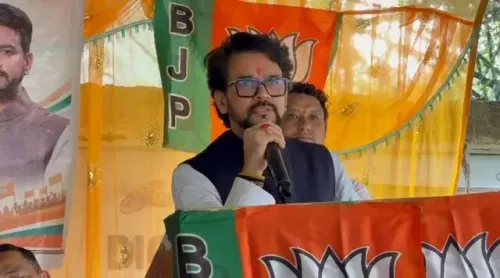
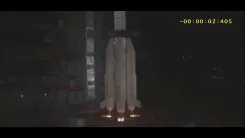
India's bid for navigation sovereignty just cleared another orbital hurdle. On Saturday, 31 October 2026, BJP MP Anurag Thakur congratulated ISRO scientists and engineers on the successful launch of GSLV-F18 carrying the NVS-03 satellite, calling the mission 'an important step in strengthening our indigenous satellite navigation system NavIC.'
NVS-03 and the second generation NavIC leap
The NVS series represents NavIC's second generation — a significant upgrade over the original IRNSS constellation that was completed in 2016. The new satellites carry improved atomic clocks and add the L1 frequency band, the same signal band used by the American GPS system. That addition matters enormously: it opens the door for NavIC integration into standard consumer smartphones and vehicles, not just specialised defence and government hardware.
NVS-01, the first of the upgraded series, flew in 2023. NVS-03 continues that build-out, pushing the constellation closer to the full operational coverage that would make NavIC a credible, self-contained alternative to foreign Global Navigation Satellite Systems across the Indian subcontinent and roughly 1,500 km beyond its borders.
From IRNSS in 2006 to a dual-use strategic asset
The roots of this mission stretch back two decades. India launched the IRNSS programme in 2006, a direct response to the country's dependence on GPS — a system controlled entirely by the United States Department of Defense. The first satellite, IRNSS-1A, lifted off in 2013; six more followed to complete the baseline constellation by 2016, when the system was rebranded NavIC (Navigation with Indian Constellation).
NavIC today serves a dual mandate: it provides positioning and timing services to civilian users in transport, agriculture, fishing, and disaster management, while simultaneously functioning as a strategic asset for India's defence forces — one that cannot be switched off or degraded by a foreign government during a crisis.
Thakur's 'Sea to Space' framing and the Atmanirbhar arc
Thakur's post placed the launch squarely within Prime Minister Narendra Modi's broader Atmanirbhar Bharat narrative, writing that 'Naya Bharat is continuously scaling new horizons, from the Sea to the Space.' The phrasing is deliberate: space self-reliance — in launch vehicles, satellites, and now navigation — has become one of the BJP government's signature technology-sovereignty talking points since Modi's first term in 2014.
Completing the NVS constellation and driving NavIC integration into everyday devices — the phones Indians already carry, the trucks and fishing boats already in service — is the next measurable test of whether that promise translates into infrastructure millions actually use.
Point of View
Decade-long arc of India building navigation sovereignty — a strategic hedge against the vulnerability exposed when India found itself dependent on a foreign-controlled GPS during past security crises. For the BJP, each ISRO milestone serves double duty: tangible Atmanirbhar Bharat progress and a high-visibility symbol of technological nationalism ahead of electoral cycles. The real policy test, however, is downstream: whether NavIC's L1 signals achieve mass adoption in consumer devices and whether defence platforms are formally certified to operate on the system exclusively — metrics that will determine whether NavIC becomes infrastructure or remains symbolism.
NationPress
31 Oct 2026
Frequently Asked Questions
What is the NVS-03 satellite and what does it do?
NVS-03 is a second-generation NavIC navigation satellite launched aboard GSLV-F18. It carries improved atomic clocks and L1 band signals, expanding India's indigenous satellite navigation coverage over the subcontinent and around 1,500 km beyond its borders.
What is NavIC and how is it different from GPS?
NavIC (Navigation with Indian Constellation) is India's own regional satellite navigation system, fully controlled by ISRO. Unlike GPS, which is operated by the US military, NavIC gives India independent positioning and timing services that cannot be restricted by a foreign government.
Why did India build its own navigation satellite system?
India launched the IRNSS programme in 2006 after recognising its strategic dependence on foreign GNSS systems. The goal was to develop a self-reliant navigation capability for both civilian applications and defence forces.
What is the NVS series and how does it improve on the original NavIC satellites?
The NVS (NavIC Validating Satellite) series is the second generation of NavIC satellites. Key upgrades include better atomic clocks for improved timing accuracy and the addition of the L1 frequency band, which allows integration with standard consumer smartphones and vehicles.
What did Anurag Thakur say about the GSLV-F18 NVS-03 launch?
BJP MP Anurag Thakur congratulated ISRO scientists and engineers, calling the mission 'an important step in strengthening our indigenous satellite navigation system NavIC' and framing it as part of India's pursuit of self-reliance in critical technologies under PM Modi.