Anurag Thakur Hails HPCA Stadium as Kangra's Economic Anchor
Synopsis
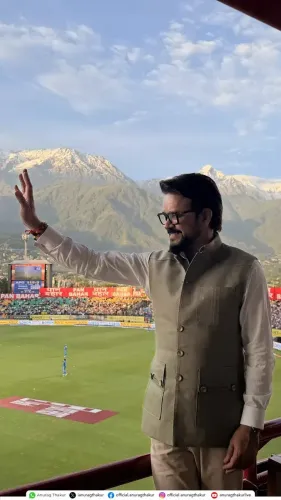
BJP MP Anurag Thakur has highlighted the HPCA Stadium in Dharamshala as a transformative force for Kangra's economy, arguing that two decades of sports infrastructure investment turned a hill town into an international tourism destination — and a template for sports-led regional growth.
Key Takeaways
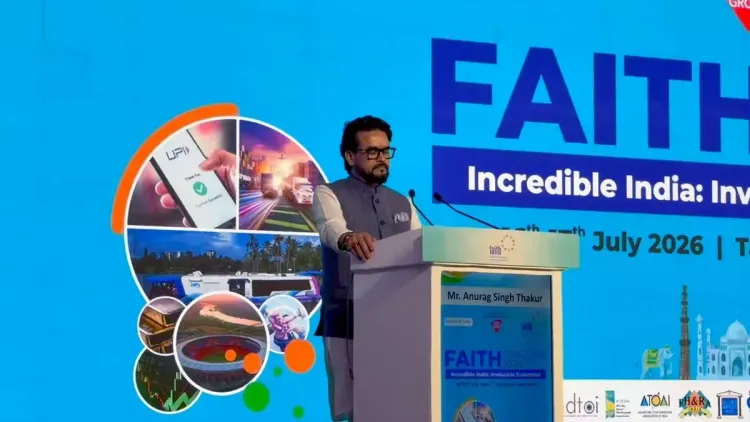
Anurag Thakur , BJP MP and former Union Minister of Youth Affairs and Sports, posted on 19 July 2026 crediting the HPCA Stadium with anchoring Kangra district's economy.
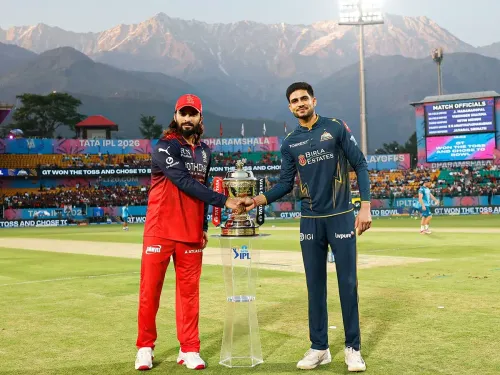
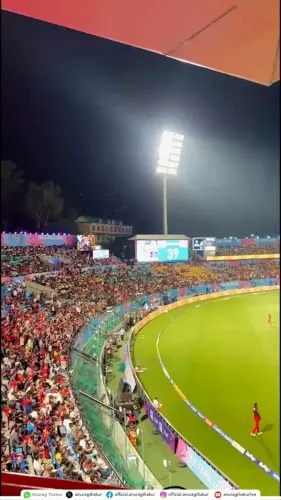
The Dharamshala ground, built roughly 20 years ago , is now recognised as one of the world's most scenic international cricket venues.
Thakur cited a shift 'from zero flights and luxury hotels to a thriving tourism hub' as evidence of sports infrastructure's economic multiplier effect.
The stadium has attracted international visitors including the Barmy Army , diversifying Kangra's visitor base beyond traditional pilgrimage tourism.
Precise economic impact figures cited in the post are not independently verified in the public record.
The post signals continued political advocacy for sports-led regional development in Himachal Pradesh and beyond.
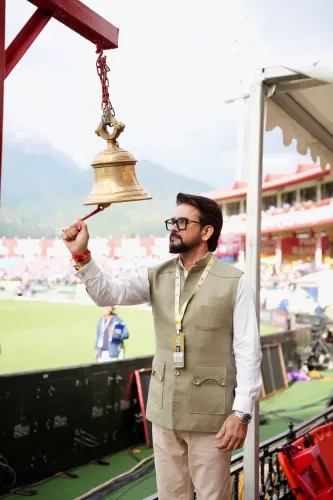
BJP MP Anurag Thakur on Sunday, 19 July 2026, credited the Himachal Pradesh Cricket Association (HPCA) Stadium in Dharamshala with transforming the Kangra district's economy, calling it proof that bold infrastructure investment can elevate an entire region. Posting from Delhi, the former Union Minister of Youth Affairs and Sports argued that what once seemed impossible — building a world-class international cricket venue in the Himalayan hills — had become a model for sports-led regional development.
Context
Thakur's post marks roughly two decades since the HPCA Stadium was developed as a venue capable of hosting international fixtures. At the time, the idea of routing global cricket to a hill town in Himachal Pradesh was widely considered impractical, given the absence of direct air connectivity and high-end hospitality infrastructure. The stadium, set against a dramatic Himalayan backdrop, has since been recognised internationally as among the most scenic cricket grounds in the world.
Thakur, who has deep ties to Himachal Pradesh Cricket Association through his earlier administrative roles in state cricket, framed the stadium's growth story as a personal and political vindication. 'From zero flights and luxury hotels to a thriving tourism hub,' he wrote, 'it shows that bold vision can completely elevate a region's economy.'
Policy Backdrop
The development of the Dharamshala ground fits within a broader national pattern that accelerated after the National Sports Policy 2001, which emphasised building modern sports infrastructure across states beyond the traditional metro centres. Since the early 2000s, several Indian states have developed cricket venues in non-metro locations, using scenic or culturally significant settings to attract international fixtures and the tourism spending that follows.
Kangra district, which encompasses Dharamshala, had historically depended on pilgrimage tourism — the town is home to the Dalai Lama's seat-in-exile and draws spiritual travellers from across the world. The stadium added a new, commercially robust layer to that visitor economy, bringing in cricket fans including the Barmy Army, the well-known travelling supporters' group of England cricket, when bilateral series have been held there.
Stakeholders and Impact
Local tourism operators, hoteliers, and transport providers in the Kangra valley are the most direct beneficiaries of the stadium's draw. International cricket fixtures generate concentrated demand for accommodation, food, and local services, providing seasonal but significant revenue boosts to businesses that otherwise cater primarily to domestic leisure and pilgrimage visitors.
Thakur's framing — 'from spiritual retreats to the Barmy Army' — captures the breadth of that visitor diversification. The research backing his claims, however, notes that precise economic impact figures and specific counts of new hotels or flight routes added since the stadium's development remain unverified in the public record. The directional claim of economic uplift is broadly supported by the region's visible hospitality growth, but exact numbers should be treated with caution.
What's Next
The immediate question is whether Dharamshala will be scheduled to host upcoming bilateral series or IPL matches, which would sustain the economic momentum Thakur describes. Any new central or state tourism scheme linking sports infrastructure to hill-station development in Himachal Pradesh could also follow, given the political salience the stadium now carries. Thakur's post, framed as a retrospective on infrastructure vision, also reads as an implicit case for continued investment in sports-led regional development across India's smaller states and union territories.
Point of View
' he is positioning himself as the visionary behind Himachal Pradesh's cricket-infrastructure story, a legacy asset ahead of any future electoral or ministerial cycle. The 'Barmy Army to spiritual retreats' framing is a deft piece of soft-power messaging, linking India's cricket diplomacy to grassroots economic outcomes in a BJP-governed hill state. More broadly, the post fits a pattern of the ruling dispensation presenting sports infrastructure — stadiums, arenas, sports cities — as proxies for development governance, a narrative that has gained traction since India's hosting of major international events. The absence of verified impact data, however, leaves the economic claims in the realm of political assertion rather than audited outcome.
NationPress
18 Oct 2026
Frequently Asked Questions
What is the HPCA Stadium in Dharamshala?
The HPCA Stadium, or Himachal Pradesh Cricket Association Stadium, is an international cricket venue in Dharamshala, Himachal Pradesh, widely regarded as one of the most scenic grounds in the world due to its Himalayan backdrop. It has hosted international matches including Test and One Day Internationals since the mid-2000s.
Why did Anurag Thakur post about the Dharamshala stadium?
Anurag Thakur posted on 19 July 2026 to highlight the economic transformation the HPCA Stadium has brought to Kangra district over roughly 20 years, arguing it is proof that bold sports infrastructure investment can elevate a region's tourism and hospitality economy.
How has the Dharamshala cricket stadium boosted Kangra's economy?
The stadium has diversified Kangra's visitor base by attracting international cricket fans alongside the district's traditional pilgrimage tourists, spurring growth in hotels, flights, and local hospitality. Precise verified figures are not publicly available, but the directional growth in the region's tourism sector is broadly acknowledged.
Who are the Barmy Army and why did Anurag Thakur mention them?
The Barmy Army is the travelling supporters' group of England cricket fans, known for attending overseas Test and bilateral series. Thakur mentioned them to illustrate how the Dharamshala venue has drawn high-spending international visitors to a hill town that previously had little such footfall.
What is Anurag Thakur's connection to Himachal Pradesh cricket?
Anurag Thakur is the BJP Lok Sabha MP from Hamirpur in Himachal Pradesh and a former Union Minister of Youth Affairs and Sports. He has longstanding administrative ties to the Himachal Pradesh Cricket Association and has been associated with the development of cricket infrastructure in the state.