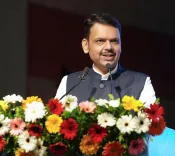
Anurag Thakur: Congress won't form govt for 30 years
Synopsis
BJP MP Anurag Thakur has declared that Congress will not return to power for 30 years, directly calling out Rahul Gandhi's 'negative politics' in a sharp social-media post on 22 October 2026.
Key Takeaways
Anurag Thakur , BJP Lok Sabha MP from Hamirpur, Himachal Pradesh , posted the statement on 22 October 2026 .
He directly addressed Rahul Gandhi , predicting Congress will not form the central government for the next 30 years .
Thakur attributed the prediction specifically to what he called Congress's 'negative politics.' The BJP has held a Lok Sabha majority since 2014 , ending a decade of Congress-led UPA governance.
BJP leaders have consistently characterised Congress strategy as dynastic or obstructionist across multiple election cycles.
The 2029 Lok Sabha elections will be the most direct test of such claims about the opposition's long-term viability.
A blunt political prophecy — BJP MP Anurag Thakur has publicly declared that the Indian National Congress will not return to power at the Centre for the next 30 years, targeting party leader Rahul Gandhi directly over what he calls 'negative politics.'
Posting on 22 October 2026, Thakur addressed Gandhi by name in a sharp Hindi-language message: 'Rahul ji, aap jis tarah se nakaratmak rajneeti kar rahe hain, uske aadhar par main kehta hoon ki agle 30 saal tak aapki sarkar kabhi nahi banne wali hai…' — 'Rahul ji, based on the kind of negative politics you are doing, I say that your government will never come to power for the next 30 years…'A 30-year verdict and what's behind it
The statement is combative in form but calculated in framing. Thakur is not just predicting an election result — he is attaching a cause to it, pinning the Congress's electoral fate directly to its opposition strategy. The logic he projects: that relentless negativity, rather than a constructive alternative, will continue to cost the party with voters.
The backdrop matters. The BJP has held a Lok Sabha majority since 2014, ending a decade of Congress-led UPA rule. In the years since, BJP leaders and spokespersons have consistently characterised Congress's politics as dynastic, obstructionist, or empty of policy substance. Thakur's statement follows that well-worn script — but the '30 years' figure gives it a sharper, more memorable edge.
Rahul Gandhi as the recurring target
Rahul Gandhi, the Congress's most prominent face and former party president, has been the focal point of BJP attacks through multiple election cycles. The BJP's strategy of framing him as the symbol of Congress's alleged weaknesses has been a consistent feature of national campaigning since 2014. By addressing him directly — 'Rahul ji' — Thakur keeps that narrative alive and personal.
Congress has repeatedly pushed back against such characterisations, arguing its campaigns highlight genuine governance failures rather than negativity. The party's performance in upcoming state assembly elections through 2028, and ultimately the 2029 Lok Sabha polls, will be the real stress-test of both the BJP's confidence and Congress's recovery arc.
Standard sparring or something more?
At one level, this is the bread-and-butter of Indian parliamentary politics — a ruling-party MP firing a calibrated broadside at the principal opposition leader. But the specificity of the timeframe, three decades, is designed to land beyond a single news cycle. It frames the 2014 shift not as a temporary correction but as a generational realignment — precisely the narrative the BJP wants embedded in the public mind ahead of future contests. Whether the arithmetic of Indian democracy cooperates is, of course, another matter entirely.
Point of View
However, will be tested hard by state election results leading up to the 2029 Lok Sabha contest.
NationPress
22 Oct 2026
Frequently Asked Questions
What did Anurag Thakur say about Rahul Gandhi in October 2026?
Anurag Thakur posted on X on 22 October 2026 stating that based on Rahul Gandhi's 'negative politics,' the Congress party would not form a government at the Centre for the next 30 years.
Who is Anurag Thakur?
Anurag Thakur is a BJP Lok Sabha MP from Hamirpur, Himachal Pradesh, and a former Union Minister for Information and Broadcasting as well as Youth Affairs and Sports.
What does BJP mean by 'negative politics' against Congress?
BJP leaders, including Thakur, use the term 'negative politics' to characterise Congress's opposition strategy as obstructionist and lacking constructive policy alternatives, a framing the BJP has deployed consistently since 2014.
When did BJP last win a Lok Sabha majority?
The BJP first won a Lok Sabha majority in 2014, ending the Congress-led UPA's decade in power, and has held that majority since.
When is the next Lok Sabha election?
The next Lok Sabha general election is due in 2029, and it will be the most significant test of BJP's claims about Congress's long-term electoral weakness.