CM Fadnavis Inaugurates Three BMC Flyovers Across Mumbai
Synopsis
Chief Minister Devendra Fadnavis inaugurated three BMC flyovers — at Vidyavihar, Sion, and Goregaon East — on 22 October 2026. The Goregaon East structure forms part of the Goregaon-Mulund Link Road project aimed at improving Mumbai's east-west suburban connectivity.
Key Takeaways
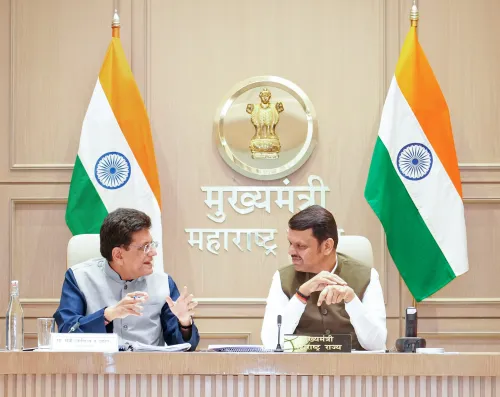
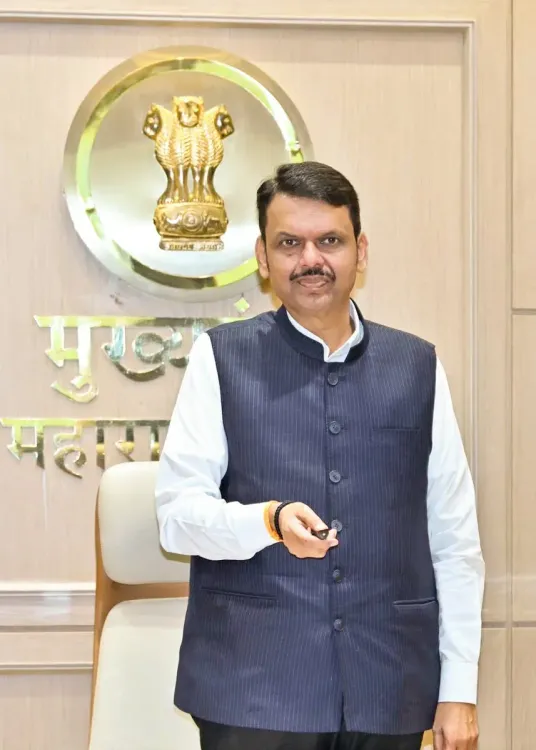
Three flyovers were inaugurated by CM Devendra Fadnavis online from Varsha Bungalow, Mumbai on 22 October 2026 .
The Vidyavihar east-west railway overbridge and the Sion railway station flyover address long-standing suburban traffic bottlenecks.
The Goregaon East flyover (Ratnagiri Junction to Santosh Nagar on Film City Road) is part of the larger Goregaon-Mulund Link Road (GMLR) project.
The GMLR is designed to link Mumbai's western and eastern suburbs, reducing pressure on existing expressways.
Senior leaders including DCM Sunetra Ajit Pawar , Mayor Ritu Tawde , and ministers Mangal Prabhat Lodha and Ashish Shelar were present at the event.
Three new flyovers — spanning Vidyavihar, Sion, and Goregaon East — opened for Mumbai's commuters on 22 October 2026, as Chief Minister Devendra Fadnavis presided over the inauguration ceremony online from Varsha Bungalow, Mumbai, marking a fresh push by the Brihanmumbai Municipal Corporation (BMC) to untangle the city's chronic suburban traffic knots.
Three structures, three pressure points
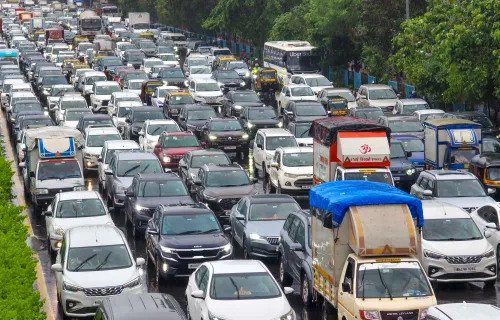
The first structure commissioned is the Vidyavihar east-west connecting railway overbridge, which plugs a long-standing gap in connectivity between the two sides of one of Mumbai's busiest central suburban corridors. The second is a flyover at Sion railway station, a chokepoint where road and rail traffic have historically collided to create stubborn congestion. Together, they address two nodes that suburban commuters have flagged for years as daily friction points.
The third and most strategically significant structure is the flyover from Ratnagiri Junction to Santosh Nagar along Film City Road in Goregaon East — delivered as part of the larger Goregaon-Mulund Link Road (GMLR) project. The GMLR is designed to stitch Mumbai's western and eastern suburbs into a single commuter corridor, easing pressure off the already saturated Western Express Highway and Eastern Express Highway.
GMLR: Mumbai's east-west lifeline, section by section
The Goregaon-Mulund Link Road has been one of BMC's most ambitious undertakings — a spine road intended to let vehicles travel between the western and eastern suburbs without threading through the city's congested heart. Successive Maharashtra governments and BMC administrations have advanced the project in phases since the 2000s, with individual sections delivered incrementally as land acquisition and construction timelines allowed. Today's Goregaon East flyover represents one more completed segment of that longer arc.
The inauguration was conducted ऑनलाईन (online), with senior leadership in attendance including Deputy Chief Minister Sunetra Ajit Pawar, Minister Mangal Prabhat Lodha, Minister Adv. Ashish Shelar, Mumbai Mayor Ritu Tawde, and Deputy Mayor Sanjay Ghadi alongside senior civic officials — signalling the political weight the state government attaches to the delivery of these projects.
Mumbai's infrastructure push: pattern, not episode
Infrastructure delivery in Mumbai has long been a political signal as much as a civic necessity. The city's 20-million-plus population strains a road network that grew far slower than its suburbs. BMC and allied agencies have executed multiple railway overbridge and flyover projects across Mumbai's suburban grid, with east-west connectivity consistently identified as the weakest link — owing to the north-south spine of the railway network that physically divides the city. Each new overbridge or flyover that bridges that divide is felt immediately by commuters.
With the GMLR still partially incomplete, the pressure now falls on BMC to accelerate remaining sections so that the corridor delivers its full traffic-relief potential — and not just a series of isolated structures that ease one node while leaving bottlenecks intact downstream.
Three flyovers opened. One mega-corridor inching closer to completion. Mumbai's commuters will judge the outcome not at the ribbon-cutting, but at rush hour.
Point of View
Completing GMLR segments before the next electoral cycle is both a governance imperative and a political calculation in Mumbai's suburban constituencies. The online format of the inauguration, however, slightly dulls the optics of a moment that typically requires a crowd to land fully.
NationPress
22 Oct 2026
Frequently Asked Questions
Which flyovers were inaugurated by CM Fadnavis in Mumbai on 22 October 2026?
Three flyovers were inaugurated: the Vidyavihar east-west connecting railway overbridge, the flyover at Sion railway station, and the flyover from Ratnagiri Junction to Santosh Nagar on Film City Road in Goregaon East under the GMLR project.
What is the Goregaon-Mulund Link Road (GMLR) project?
The GMLR is a major BMC infrastructure project that aims to create a direct road corridor between Mumbai's western and eastern suburbs, reducing traffic on the Western and Eastern Express Highways.
Who attended the BMC flyover inauguration event?
Deputy Chief Minister Sunetra Ajit Pawar, Minister Mangal Prabhat Lodha, Minister Ashish Shelar, Mumbai Mayor Ritu Tawde, Deputy Mayor Sanjay Ghadi, and senior officials attended the event.
Why is east-west connectivity important for Mumbai?
Mumbai's north-south railway network physically divides the city, making east-west road connectivity a persistent challenge. Flyovers and link roads help commuters cross between suburbs without travelling through congested central areas.
Is the Goregaon-Mulund Link Road fully complete?
The GMLR remains partially complete. The Goregaon East flyover inaugurated on 22 October 2026 is one completed segment; remaining sections are still under construction or in planning stages.