CM Fadnavis Reviews GMLR Project, Eyes North Coastal Road Link
Synopsis
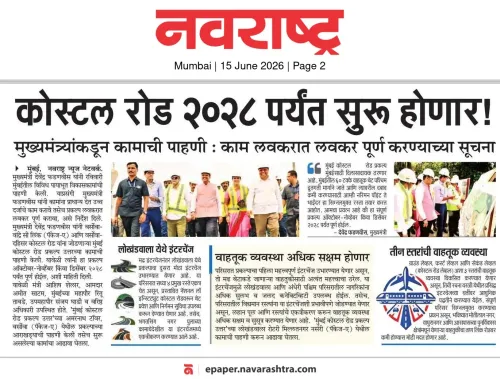
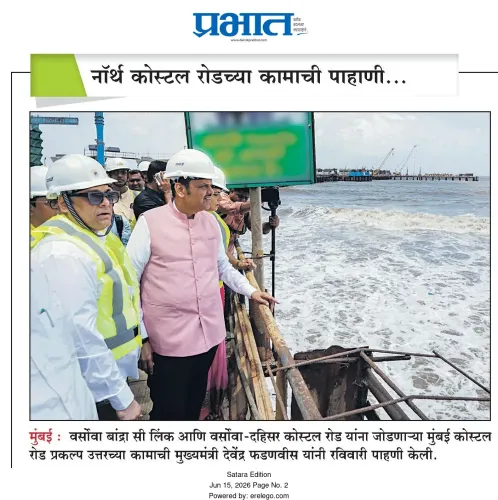
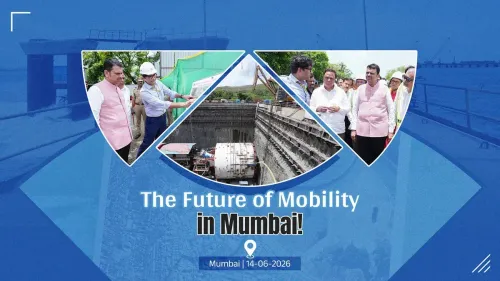
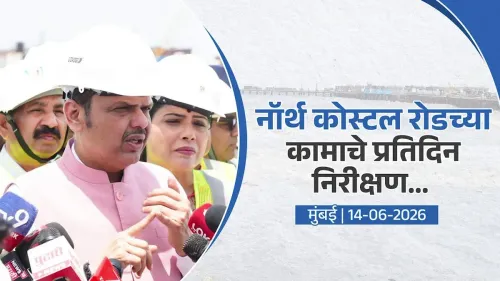
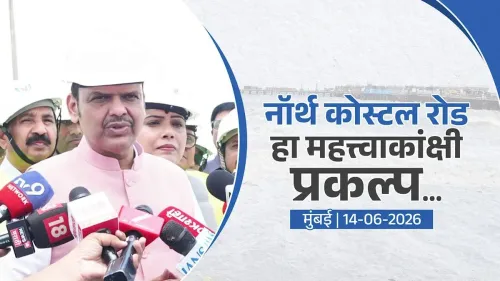
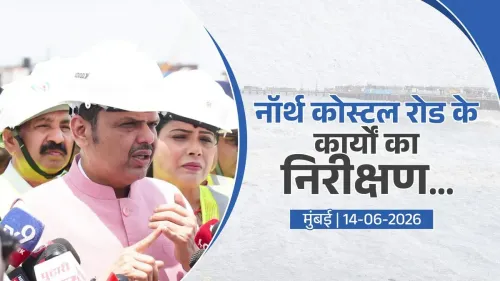
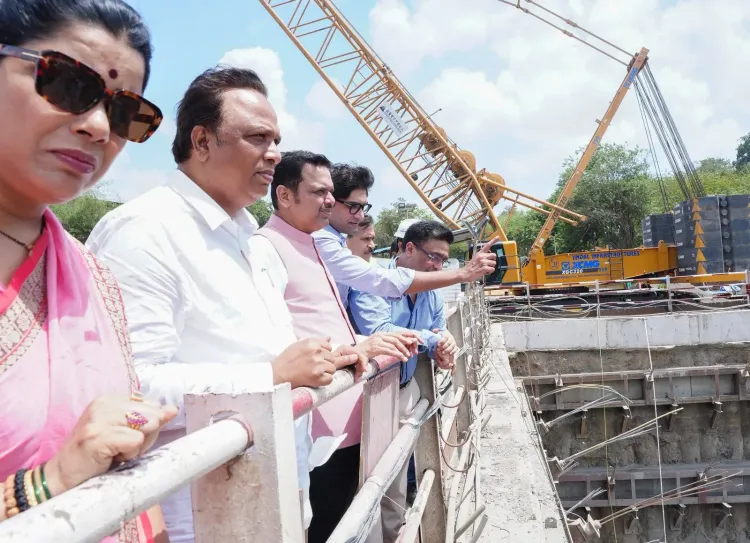
Chief Minister Devendra Fadnavis inspected the Goregaon–Mulund Link Road project in Mumbai on 14 June 2026. The corridor is proposed to connect via an elevated link to the Mumbai Coastal Road Project (North), eventually joining South Mumbai and western suburbs with Bhayander, Thane, and Mulund. Mayor Ritu Tawde and senior officials joined the review.
Key Takeaways
Chief Minister Devendra Fadnavis conducted a site inspection of the Goregaon–Mulund Link Road (GMLR) on 14 June 2026 .
GMLR is proposed to be connected to the Mumbai Coastal Road Project (North) via an elevated connector .
The integrated corridor will link Nariman Point and western suburbs including Bandra and Andheri with Bhayander , Thane , and Mulund .
The inspection was attended by Minister Ashish Shelar , MLA Ameet Satam , Mayor Ritu Tawde , and Deputy Mayor Sanjay Ghadi .
The project addresses Mumbai's long-standing east-west connectivity gap across its suburban belt.
The Mumbai Coastal Road Project's southern section dates to construction phases beginning around 2018–2019 under the Fadnavis government.
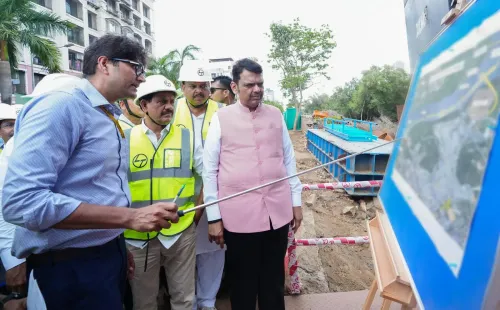
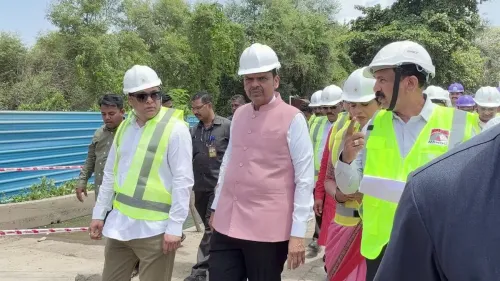
The Chief Minister's Office of Maharashtra announced on Sunday, 14 June 2026 that Chief Minister Devendra Fadnavis conducted an on-site inspection of the Goregaon–Mulund Link Road (GMLR) project in Mumbai, underscoring the state government's push to integrate the corridor with the proposed Mumbai Coastal Road Project (North) via an elevated connector.
What the Inspection Covered
The official post from the Chief Minister's Office states that GMLR हा प्रकल्प उन्नत कनेक्टरद्वारे प्रस्तावित 'मुंबई कोस्टल रोड प्रकल्प उत्तर'ला जोडला जाणार आहे ('The GMLR project is proposed to be connected to the Mumbai Coastal Road Project North through an elevated connector'). Once complete, the corridor is intended to link South Mumbai (Nariman Point) and western suburbs including Bandra and Andheri directly with Bhayander, Thane, and Mulund.
Accompanying CM Fadnavis during the site visit were Minister Adv. Ashish Shelar, MLA Ameet Satam, Mumbai Mayor Ritu Tawde, Deputy Mayor Sanjay Ghadi, and senior officials from the relevant departments.
Context
The Goregaon–Mulund Link Road is a proposed elevated road corridor designed to address Mumbai's chronic east-west connectivity deficit. The city's road network has historically been oriented along a north-south spine, leaving cross-suburban travel — particularly between the western suburbs and the eastern belt running through Thane and Mulund — heavily congested.
The Mumbai Coastal Road Project, whose southern section saw construction begin around 2018–2019 during an earlier Fadnavis administration, is a multi-phase expressway along Mumbai's western shoreline. Its northern extension is now proposed as the anchor to which GMLR would connect, creating a continuous corridor from the island city's tip to the northern and eastern suburbs.
Policy Backdrop
Maharashtra's infrastructure agenda has consistently prioritised elevated connectors and integrated urban expressways as solutions to the Mumbai Metropolitan Region's density-driven congestion. The GMLR–North Coastal Road integration fits into a broader state strategy of linking disparate project phases so that commuters benefit from seamless travel rather than disjointed corridors.
The involvement of the Mayor of Mumbai and senior civic officials alongside state ministers signals coordination between the Brihanmumbai Municipal Corporation (BMC) and the state government — a coordination that has historically been critical for land acquisition, utility relocation, and project clearances in dense urban stretches.
Stakeholders and Impact
Millions of daily commuters in Mumbai's western suburbs — from Bandra northward through Andheri and beyond — stand to benefit if the corridor reduces travel time to eastern nodes like Thane and Mulund. Residents of Goregaon and surrounding areas have long sought faster cross-city access without routing through the congested Eastern Express Highway or Western Express Highway.
Business and logistics stakeholders in the Mumbai Metropolitan Region also have a direct interest: east-west road links can redistribute freight and commercial traffic, easing pressure on existing arterials.
What's Next
The inspection by CM Fadnavis typically precedes formal project-progress reviews and can trigger expedited approvals or revised timelines. Key milestones to watch include the finalisation of the elevated connector's alignment linking GMLR to the North Coastal Road, any land acquisition notices for affected stretches, and the state cabinet's formal clearance for the integrated corridor. The government's ability to move these phases in tandem will determine whether commuters see tangible relief within the current administration's term.
Point of View
The administration is framing these as a single integrated mobility solution rather than standalone works — a politically useful narrative ahead of any civic or state electoral cycle. The presence of the Mumbai Mayor alongside state ministers also suggests an effort to project BMC–state alignment, which has historically been a friction point when the two bodies are controlled by different political formations. How quickly land acquisition and alignment approvals follow this inspection will be the real test of the government's intent.
NationPress
13 Sept 2026
Frequently Asked Questions
What is the Goregaon–Mulund Link Road (GMLR) project?
The Goregaon–Mulund Link Road (GMLR) is a proposed elevated road corridor in Mumbai designed to improve east-west connectivity between the city's western suburbs and the eastern belt, including Thane and Mulund.
How does GMLR connect to the Mumbai Coastal Road?
GMLR is proposed to be linked to the Mumbai Coastal Road Project (North) via an elevated connector, which would create a continuous corridor from Nariman Point in South Mumbai through western suburbs like Bandra and Andheri to Bhayander, Thane, and Mulund.
Why did CM Devendra Fadnavis inspect the GMLR project?
CM Devendra Fadnavis conducted a site inspection of the GMLR project on 14 June 2026 to review its progress and alignment, particularly in the context of its proposed integration with the North Coastal Road via an elevated connector.
Who attended the GMLR inspection with CM Fadnavis?
Minister Ashish Shelar, MLA Ameet Satam, Mumbai Mayor Ritu Tawde, Deputy Mayor Sanjay Ghadi, and senior government officials accompanied CM Fadnavis during the inspection.
What is the Mumbai Coastal Road Project?
The Mumbai Coastal Road Project is a multi-phase expressway planned along Mumbai's western shoreline. Its southern section saw construction begin around 2018–2019, and its northern extension is now proposed to be integrated with the GMLR corridor.