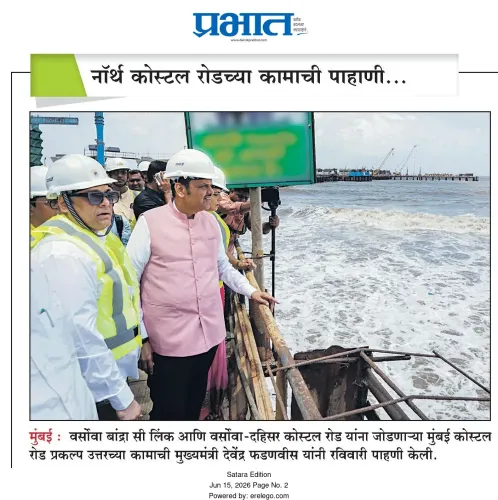
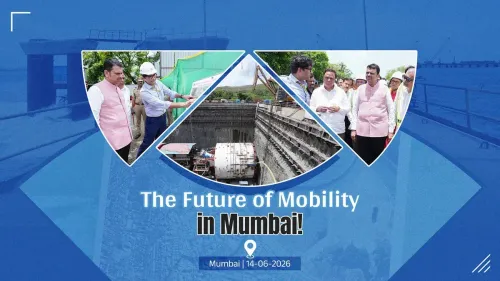
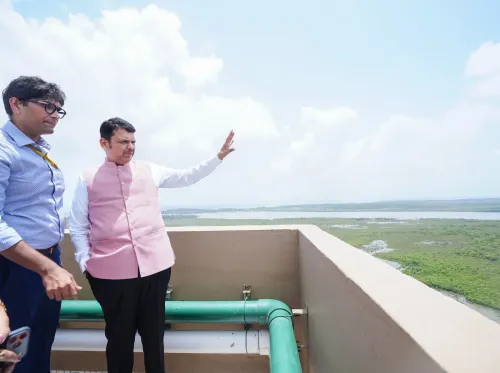
CM Fadnavis inspects Mumbai Coastal Road North Charkop site
Synopsis
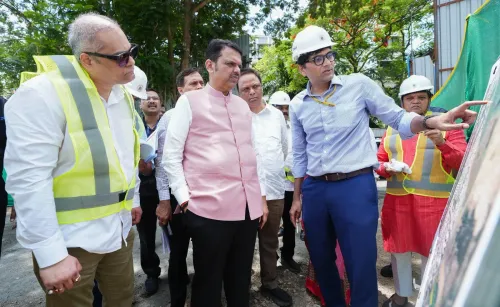
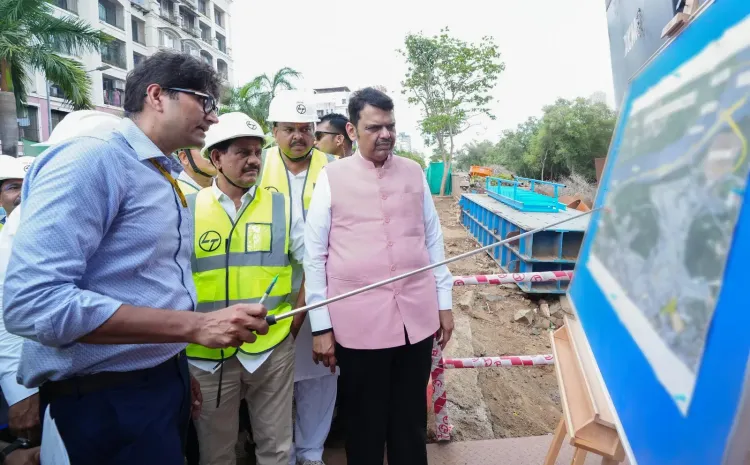
Chief Minister Devendra Fadnavis inspected Package-E of the Mumbai Coastal Road North project at Charkop Sector 8 on 14 June 2026. The package features an elevated-to-at-grade transition and a key intersection providing direct Borivali connectivity, with senior ministers, MLAs, and the Mumbai Mayor present.
Key Takeaways
CM Devendra Fadnavis conducted a site inspection of Package-E, Sector 8, Charkop of the Mumbai Coastal Road North on 14 June 2026 .
The package includes an elevated-to-at-grade transition road alignment up to Charkop Sector 8.
A critical intersection will be developed at the Charkop site to manage traffic flow.
Vehicles heading to Borivali will receive direct connectivity to the existing road network from this point.
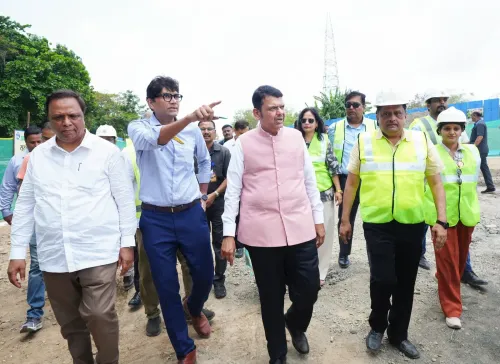
Minister Ashish Shelar , three MLAs, Mumbai Mayor Ritu Tawde , and Deputy Mayor Sanjay Ghadi accompanied the Chief Minister.
The project is part of Maharashtra's long-running plan to decongest the Western Express Highway and western suburban corridors.
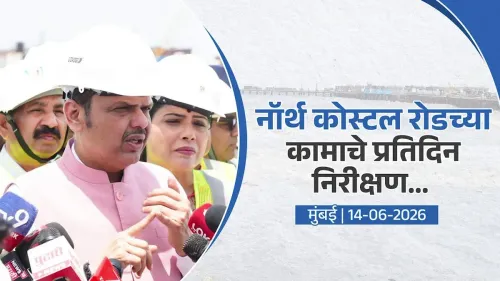
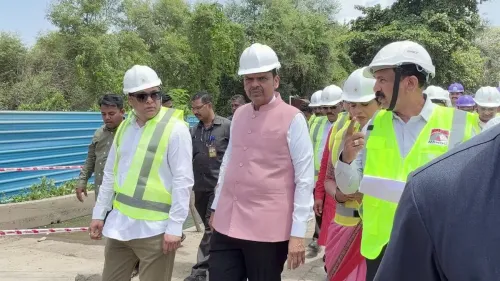
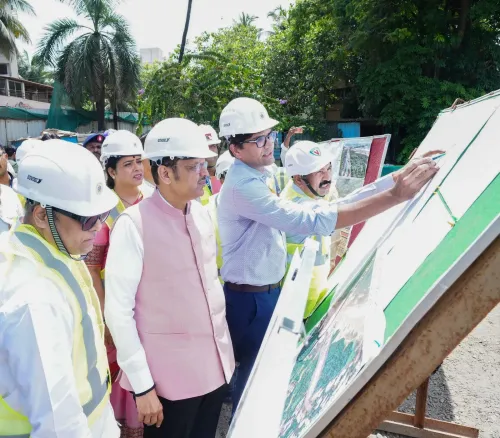
Chief Minister Devendra Fadnavis on Sunday, 14 June 2026, conducted an on-site inspection of Package-E (Sector 8, Charkop) of the Mumbai Coastal Road Project North, reviewing progress on the elevated and at-grade transition section that will extend the coastal corridor into Mumbai's western suburbs.
Context
The Chief Minister's Office announced that Fadnavis personally visited the Charkop Sector-8 site, examining work on a key segment of the northward extension of Mumbai's coastal road network. The post, shared in Marathi, noted three headline features of the package: a road alignment running via an elevated-to-at-grade transition up to Charkop Sector 8, development of a critical intersection at the site, and direct connectivity for vehicles heading toward Borivali into the existing road network.
Senior officials and elected representatives accompanied the Chief Minister, including Minister Adv. Ashish Shelar, MLA Ameet Satam, MLA Sanjay Upadhyay, MLA Prakash Surve, Mumbai Mayor Ritu Tawde, and Deputy Mayor Sanjay Ghadi.
Policy Backdrop
The Mumbai Coastal Road project received its foundational environmental clearances and approvals in 2017–2018 as part of a broader state push to modernise Mumbai's road infrastructure. The southern sections of the coastal road were progressively opened from 2023–2024, and the northern extension now represents the next phase of that plan.
Maharashtra's successive administrations have treated the coastal road as a flagship urban mobility intervention, tracing its origins to development plans first drawn up in the 1990s and 2000s. The project is designed to relieve chronic congestion on the Western Express Highway and parallel arterials serving Mumbai's densely populated western suburbs.
Stakeholders and Impact
Residents and daily commuters across Charkop, Kandivali, and Borivali stand to benefit most directly from Package-E, which promises seamless integration with the existing road grid at the Charkop intersection. The elevated-to-at-grade transition is engineered to allow vehicles to exit the coastal corridor and merge into local traffic without bottlenecks at grade-level junctions.
The presence of the Mumbai Mayor and ward-level MLAs at the inspection signals the project's political salience for the Brihanmumbai Municipal Corporation and the constituencies it serves. Civic bodies will be responsible for maintaining the intersection and feeder roads once the package is commissioned.
What's Next
Attention will now turn to the rollout timelines for the remaining packages of the Mumbai Coastal Road North corridor and to traffic-impact assessments once the Charkop intersection becomes operational. The inspection suggests the state government is maintaining active oversight of construction milestones ahead of the project's targeted completion phases.
If the northern extension delivers on its connectivity promise, it could meaningfully redistribute traffic load away from the Western Express Highway, setting a template for how elevated coastal corridors are integrated with suburban road networks in other Indian metros.
Point of View
As the western suburbs — Charkop, Kandivali, Borivali — are densely populated constituencies where traffic relief translates directly into voter sentiment. By bringing together a minister, three MLAs, and the Mumbai Mayor at a single site review, the administration is also projecting unified civic-state coordination, which has historically been a friction point on large Mumbai infrastructure projects. The broader implication is that the state is positioning the coastal road's northern leg as a centrepiece of its urban-governance record.
NationPress
14 Sept 2026
Frequently Asked Questions
What is the Mumbai Coastal Road North project?
The Mumbai Coastal Road North is an extension of Mumbai's coastal road network into the western suburbs, designed to ease congestion by providing an elevated and at-grade road corridor connecting areas like Charkop and Borivali to the existing road grid.
What is Package-E of the Mumbai Coastal Road North?
Package-E covers Sector 8 in Charkop and includes an elevated-to-at-grade road transition, a key traffic intersection, and a direct link for vehicles travelling toward Borivali to join the existing road network.
Why did CM Devendra Fadnavis visit Charkop on 14 June 2026?
Chief Minister Devendra Fadnavis visited the Charkop Sector-8 site to personally review the construction progress of Package-E of the Mumbai Coastal Road North project, accompanied by ministers, MLAs, and Mumbai's Mayor.
How will the Charkop coastal road package benefit Borivali commuters?
Once operational, the Charkop intersection will give vehicles heading to Borivali a direct connection to the existing road network, reducing dependence on the congested Western Express Highway.
When did the Mumbai Coastal Road project get its approvals?
The Mumbai Coastal Road project received its environmental clearances and initial approvals in 2017–2018, with southern sections opening progressively from 2023–2024 and the northern extension currently under construction.