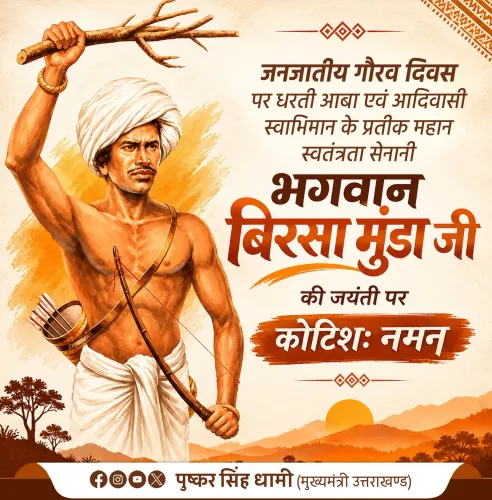
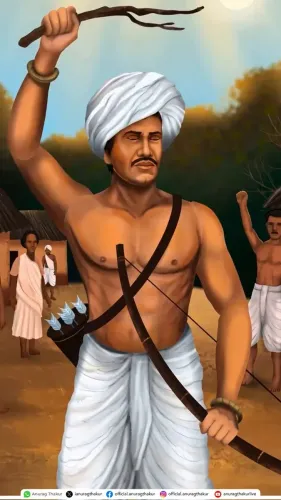
Anurag Thakur pays tribute to Birsa Munda on Janjatiya Gaurav Divas

Synopsis
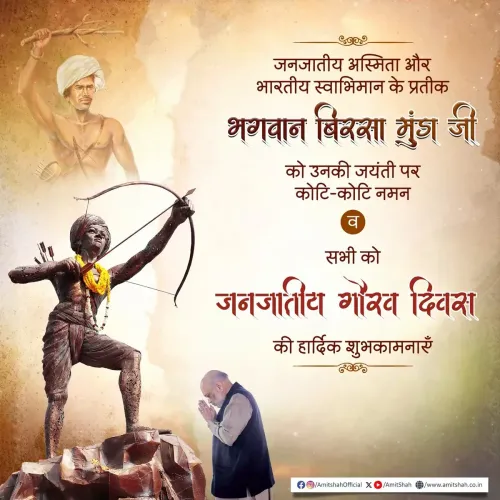
BJP MP Anurag Thakur on 15 November 2026 paid tribute to Bhagwan Birsa Munda on his birth anniversary, extending Janjatiya Gaurav Divas wishes and invoking the tribal leader's legacy of protecting jal, jungle, and zameen.
Key Takeaways
Anurag Thakur posted a Hindi tribute to Bhagwan Birsa Munda on 15 November 2026 , marking his birth anniversary.
He extended Janjatiya Gaurav Divas wishes to all citizens and honoured Birsa Munda by his title 'Dharti Aaba' (Father of the Earth).
Birsa Munda (1875–1900) led the Ulgulan rebellion against British land policies in the Chota Nagpur region of present-day Jharkhand .
The Ministry of Tribal Affairs formally declared 15 November as Janjatiya Gaurav Divas in 2021 .
Thakur's post invoked the 'jal, jungle aur zameen' ethos as an inspiration for greater sensitivity toward the rights and dignity of all communities.
A freedom fighter who terrified the British Empire at the age of twenty-five. On the birth anniversary of Bhagwan Birsa Munda, BJP MP Anurag Thakur paused to honour the tribal leader's enduring legacy — and the national day that now carries his memory forward.
Posting in Hindi on Sunday, 15 November 2026, Thakur offered a respectful salute to Birsa Munda, describing him as a 'parakrami swatantrata senani' (courageous freedom fighter) who stood fearlessly against British rule and devoted his life to the advancement of marginalised communities. He extended warm wishes to all citizens on Janjatiya Gaurav Divas, invoking Birsa Munda's revered title 'Dharti Aaba' — Father of the Earth — a name the Munda community gave him that speaks to both spiritual authority and rootedness in the land.
Birsa Munda's rebellion and the 'Jal, Jungle, Zameen' legacy
Birsa Munda, born on 15 November 1875 in the Chota Nagpur region of present-day Jharkhand, led the Ulgulan — the Great Tumult — a revolt against British land-dispossession policies and missionary influence that shook colonial administration. He died in custody in 1900, aged just twenty-five, but the phrase he lived and fought by — 'jal, jungle aur zameen' (water, forest, and land) — has never left Indian political and social discourse. Thakur's post invokes it directly, calling Birsa Munda's dedication to protecting these three elements an inspiration for all of society to become more sensitive to rights and dignity.
How Janjatiya Gaurav Divas became a national observance
In 2021, the Ministry of Tribal Affairs formally declared 15 November as Janjatiya Gaurav Divas, making it an annual national occasion to commemorate Birsa Munda and recognise the broader contribution of tribal communities to India's freedom struggle. The move was significant: it elevated a figure who had long been central to Adivasi identity into a formally acknowledged national icon, shifting him from regional hero to the country's shared inheritance. Every year since, the day has drawn tributes from across the political spectrum, alongside government events spotlighting tribal welfare and land rights.
Thakur's message reinforces a consistent BJP framing — linking the 'jal, jungle, zameen' ethos of tribal resistance to a broader call for social sensitivity and inclusion, positioning the party's tribal outreach within the moral vocabulary Birsa Munda himself established. For India's Adivasi communities, the day remains far more than politics: it is an annual affirmation of a sacrifice the mainstream long undervalued.
Point of View
Anchoring government welfare messaging in the moral authority of Birsa Munda's resistance. Thakur's tribute — invoking 'jal, jungle, zameen' alongside a call for social sensitivity — reflects a deliberate effort to frame tribal rights not as a legacy of unresolved grievance but as a living national value. This rhetorical strategy attempts to absorb Adivasi political identity into a wider nationalist narrative, a move that has drawn both appreciation and scrutiny from tribal rights advocates. How substantively that narrative translates into land-rights policy remains the sharper question the day raises every year.
NationPress
15 Nov 2026
Frequently Asked Questions
What is Janjatiya Gaurav Divas?
Janjatiya Gaurav Divas is a national observance held on 15 November every year to mark the birth anniversary of tribal freedom fighter Birsa Munda and honour the contributions of tribal communities to India's independence struggle. It was formally declared by the Ministry of Tribal Affairs in 2021 .
Why is Birsa Munda called 'Dharti Aaba'?
'Dharti Aaba' means 'Father of the Earth' in the Munda tradition. The title reflects Birsa Munda's spiritual standing in his community and his lifelong fight to protect tribal land, forests, and water from British-era dispossession.
What was Birsa Munda's Ulgulan rebellion?
The Ulgulan — meaning 'Great Tumult' — was a tribal uprising led by Birsa Munda in the late 1890s in the Chota Nagpur region against British land policies and missionary influence. It is remembered as one of the most significant acts of tribal resistance in colonial India.
What does 'jal, jungle, zameen' mean in Indian politics?
'Jal, jungle aur zameen' — water, forest, and land — is a phrase closely associated with Birsa Munda and tribal rights movements in India. It encapsulates the demand that indigenous communities retain sovereignty over the natural resources that sustain their lives and culture.
Why did Anurag Thakur post about Birsa Munda?
BJP MP Anurag Thakur posted a tribute on 15 November 2026 , Birsa Munda's birth anniversary and Janjatiya Gaurav Divas , honouring the tribal leader's freedom struggle and extending wishes to all citizens on the national observance day.