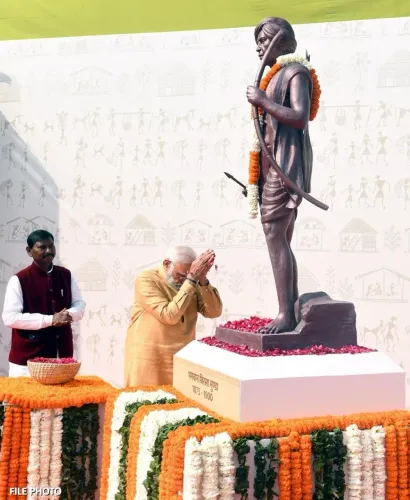
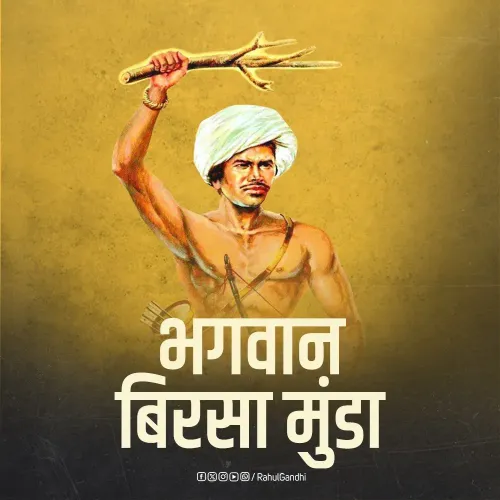
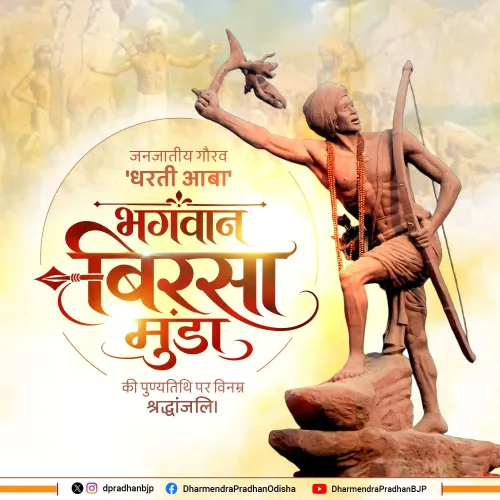
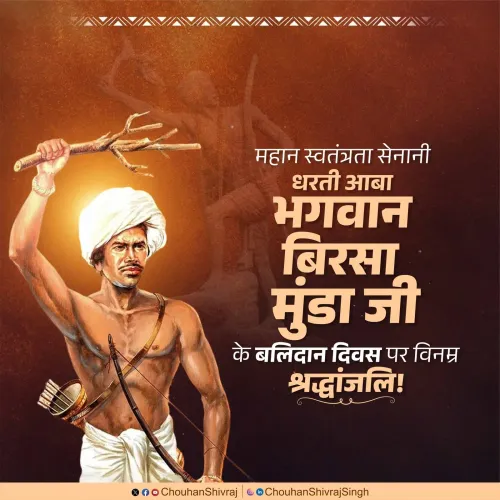
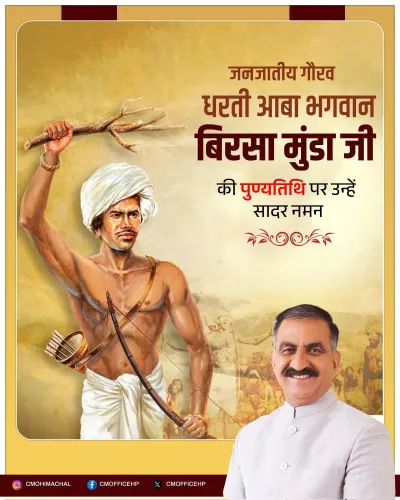
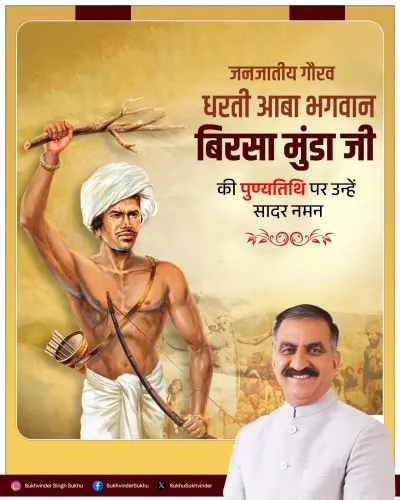
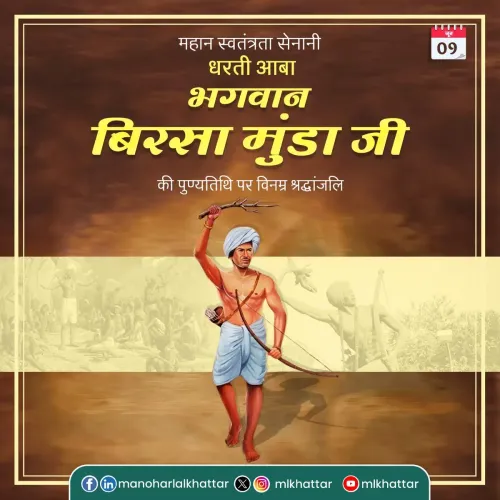
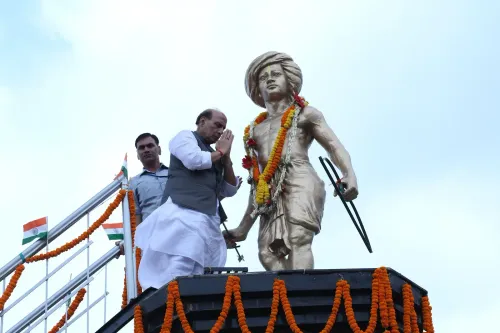
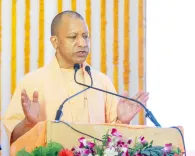
Anurag Thakur pays tribute to Birsa Munda on his martyrdom day
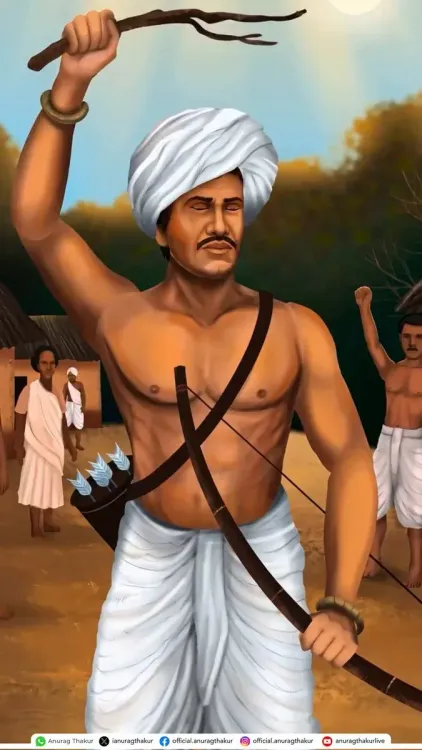
Synopsis
BJP MP Anurag Thakur paid a humble tribute to tribal freedom fighter Birsa Munda on his martyrdom anniversary on 9 June 2026, honouring the 'Dharti Aaba' legacy of protecting water, forests and land as the foundation of tribal identity.
Key Takeaways
Birsa Munda died on 9 June 1900 in colonial custody at the age of 25 , making this his 126th martyrdom anniversary.
BJP MP Anurag Thakur paid tribute on X, invoking jal-jungle-zameen as the bedrock of tribal identity.
Munda is revered as 'Dharti Aaba' (Father of the Earth) for leading the Ulgulan movement against colonial land encroachment in the Chotanagpur region.
The Government of India designated 15 November as Janjatiya Gaurav Divas in 2021 to honour tribal contributions to India's freedom struggle.
The Forest Rights Act, 2006 legally recognises tribal land and forest rights, directly addressing the core demands Birsa Munda championed.
Commemorations are expected across Jharkhand , Chhattisgarh and Odisha , states with large Scheduled Tribe populations.
BJP MP Anurag Thakur on Tuesday, 9 June 2026, paid tribute to tribal freedom fighter Birsa Munda on his martyrdom anniversary, invoking the ideals of jal-jungle-zameen (water, forest and land) as the bedrock of tribal identity and pride.
Context
In his post, Thakur described Birsa Munda as a 'great freedom struggle fighter' and 'Dharti Aaba' — a revered title meaning 'Father of the Earth' — and offered a 'humble tribute on his martyrdom day.' He framed the protection of water, forests and land as the foundation of janjatiya asmita, or tribal identity. Thakur shared the tribute alongside a video on his official X account.
Birsa Munda was born in 1875 in the Chotanagpur region and died on 9 June 1900 in colonial custody at the age of 25. He led the Ulgulan (Great Tumult) movement, rallying Munda tribal communities against British colonial authorities and local landlords who encroached on their land and forest rights.
Policy Backdrop
The Government of India in 2021 formally notified 15 November — Birsa Munda's birth anniversary — as Janjatiya Gaurav Divas to honour the contributions of tribal communities to India's freedom struggle. The designation institutionalised official commemoration of Adivasi icons at the national level. Separately, the Scheduled Tribes and Other Traditional Forest Dwellers (Recognition of Forest Rights) Act, 2006, legally recognises individual and community rights of forest-dwelling communities over land and minor forest produce, addressing the core jal-jungle-zameen demand that Birsa Munda championed.
The Panchayats (Extension to Scheduled Areas) Act, 1996, extended provisions for tribal self-governance across scheduled areas in central and eastern India, forming part of the broader legislative architecture aimed at protecting tribal autonomy.
Stakeholders and Impact
Birsa Munda's martyrdom anniversary draws attention from tribal communities across Jharkhand, Chhattisgarh, Odisha and other states with significant Scheduled Tribe populations. Jharkhand, carved out in 2000 to encompass the historic Chotanagpur and Santhal Pargana regions, remains a politically and culturally significant state where tribal identity and resource rights are central public concerns. The BJP has consistently elevated Adivasi icons in its public messaging as part of efforts to deepen its presence in tribal electoral belts.
The tribute connects historical narratives of resistance over land and forest rights with contemporary policy discussions on the implementation of forest-rights claims and tribal welfare programmes. Tribal civil society organisations and Adivasi political groups mark the day with local commemorations and calls for stronger enforcement of existing forest and land rights laws.
What's Next
Official commemorations on 9 June are expected in Jharkhand and other states with large tribal populations, with political leaders across parties likely to mark the occasion. Attention will remain on the pace of implementation of forest-rights claims under the 2006 Forest Rights Act and the roll-out of tribal development schemes, as Birsa Munda's martyrdom day increasingly serves as a marker for assessing the state of Adivasi rights and welfare in India.
Point of View
Chhattisgarh and Odisha. By foregrounding jal-jungle-zameen — the historic battle cry of tribal land and forest rights — the messaging seeks to align the party's cultural nationalism with Adivasi aspirations. The institutionalisation of Janjatiya Gaurav Divas in 2021 gave this approach an official scaffold, and individual tributes by senior MPs reinforce it at the grassroots level. The effectiveness of this strategy ultimately depends on visible progress in implementing the Forest Rights Act and resolving outstanding land-rights claims.
NationPress
26 Oct 2026
Frequently Asked Questions
When did Birsa Munda die and why is 9 June observed?
Birsa Munda died on 9 June 1900 in British colonial custody in Ranchi at the age of 25. The date is observed as his martyrdom anniversary across tribal communities and by political leaders nationwide.
Who is Dharti Aaba and what does the title mean?
'Dharti Aaba' means 'Father of the Earth' in the Munda language and is the revered title given to Birsa Munda , the tribal freedom fighter who led the Ulgulan movement in the Chotanagpur region against British colonial rule and landlord encroachment.
What is Janjatiya Gaurav Divas and when was it declared?
Janjatiya Gaurav Divas was declared by the Government of India in 2021 and is observed on 15 November , Birsa Munda's birth anniversary, to honour the contributions of tribal communities to India's freedom struggle.
What is the Forest Rights Act and how does it relate to Birsa Munda's legacy?
The Scheduled Tribes and Other Traditional Forest Dwellers (Recognition of Forest Rights) Act, 2006 , legally recognises tribal rights over forest land and produce. It directly addresses the jal-jungle-zameen demands that Birsa Munda championed more than a century ago.
Why does the BJP frequently reference Birsa Munda in its messaging?
The BJP has systematically elevated Adivasi icons including Birsa Munda to expand its electoral presence in tribal belts of Jharkhand , Chhattisgarh and Odisha , linking historical narratives of resistance with contemporary welfare and cultural recognition programmes.