Tharoor backs J&K MLA's Kashmiri Pandit Re-integration Bill

Synopsis
Congress MP Dr. Shashi Tharoor has endorsed MLA Aga Syed Muntazir Mehdi's Kashmiri Pandit and Migrant Re-integration Private Member's Bill in the J&K Assembly, calling the cause of safe and dignified Pandit return one he has long championed. The bill revives legislative focus on India's unresolved 1990 displacement crisis.
Key Takeaways
MLA Aga Syed Muntazir Mehdi introduced the Kashmiri Pandit and Migrant Re-integration Private Member's Bill in the J&K Legislative Assembly .
Shashi Tharoor publicly endorsed the bill on 23 September 2026 , calling it a cause he has 'long supported.' The bill addresses the displacement of Kashmiri Pandits that originated during the 1990 exodus amid rising militancy in the Kashmir Valley.
Private member's bills in India rarely become law but serve as critical tools for legislative accountability and political signalling.
Successive governments have announced Pandit rehabilitation schemes over three decades, but meaningful return has not been achieved.
The bill's fate will depend on substantive assembly debate and any coordination from the central government on existing migrant rehabilitation frameworks.
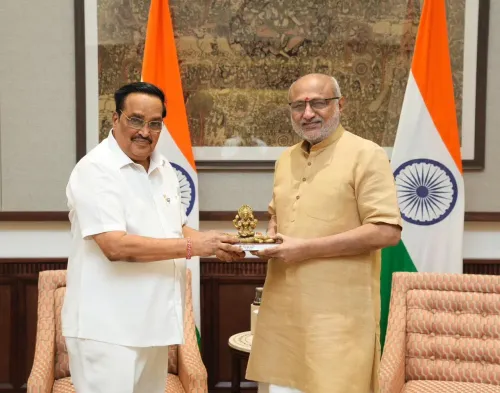
A private member's bill tabled in the Jammu and Kashmir Legislative Assembly has drawn national attention — and a pointed endorsement from one of India's most prominent voices on minority rights. Congress MP Dr. Shashi Tharoor on Wednesday, 23 September 2026 publicly welcomed the move by MLA Aga Syed Muntazir Mehdi to introduce the Kashmiri Pandit and Migrant Re-integration Private Member's Bill, calling it a cause he has 'long supported.'
A bill that names what decades of policy skirted
The Kashmiri Pandit and Migrant Re-integration Private Member's Bill, tabled by MLA Aga Syed Muntazir Mehdi in the J&K Assembly, directly addresses one of independent India's most painful and politically charged displacements. In 1990, amid a surge in militancy and targeted violence, the vast majority of Kashmiri Pandits fled the Kashmir Valley in what became one of the largest internal displacements in post-partition India. More than three decades on, their safe, dignified and sustainable return remains unresolved.
Tharoor described the bill as 'heartening,' adding that the cause of Kashmiri Pandit reintegration is one he has long championed. The framing — 'safe, dignified and sustainable' — is deliberate and significant. It signals that return is not merely a logistical question but a political and security compact that the state must guarantee.
Why a private member's bill matters here
Private member's bills rarely become law in India's parliamentary system — but they are rarely meant to. Their power lies in forcing a subject onto the legislative floor, compelling the government to respond, and creating a formal record of political will. That a J&K MLA has chosen this mechanism for Kashmiri Pandit reintegration — rather than waiting for executive action — is itself a statement.
Successive governments, both at the centre and in J&K, have announced rehabilitation packages and resettlement schemes over the years. Implementation, however, has been inconsistent, and the community's return in meaningful numbers has not materialised. The bill, if debated robustly, could put concrete accountability on the table.
Tharoor's long record on Pandit rehabilitation
Dr. Tharoor's endorsement is not incidental. The Thiruvananthapuram MP and former UN Under-Secretary-General has repeatedly spoken about the Kashmiri Pandit exodus as a humanitarian failure that transcends partisan lines. His support for MLA Mehdi's bill underscores a broader argument: that reintegration is not a BJP or Congress issue — it is a constitutional and moral obligation of the Indian state.
The alignment between a Congress MP from Kerala and a J&K MLA on this issue also signals that the political coalition around Pandit rehabilitation may be wider than any single party's narrative allows.
Whether the J&K Assembly debates the bill substantively, and whether the central government signals any coordination on existing migrant rehabilitation schemes, will determine if this legislative moment translates into something the displaced community can actually count on.
Point of View
But their value in forcing executive accountability is real. The 'safe, dignified and sustainable' framing Tharoor amplifies implicitly critiques past rehabilitation efforts as falling short on all three counts. If the J&K Assembly debates the bill seriously, it could set a new benchmark for what the state owes its displaced citizens — and embarrass any government, at any level, that fails to respond.
NationPress
24 Sept 2026
Frequently Asked Questions
What is the Kashmiri Pandit and Migrant Re-integration Private Member's Bill?
It is a private member's bill introduced by J&K MLA Aga Syed Muntazir Mehdi in the Jammu and Kashmir Legislative Assembly, aimed at enabling the safe, dignified and sustainable return and reintegration of Kashmiri Pandits and other migrants displaced from the Kashmir Valley.
Why did Kashmiri Pandits leave the Kashmir Valley?
The vast majority of Kashmiri Pandits fled the Kashmir Valley in 1990 amid a surge in militancy and targeted violence, in what became one of the largest internal displacements in post-partition India.
What did Shashi Tharoor say about the Kashmiri Pandit bill?
Congress MP Dr. Shashi Tharoor called it 'heartening' to see MLA Aga Syed Muntazir Mehdi bring forward the bill, describing the safe, dignified and sustainable return of Kashmiri Pandits as a cause he has long supported.
Do private member's bills in India usually become law?
Rarely — private member's bills in India's parliamentary system are primarily used to place issues on the legislative record and compel government response, rather than to pass binding legislation. Their significance is largely political and symbolic.
What is the current status of Kashmiri Pandit rehabilitation in India?
Despite multiple rehabilitation packages and resettlement schemes announced by successive central and J&K governments since 1990, the return of Kashmiri Pandits to the Valley in significant numbers has not materialised, and implementation of existing schemes has been inconsistent.