Tharoor Backs Sanjiv Bhatt's Letter, Calls It 'Moving'

Synopsis
Congress MP Dr. Shashi Tharoor publicly backed a letter by former Gujarat IPS officer Sanjiv Bhatt on June 21, 2026, calling it 'moving and powerful.' Bhatt, dismissed in 2015, is known for allegations of state complicity in the 2002 Gujarat riots. Tharoor's endorsement amplifies the letter to a national audience amid ongoing legal proceedings.
Key Takeaways
Shashi Tharoor endorsed a letter by former IPS officer Sanjiv Bhatt on June 21, 2026 , calling it 'moving and powerful.' Sanjiv Bhatt is a former Gujarat-cadre IPS officer dismissed from service in 2015 .
Bhatt filed a high-profile affidavit in 2011 alleging state-level awareness of the 2002 Gujarat riots before they occurred.
The exact contents of the referenced letter have not been independently verified.
Tharoor's endorsement reflects a recurring pattern of opposition figures amplifying voices critical of the government on institutional accountability.
The post is expected to draw responses from ruling-party spokespersons and renewed attention to pending legal cases involving Bhatt.
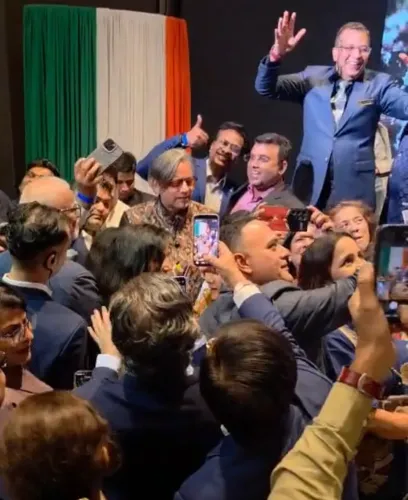
Congress MP Dr. Shashi Tharoor on Sunday, June 21, 2026, publicly endorsed a letter by former Gujarat-cadre IPS officer Sanjiv Bhatt, describing it as 'moving and powerful' and urging his followers to read it.
Context
Tharoor's post, shared on X, tagged @sanjivbhatt directly and carried the hashtag #MustRead — a signal of strong personal endorsement. While the exact contents of the letter have not been independently verified, the amplification by a senior opposition parliamentarian gives it significant political visibility.
Sanjiv Bhatt is a former Indian Police Service officer of the Gujarat cadre who was dismissed from service in 2015. He became a prominent public figure after filing an affidavit in 2011 alleging state-level complicity in the 2002 Gujarat riots — communal violence that followed the Godhra train burning and has remained one of the most contested episodes in contemporary Indian political and legal history.
Policy Backdrop
Bhatt's public letters and affidavits over the years have been part of a broader, unresolved debate over institutional accountability, the autonomy of civil servants, and the rule of law in relation to the 2002 riots. His 2011 affidavit, submitted before the Supreme Court-appointed Special Investigation Team, alleged that senior political figures were aware of the violence in advance — allegations that have been legally contested and denied.
Bhatt has since faced multiple legal proceedings, including conviction in separate criminal cases, which his supporters characterise as institutional retaliation and which authorities maintain are unrelated to his political statements. These cases remain a live point of contention between civil liberties advocates and the government.
Stakeholders and Impact
Tharoor's endorsement is notable given his stature — a sitting Lok Sabha MP from Thiruvananthapuram, former Union Minister of State for External Affairs and Human Resource Development, and former UN Under-Secretary-General. His public platform amplifies Bhatt's letter to a national and international audience.
Opposition figures have periodically amplified statements from individuals who have come into conflict with central agencies, framing such moves as a defence of institutional autonomy and accountability. Ruling-party spokespersons have in the past characterised such endorsements as politically motivated. Former civil servants, legal observers, and civil society groups tracking the 2002 riots cases are among those likely to engage with the letter's contents.
What's Next
The post is likely to draw responses from Bharatiya Janata Party spokespersons and may prompt further statements from Indian National Congress leadership. Scheduled hearings in cases involving Bhatt will continue to draw attention to his situation. Tharoor's endorsement ensures that whatever Bhatt has written will reach a far wider audience than it might otherwise, keeping the broader questions of civil-servant accountability and the legacy of the 2002 Gujarat riots in public discourse ahead of any forthcoming legal developments.
Point of View
Which sits at the intersection of civil-servant whistleblowing, communal accountability, and what critics call the weaponisation of state agencies. Expect the ruling party to respond sharply, framing the endorsement as partisan point-scoring rather than a genuine defence of rule of law.
NationPress
21 Jun 2026
Frequently Asked Questions
Who is Sanjiv Bhatt and why is he in the news?
Sanjiv Bhatt is a former Gujarat-cadre IPS officer dismissed in 2015, known for alleging state complicity in the 2002 Gujarat riots. He is in the news after Congress MP Dr. Shashi Tharoor publicly endorsed a letter written by him on June 21, 2026.
What did Shashi Tharoor say about Sanjiv Bhatt's letter?
Tharoor called the letter 'moving and powerful' and urged his followers to read it, tagging Bhatt directly on X with the hashtag #MustRead.
What was Sanjiv Bhatt's 2011 affidavit about?
Bhatt's 2011 affidavit, submitted in proceedings before the Supreme Court-appointed Special Investigation Team, alleged that senior political figures had prior knowledge of the 2002 Gujarat riots — allegations that have been legally contested and denied.
Why was Sanjiv Bhatt dismissed from the IPS?
Sanjiv Bhatt was dismissed from the Indian Police Service in 2015. He and his supporters have characterised the proceedings as retaliation for his public stance on the 2002 Gujarat riots, while authorities maintain the dismissal was on separate grounds.
What is the significance of Tharoor endorsing Bhatt's letter?
As a sitting Lok Sabha MP, former Union Minister, and former UN Under-Secretary-General, Tharoor commands a large national and international audience. His endorsement significantly amplifies Bhatt's letter and keeps questions of civil-servant accountability and the 2002 riots in public discourse.