Tharoor Calls to Save Central Secretariat Library
Synopsis
Congress MP Dr. Shashi Tharoor publicly appealed on October 1 for a university or philanthropist to preserve the Central Secretariat Library, one of New Delhi's oldest government reference collections, warning it risks being lost without institutional intervention.
Key Takeaways
Shashi Tharoor posted a public appeal on October 1, 2026 calling for the preservation of the Central Secretariat Library .
Tharoor urged the library to be housed in a national institution accessible to the general public.
He directly challenged universities and philanthropists to come forward and help preserve the collection.
The Central Secretariat Library in New Delhi is one of India's oldest government libraries, holding policy documents, legislative records, and rare reference materials.
The library's future has faced questions amid the broader Central Vista redevelopment of New Delhi's administrative district.
A colonial-era repository of governance knowledge is quietly slipping toward oblivion — and Congress MP Dr. Shashi Tharoor wants someone to stop it. On Thursday, October 1, 2026, the Thiruvananthapuram MP posted a pointed appeal on X, urging universities or philanthropists to step forward and preserve the Central Secretariat Library before its collection is lost to institutional neglect.
Tharoor's post was unambiguous: 'The Central Secretariat Library must be preserved, ideally in a national institution accessible to the general public. Is there no university or philanthropist willing to come forward to help preserve the collection?' The appeal was both a warning and a challenge — directed not at any single ministry, but at civil society itself.
What Is the Central Secretariat Library?
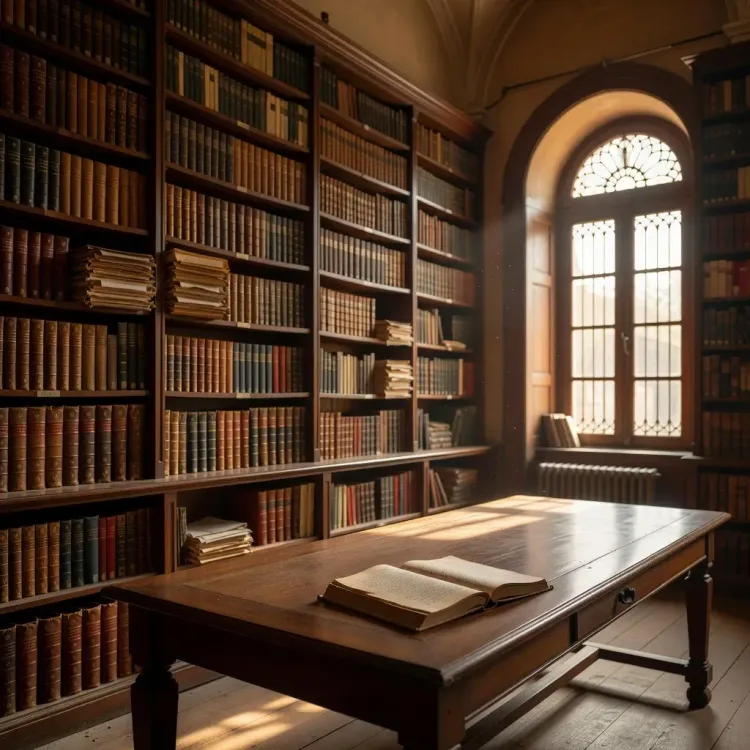
The Central Secretariat Library in New Delhi is one of India's oldest government libraries, established to serve the administrative apparatus of the Indian state. Its stacks contain decades of policy documents, legislative records, rare periodicals, and reference materials that trace the arc of the Indian republic's governance history. For researchers, historians, and civil servants, it has long been an understated but irreplaceable resource.
The library functions under the Ministry of Culture and has faced questions about its future footprint amid the broader reorganisation of government offices tied to the New Delhi Central Vista redevelopment project — a long-running overhaul of the capital's administrative spine that has displaced or restructured several legacy institutions.
The Preservation Gap — and Who Could Fill It
Tharoor's framing is pointed: if the state cannot or will not guarantee the collection's survival, can a university or a private benefactor? It is a question that cuts to a genuine gap in India's institutional architecture. The country has world-class archival ambitions — the National Archives of India holds millions of records — but physical library collections tied to specific government bodies often fall through the cracks when those bodies are reorganised or relocated.
The appeal to philanthropists is not unprecedented. Several Indian cities have seen private trusts or university endowments rescue endangered collections — from rare manuscripts to colonial-era newspaper archives. Whether any institution answers Tharoor's public call remains to be seen, but the MP has done what few in Parliament bother to do: name the problem out loud, and in public.
Point of View
Where the Central Vista redevelopment has reshuffled government offices and raised legitimate questions about legacy collections. By addressing civil society rather than a ministry, he implicitly signals scepticism that the state will act — a political posture that doubles as a genuine cultural alarm. The call fits a broader pattern of opposition voices positioning themselves as custodians of India's plural, democratic institutional memory at a moment when that narrative is contested. Whether this sparks a concrete philanthropic or academic response will be the real test of whether such public appeals still move institutions.
NationPress
1 Oct 2026
Frequently Asked Questions
What is the Central Secretariat Library in New Delhi?
The Central Secretariat Library is one of India's oldest government reference libraries, located in New Delhi and maintained under the Ministry of Culture. It holds decades of policy documents, legislative records, rare periodicals, and administrative reference materials central to the history of Indian governance.
Why is the Central Secretariat Library under threat?
The library's future has come into question amid the Central Vista redevelopment project, a large-scale overhaul of New Delhi's administrative district that has relocated and restructured several legacy government institutions.
What did Shashi Tharoor say about the Central Secretariat Library?
On October 1, 2026, Tharoor posted on X calling for the library to be preserved in a national institution accessible to the public, and asked whether any university or philanthropist would step forward to help save the collection.
Who is responsible for preserving the Central Secretariat Library?
The Central Secretariat Library falls under the purview of the Ministry of Culture. Tharoor's appeal, however, broadened the call to include universities and private philanthropists, suggesting he sees a role for civil society beyond government alone.
Has any university or philanthropist responded to Tharoor's appeal?
As of October 1, 2026, no public response from a university or philanthropist has been confirmed. Tharoor's post represents an open call that has not yet been answered.