Tharoor on India-China ties: 'Choose our choreography'
Synopsis
On the eve of Independence Day 2026, Congress MP Dr. Shashi Tharoor launched a 14-essay anthology on India-China ties edited by Ambassador K. Surendra, arguing India cannot choose its geography with China — only its choreography.
Key Takeaways
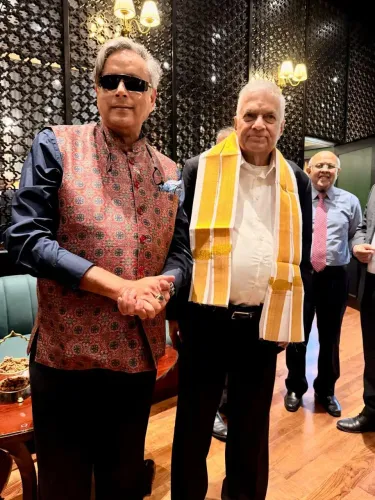
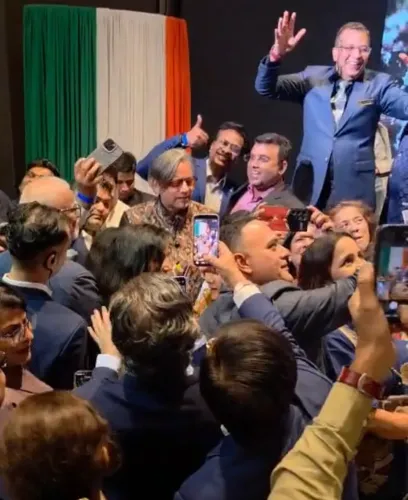
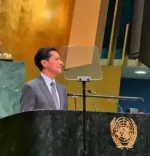
Shashi Tharoor attended and spoke at the launch of a new anthology on India-China relations on 14 August 2026 .
The book — edited by Ambassador K.
Surendra — contains fourteen essays offering a range of expert views rather than a single argument.
Tharoor described the plurality of perspectives as 'the book's greatest strength' and shared his own views at the launch.
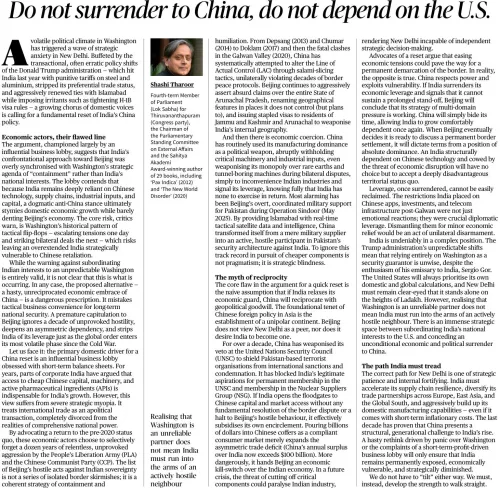
He framed the bilateral challenge with a memorable line: India cannot choose its geography with China, only its 'choreography.' The anthology arrives against the backdrop of the 2020 Galwan Valley clash and ongoing Line of Actual Control disengagement talks that have defined India-China ties in recent years.
Upcoming BRICS and SCO summits will be key tests of whether diplomatic engagement can translate Tharoor's metaphor into measurable policy movement.
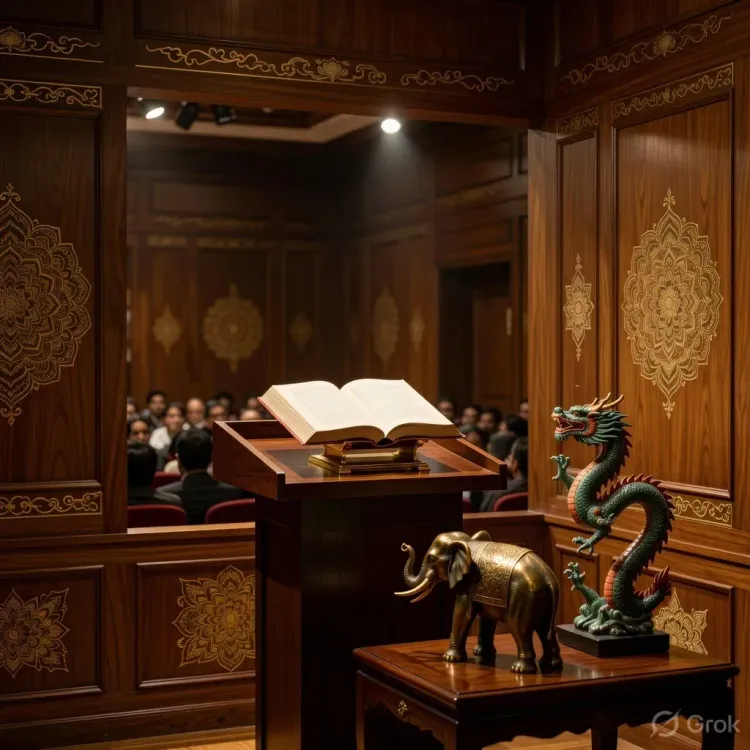
Geography is destiny — but diplomacy is a choice. On the eve of Independence Day 2026, Congress MP Dr. Shashi Tharoor attended the launch of a new anthology on India's most consequential and least understood bilateral relationship, and left with a line that cuts to the heart of the debate: when it comes to the Chinese Dragon and the Indian Elephant, we cannot choose our geography — we can only choose our choreography.
The volume in question — 'Is This the Time for the Indian Elephant and the Chinese Dragon to Dance Together?' — is edited by Ambassador K. Surendra and brings together fourteen essays from a range of foreign-policy voices. Tharoor, who contributed to the anthology and spoke at the launch, described its defining quality as its pluralism: 'a range of views rather than a single argument,' he wrote, calling that breadth the book's greatest strength.
Why fourteen voices, not one verdict
The choice to present competing perspectives rather than a unified thesis is itself a statement about where the India-China debate stands. No single school of thought commands consensus — not among strategists, not in Parliament, not in the chancelleries of Delhi or Beijing. Some contributors will argue for deeper economic re-engagement; others will press for accelerated strategic decoupling. The anthology holds that tension without resolving it, which is precisely what makes it a serious contribution to the conversation. Tharoor, whose background spans the United Nations, the Ministry of External Affairs, and nearly two decades in Parliament, is one of the few Indian public figures equally fluent in the diplomatic and democratic registers of this debate. His presence at the launch — and his willingness to 'hold forth' on his own views — signals that the book is not an academic exercise but an intervention in live policy discourse.The weight of Galwan and Doklam behind every page
The backdrop to any serious India-China volume in 2026 is the accumulated damage of recent years. The 73-day Doklam standoff in 2017 tested both sides' nerve along a ridge claimed by Bhutan. Then came the Galwan Valley clash of June 2020 — the first fatalities on the India-China border in over four decades — which shattered the post-1988 framework of 'peace and tranquility' and triggered a sweeping reassessment of economic, technological, and military dependencies. Disengagement talks have proceeded in fits and starts since. Trade volumes have remained stubbornly high even as political trust has cratered. That paradox — deep economic interdependence coexisting with live strategic friction along the Line of Actual Control — is the central tension every essay in this anthology must grapple with.Tharoor's choreography metaphor and what it means for policy
The dance metaphor Tharoor deployed is more than a turn of phrase. It encodes a specific policy logic: that India has no exit from the neighbourhood, and that managing Beijing is therefore a permanent condition rather than a problem to be solved. The question is not whether to engage but how — which steps to lead, which to follow, when to hold position, and when to move. For a political figure who has long advocated calibrated, interest-based multilateralism over ideological alignment, the framing is consistent. It also lands on a symbolically charged date: the book was launched on the eve of India's 80th Independence Day, a moment when questions of sovereignty, strategic autonomy, and national interest carry particular resonance. Future BRICS and SCO summits will test whether the choreography metaphor translates into actual diplomatic movement — or whether the two dancers remain locked in an uncomfortable, unresolved pause.Point of View
Interest-based management as the only realistic India-China doctrine. Launching the anthology on Independence Day eve amplifies its symbolic charge, linking strategic autonomy to national identity at a moment of heightened public attention. For the opposition Congress, the move also keeps foreign policy — traditionally a ruling-party stronghold — in the public conversation ahead of parliamentary sessions where LAC disengagement and economic dependencies are likely flashpoints. The book's multi-voice structure mirrors the broader Indian strategic community's genuine lack of consensus on China, which itself tells policymakers something important: the choreography has not yet been agreed upon, let alone rehearsed.
NationPress
29 Sept 2026
Frequently Asked Questions
What book did Shashi Tharoor launch on 14 August 2026?
Tharoor attended the launch of 'Is This the Time for the Indian Elephant and the Chinese Dragon to Dance Together?' — a 14-essay anthology on India-China relations edited by Ambassador K. Surendra.
What did Tharoor mean by 'we can only choose our choreography' on China?
Tharoor used the phrase to argue that India cannot escape its geographical proximity to China, so the real policy question is not whether to engage Beijing but how — choosing the right diplomatic and strategic moves rather than trying to wish away the relationship.
Who edited the India-China anthology launched by Tharoor?
The anthology was edited by Ambassador K. Surendra and brings together fourteen essays from a range of foreign-policy experts.
What is the current state of India-China relations?
India-China ties have been strained since the June 2020 Galwan Valley clash — the first border fatalities in over four decades — with disengagement talks along the Line of Actual Control continuing in fits and starts even as bilateral trade volumes remain high.
What was the Galwan Valley clash and why does it matter for India-China ties?
The Galwan Valley clash of June 2020 resulted in fatalities on both sides and marked the sharpest deterioration in India-China relations in decades, triggering a sweeping review of economic, technological, and military dependencies on China.