Tharoor Joins UN University Discussion, Lauds Audience
Synopsis
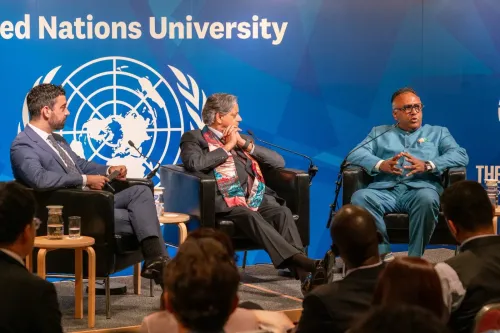
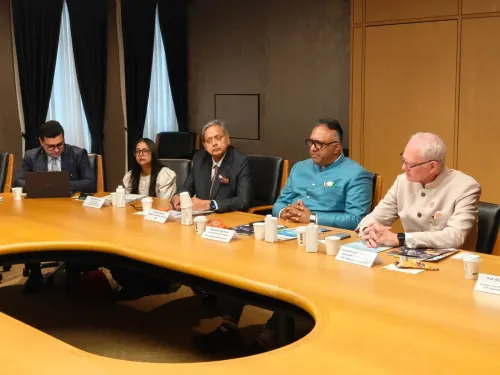
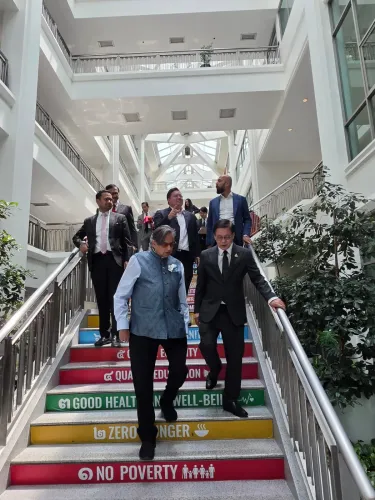
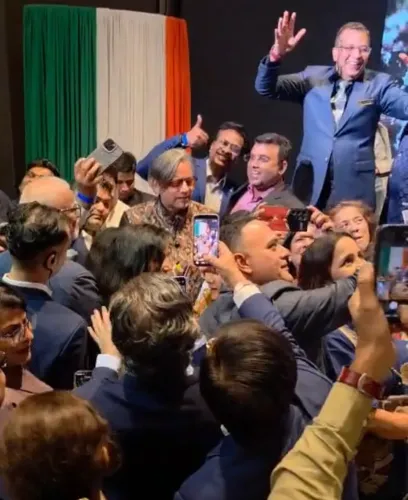
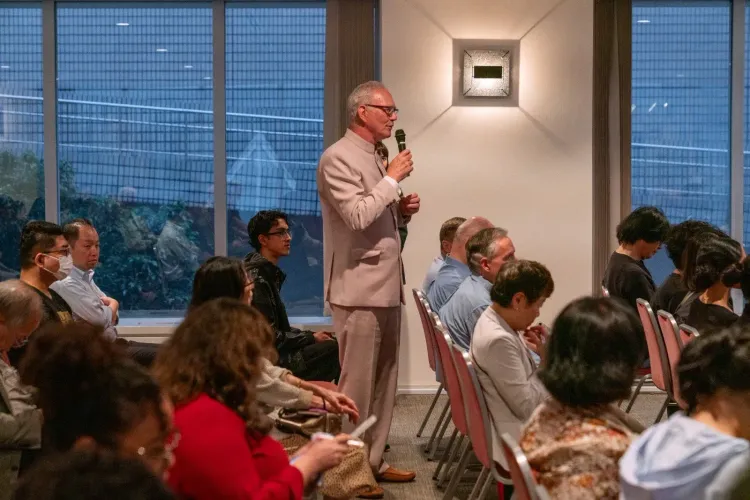
Congress MP Dr. Shashi Tharoor attended a United Nations University discussion on July 1, 2026, commending the 'terrific' audience presence and participation. The former UN Under-Secretary-General shared four images from the event, underscoring his continued engagement with multilateral policy forums.
Key Takeaways
Shashi Tharoor , Congress MP from Thiruvananthapuram , attended a United Nations University (UNU) discussion on July 1, 2026 .
Tharoor described the audience presence and participation as 'terrific', indicating a highly interactive session.
He shared 4 images from the event on X, drawing public attention to the forum.
The UNU is an autonomous UN organ that connects academic research with intergovernmental policy-making, headquartered in Tokyo .
Tharoor's engagement reflects India's broader participation in UN-linked intellectual and policy forums.
Congress MP Dr. Shashi Tharoor on Wednesday, July 1, 2026, praised the audience engagement at a discussion hosted by the United Nations University (UNU), describing the participation as 'terrific' in a post shared from the event.
Context
Dr. Tharoor, the Lok Sabha MP from Thiruvananthapuram and a former UN Under-Secretary-General, has long maintained close ties with United Nations institutions. His decades-long career at the UN — spanning roles including head of the Department of Public Information — gives him a distinctive standing at multilateral forums. The UNU, headquartered in Tokyo with offices globally, is an autonomous UN organ that bridges academic research and intergovernmental policy-making.
The event appears to have drawn a lively crowd, with Tharoor specifically highlighting the quality of audience presence and participation, suggesting an interactive format rather than a standard lecture. He shared four images from the occasion alongside his post.
Policy Backdrop
The United Nations University regularly convenes discussions on global governance, sustainable development, climate policy, and multilateralism — themes that align closely with Tharoor's public intellectual work. As a sitting parliamentarian who frequently engages on foreign policy and international law, Tharoor's participation in UNU forums reflects a broader pattern of Indian legislators contributing to global policy conversations.
India's engagement with UN bodies has been a consistent feature of its foreign policy, particularly as New Delhi positions itself as a leading voice of the Global South. Academic and policy forums such as those hosted by the UNU serve as informal diplomatic platforms where ideas that shape future multilateral negotiations are often first aired.
Stakeholders and Impact
For the UNU, the participation of a prominent parliamentarian and former senior UN official lends visibility and political weight to its public programming. For Indian audiences, Tharoor's continued presence at international forums reinforces his profile as one of India's most internationally connected legislators.
The event also signals ongoing civil-society and academic interest in multilateral dialogue at a time when global institutions face pressure to demonstrate relevance. Strong audience participation, as noted by Tharoor, suggests sustained public appetite for substantive policy discussions within the UN ecosystem.
What's Next
No formal outcomes or policy documents from the UNU discussion have been announced. However, Tharoor's participation is likely to feed into his ongoing commentary on international affairs, which he regularly shares with his large social-media following and through parliamentary interventions. Further details of the discussion's agenda and speakers are expected to emerge through the UNU's official channels.
Point of View
The participation of a legislator with his UN pedigree carries symbolic weight beyond the event itself. His highlighting of audience engagement rather than the substance of the discussion is notable — it suggests a deliberate effort to amplify the forum's public legitimacy. This pattern of international intellectual engagement also serves to distinguish Tharoor's brand of opposition politics as globally oriented and policy-driven.
NationPress
1 Jul 2026
Frequently Asked Questions
What did Shashi Tharoor say about the UN University event?
Dr. Shashi Tharoor described the audience presence and participation at the United Nations University discussion as 'terrific', sharing four images from the event on July 1, 2026.
What is the United Nations University?
The United Nations University (UNU) is an autonomous organ of the UN that bridges academic research and intergovernmental policy-making, with its headquarters in Tokyo and offices around the world.
Why does Shashi Tharoor attend UN events?
Dr. Tharoor served as a UN Under-Secretary-General for many years before entering Indian politics, giving him deep ties to UN institutions and making his participation in such forums a natural extension of his career.
Which constituency does Shashi Tharoor represent?
Dr. Shashi Tharoor is the Lok Sabha Member of Parliament from Thiruvananthapuram in Kerala, representing the Indian National Congress.
What topics does the UN University discuss?
The United Nations University regularly convenes discussions on global governance, sustainable development, climate policy, multilateralism, and related themes that inform international policy-making.