CM Sukhu Pays Tribute to India's First Voter Shyam Saran Negi
Synopsis
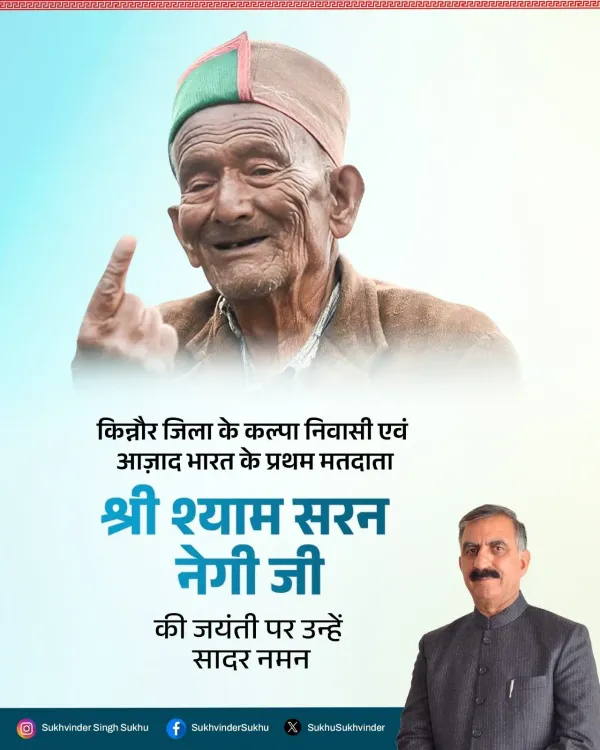
Himachal Pradesh CM Sukhvinder Singh Sukhu paid tribute to Shyam Saran Negi of Kalpa, Kinnaur — recognised as independent India's first voter — on his birth anniversary on 1 July 2026, calling him a lasting inspiration for democratic consciousness.
Key Takeaways
CM Sukhvinder Singh Sukhu paid tribute to Shyam Saran Negi on his birth anniversary on 1 July 2026 .
Shyam Saran Negi was a resident of Kalpa village, Kinnaur district, Himachal Pradesh .
Negi is nationally recognised as the first person to cast a vote in independent India during the 1951–52 general elections .
India's first general elections were held between October 1951 and February 1952 under universal adult franchise.
CM Sukhu described Negi's life as proof that 'democracy flourishes only through aware, dutiful, and active citizens.' The tribute underscores Himachal Pradesh's symbolic role in India's electoral history.
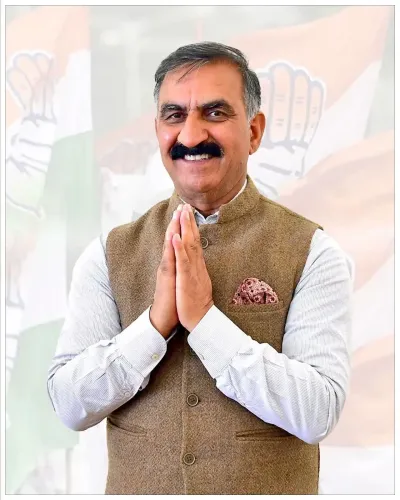
Himachal Pradesh Chief Minister Sukhvinder Singh Sukhu on Wednesday, 1 July 2026 paid tribute to Shyam Saran Negi, a resident of Kalpa in Kinnaur district and widely recognised as the first voter of independent India, on the occasion of Negi's birth anniversary.
Context
Chief Minister Sukhu's post, written in Hindi, offered a respectful salute to Negi on his birth anniversary: 'सादर नमन' ('a respectful salute'). He described Negi's life as an inspiration, noting that 'democracy flourishes only through the participation of aware, dutiful, and active citizens.' He added that Negi's personality 'will always remain an inspiration for democratic consciousness.'
Shyam Saran Negi was a resident of Kalpa village in the remote tribal district of Kinnaur, Himachal Pradesh. He is nationally recognised as the first person to have cast a vote in independent India during the country's inaugural general elections.
Policy Backdrop
India conducted its first general elections between October 1951 and February 1952, following the adoption of the Constitution in 1950 and the introduction of universal adult franchise. Polling in Kinnaur was scheduled among the earliest constituencies due to the region's harsh winter conditions, which is why Negi came to cast his ballot before voters elsewhere in the country.
The 1951–52 elections were a landmark moment — the world's largest democracy exercising universal suffrage for the first time. Figures such as Negi, who participated in that foundational exercise, have since been held up as symbols of civic duty and democratic commitment.
Stakeholders and Impact
Tributes to Negi carry significance for residents of Kinnaur and Himachal Pradesh broadly, reinforcing the state's direct connection to a defining chapter in India's democratic history. For the wider electorate, such commemorations serve as reminders of the responsibilities that accompany the right to vote.
Indian political leaders across parties have routinely issued public tributes on the birth and death anniversaries of early voters and freedom movement participants. These messages align with periodic national campaigns that link local figures from states like Himachal Pradesh to India's electoral heritage, often gaining renewed attention ahead of state or national election cycles.
What's Next
State-level voter awareness events in Himachal Pradesh are likely to reference Negi's legacy in the coming months, particularly as the Election Commission of India periodically runs campaigns promoting democratic participation. The Chief Minister's tribute signals that Negi's story will continue to be woven into the state's civic and political narrative for years to come.
Point of View
Invoking democratic heritage also serves as a subtle counter-narrative to rivals who question the party's grassroots connect. The timing, on the birth anniversary itself, suggests a deliberate calendar of commemoration that keeps Negi's legacy visible in the public discourse. More broadly, such tributes reflect a wider pattern of parties across the spectrum using electoral history to mobilise voter sentiment ahead of future polls.
NationPress
1 Jul 2026
Frequently Asked Questions
Who is Shyam Saran Negi?
Shyam Saran Negi was a resident of Kalpa village in Kinnaur district, Himachal Pradesh, and is recognised as the first person to cast a vote in independent India during the 1951–52 general elections.
Why did Kinnaur vote first in India's 1951-52 elections?
Polling in Kinnaur was scheduled among the earliest constituencies because the region experiences harsh winter conditions, requiring elections to be held before snowfall made the area inaccessible.
What did CM Sukhu say about Shyam Saran Negi?
CM Sukhu said Negi's life is an inspiration showing that 'democracy flourishes only through the participation of aware, dutiful, and active citizens,' and that his personality will always be an inspiration for democratic consciousness.
When were India's first general elections held?
India's first general elections were conducted between October 1951 and February 1952 under universal adult franchise, following the adoption of the Constitution in 1950.
Why do Indian leaders pay tribute to Shyam Saran Negi?
Political leaders across parties tribute Negi on his birth and death anniversaries to highlight India's democratic heritage and promote civic participation, often aligning such commemorations with voter awareness campaigns.